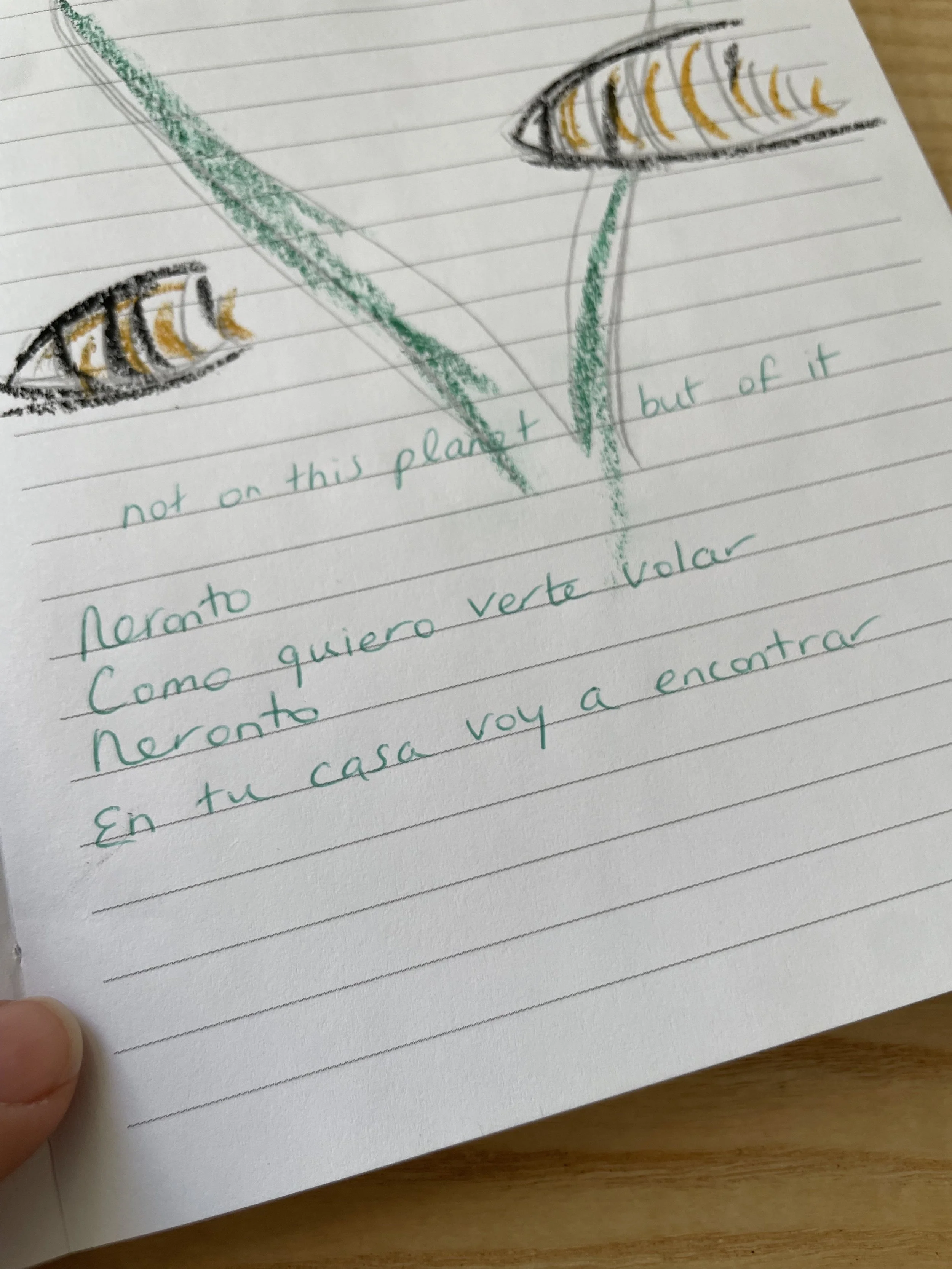
Verte Volar: An Homage to Ancient Pollinators
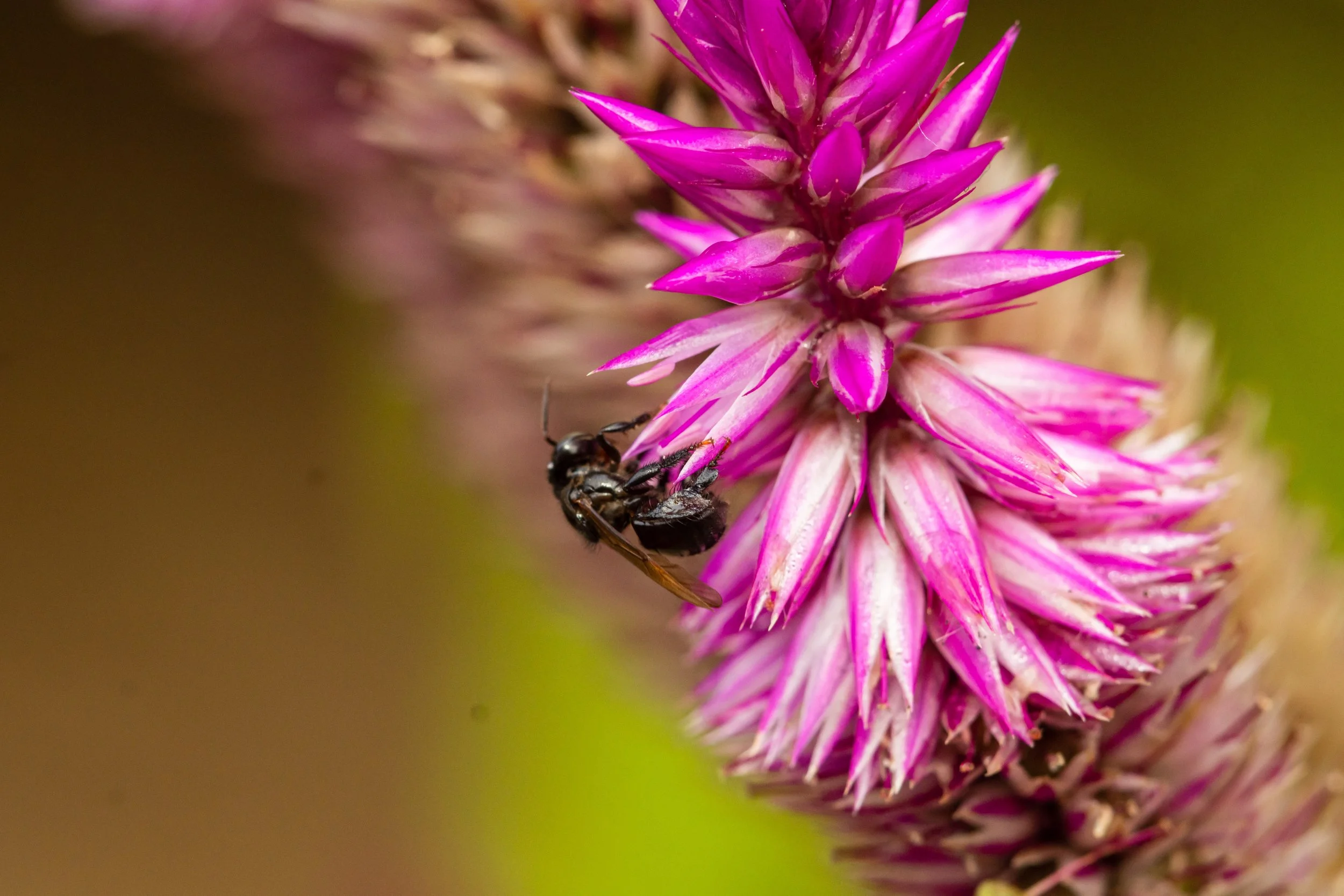
Trigona on Wheat Celosia flower. Credit: Luis García
"Verte Volar" is a new composition honoring the sacred relationship between humanity and stingless bees through an interdisciplinary partnership bridging ecology, law, poetry, and Indigenous ancestral knowledge. This spoken word and musical piece emerges from an unprecedented collaboration between Indigenous wisdom keepers, scientists, legal advocates, artists, and educators, weaving together diverse ways of knowing into a unified homage to Amazonian stingless bees. It was created by Carine Gibert, founder of Grounded In Motion, composed with Jacinta Clusellas, and produced by Benjamin Furman.
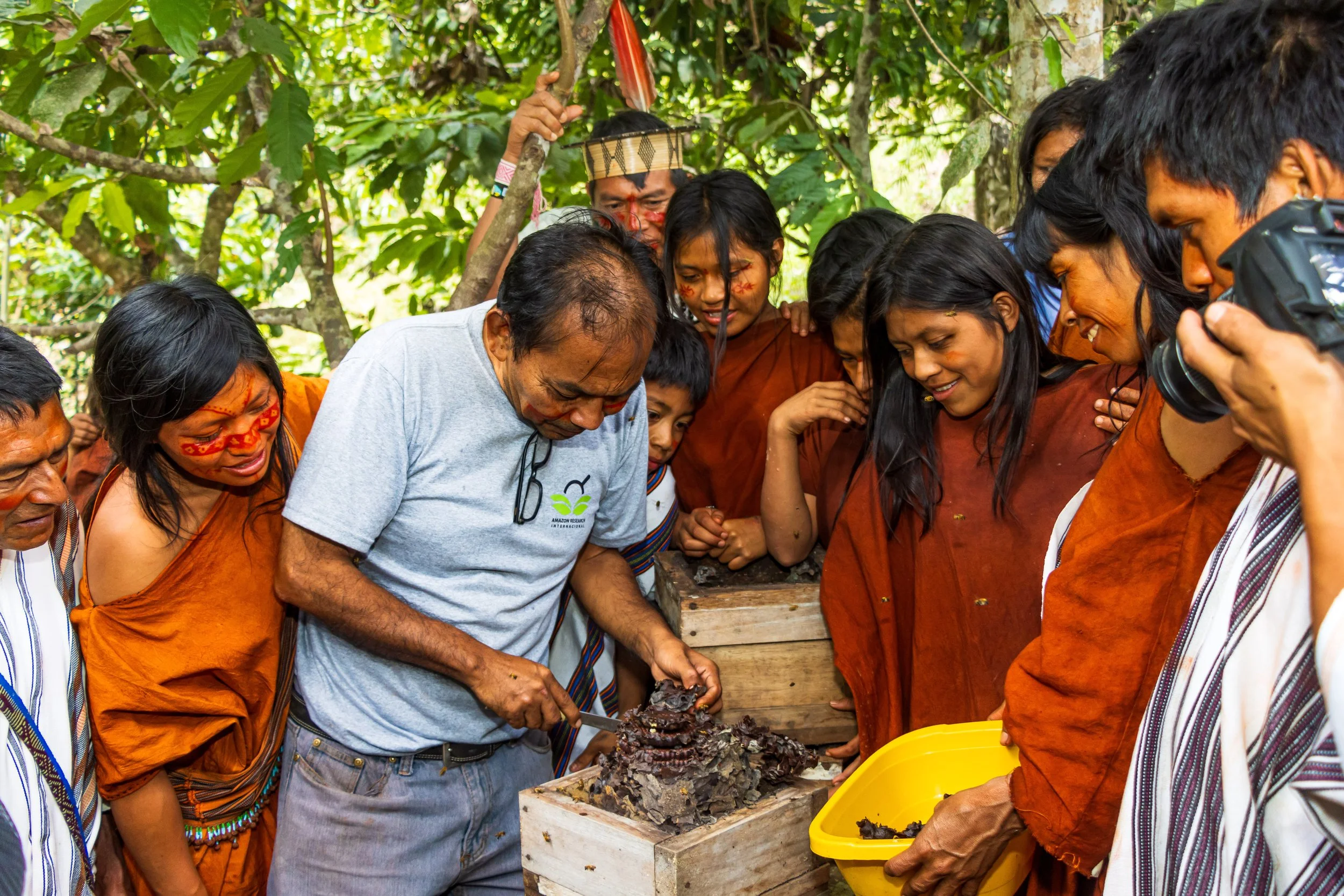
César Delgado, Ph.D., of the Peruvian Amazon Research Institute, conducts a training session on beehive maintenance. Credit: Luis García
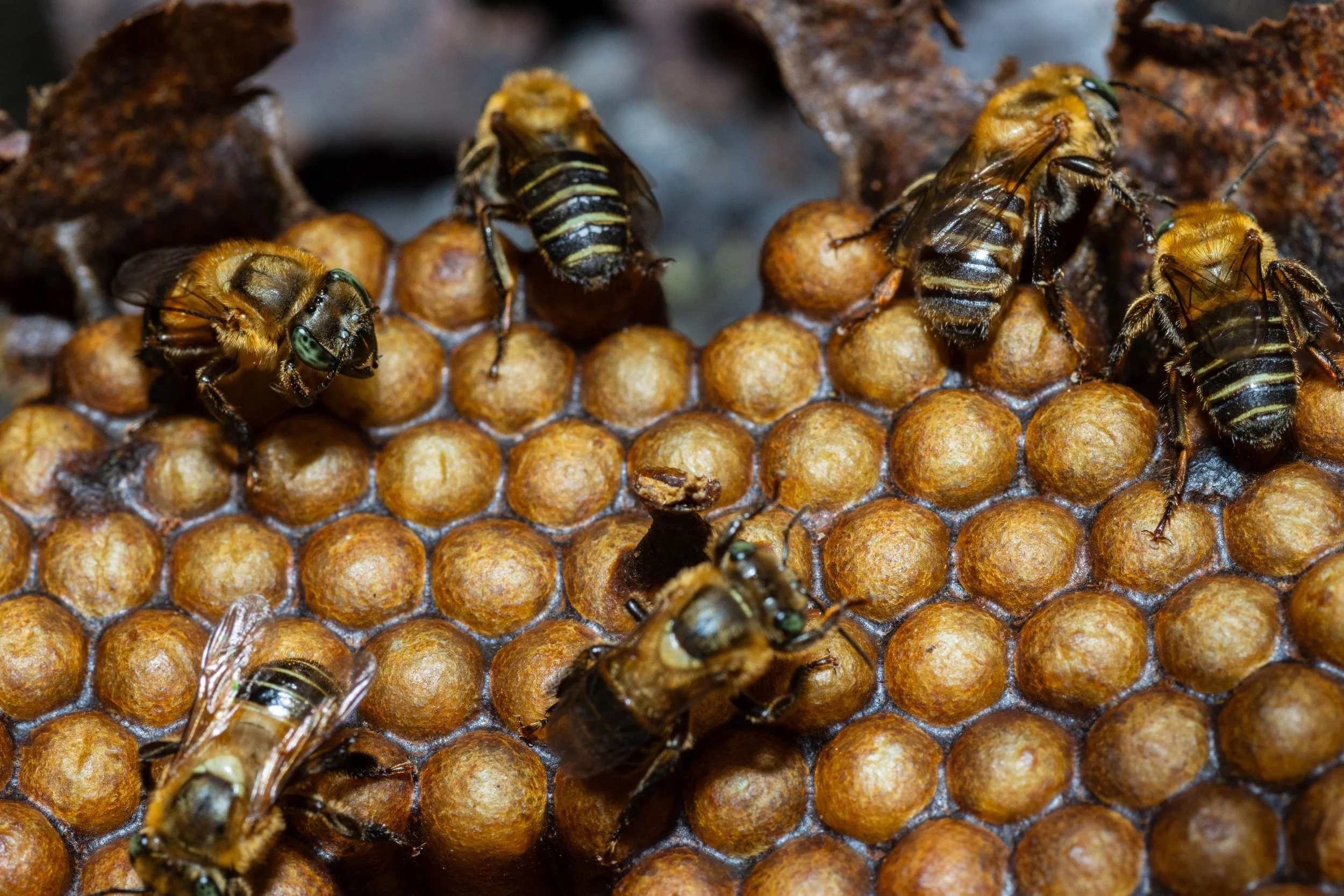
Melipona bees. Credits: Luis García
Safeguarding Amazonian Stingless Bees: A Collaboration Between Indigenous Wisdom, Education, Legal Advocacy, Science—and Now Arts Activism
The project “Safeguarding Amazonian stingless bees” serves to bridge science, the traditional knowledge of Indigenous Peoples, and the transformative framework of the Rights of Nature to support the conservation of Amazonian species of native stingless bees and their ecosystems. It also seeks to strengthen sustainable development for Indigenous communities, in harmony with Nature, restoring a relationship of balance, respect, and mutual care.
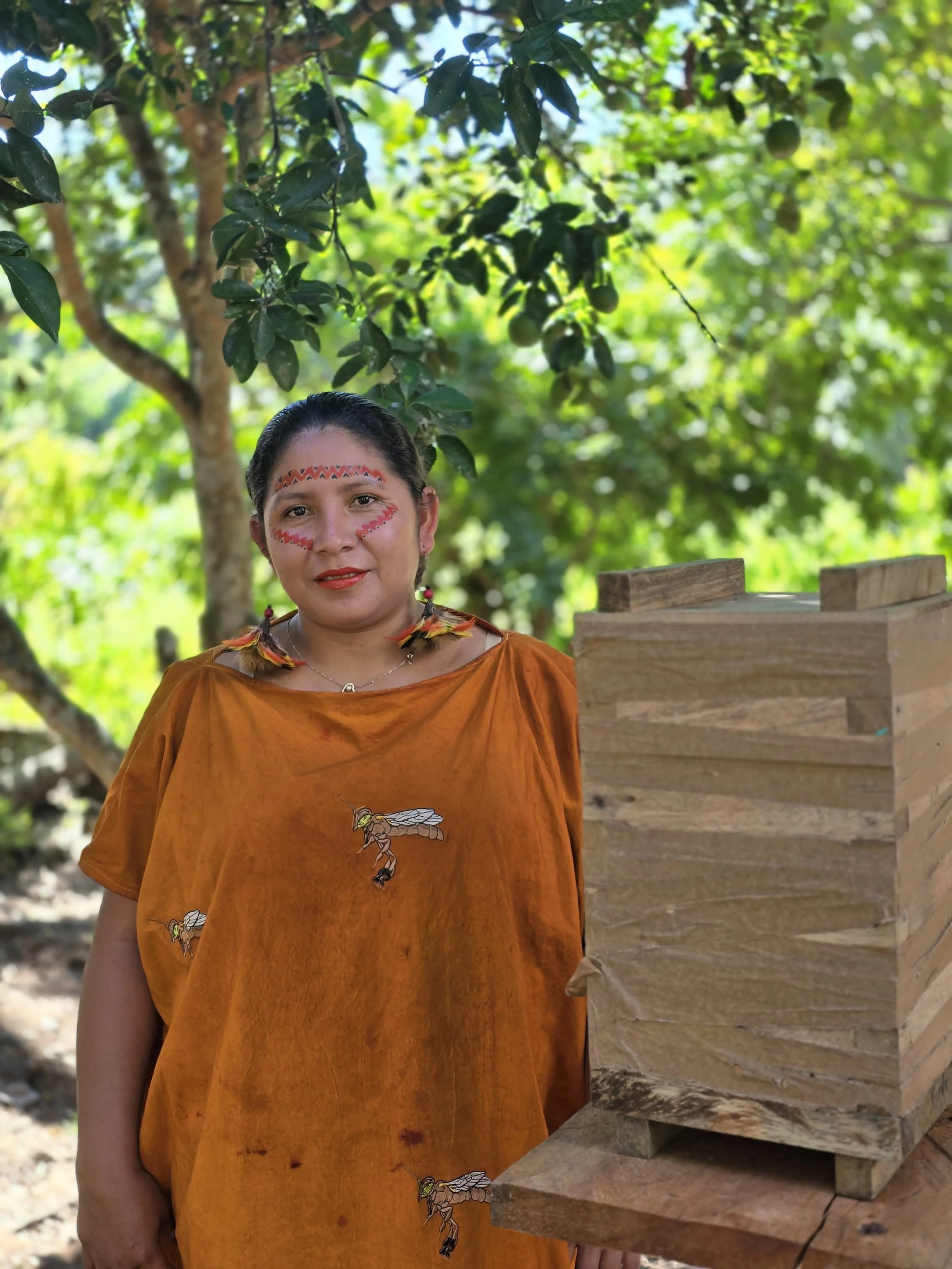
Mikaela Huamán, Indigenous leader of the Asháninka People. Credit: Javier Ruiz
The project’s core objective is to make the invisible visible. In the face of widespread lack of awareness among society and environmental authorities, population mapping shows where these key Amazonian pollinators are, how many exist, and their conservation status. These efforts have been reinforced by concrete normative advances—including Reform No. 32235 (2025) and the municipal ordinances of Satipo (33-2025-CM/MPS) and Nauta (N°17-2025-MPL-N)—which are generating legal, institutional, and cultural transformations. Bees are no longer treated solely as producers of honey but are recognized as beings with intrinsic value, ecological importance, and inherent dignity. This paradigm-shifting project seeks to recover an ancestral, sacred relationship between humanity and stingless bees, grounded in reciprocity, balance, and care.
This ongoing project is built on the foundation of strong partnerships between Earth Law Center, Amazon Research International, Eco Ashaninka, Ashaninka Communal Reserve (SERNANP), Association of Stingless Beekeepers of Loreto, the Kukama communities of Nauta, the provincial municipalities of Satipo and Nauta, and the Peruvian Amazon Research Institute. It represents a historic milestone, with the power to inspire new generations. And a crucial part of this project is to help preserve Amazonian communities’ traditional knowledge about biodiversity management.
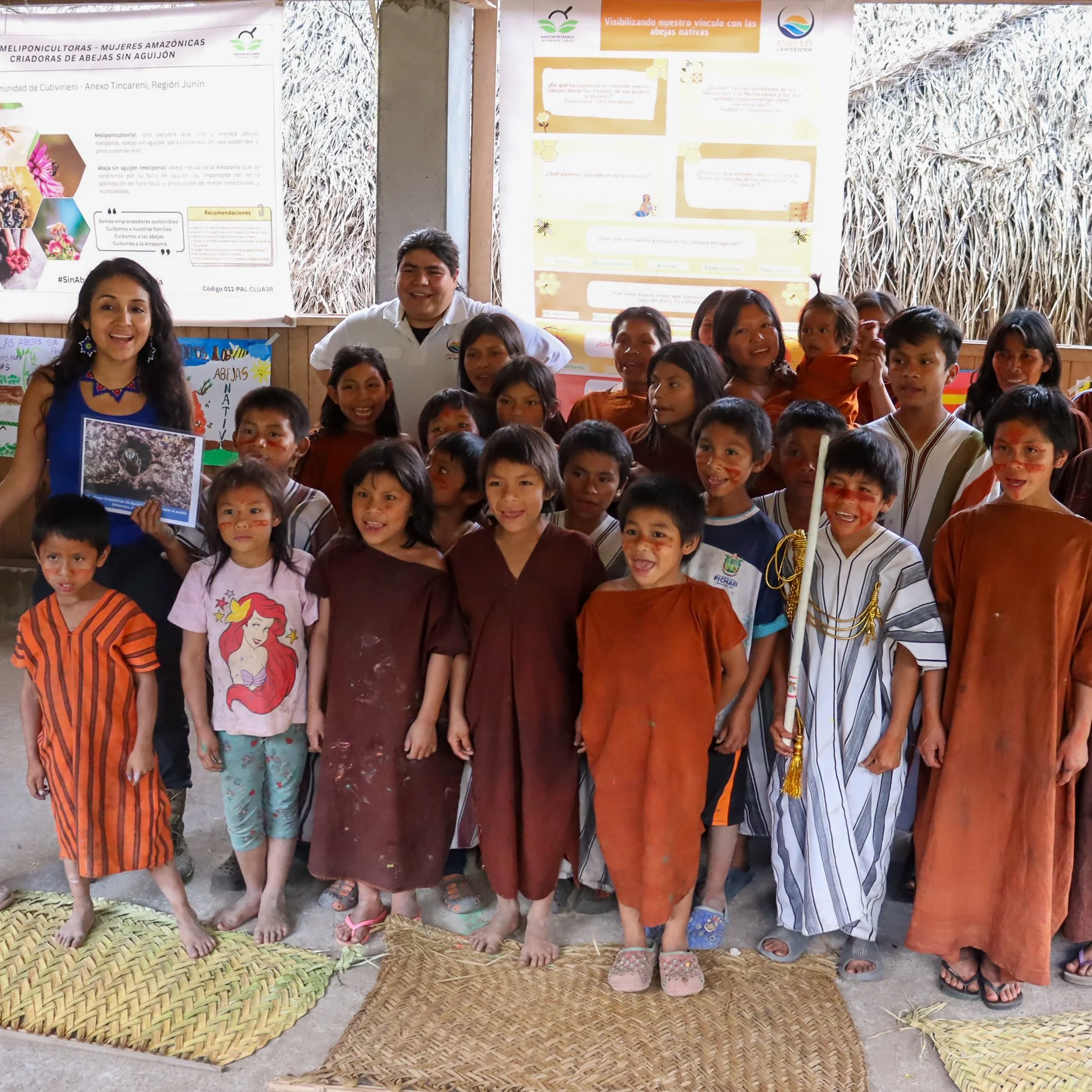
Rosa Vásquez, Ph.D., of the Peruvian Amazon Research Institute, and Bastian Núñez, a lawyer with Earth Law Center, in a workshop with Asháninka children. Credit: Luis García
These legislative transformations emerge from grassroots community work, through which the Declaration of the Rights of Stingless Bees was created and later adopted by local governments. The recognition of minimum rights for native bees includes fundamental protections such as the right to exist and maintain healthy populations, the right to a pollution-free environment, the right to be free from invasive species, and the right to access native flora to sustain their symbiotic relationship with ecosystems. It also includes the right to perform essential ecological functions and the right to restoration, supported by practices such as meliponiculture and reforestation.
We are at a key moment in the legal recognition of Nature, and this crucial legal shift needs cultural support in the form of increased emphasis on feeling into our sensorial connections. Poetry and music can support a shift in the perceived status of these essential pollinators—from being overlooked in environmental policy to being recognized and honored as pillars of biodiversity and indispensable agents in ecosystem health.
“Verte Volar” Brings the Stingless Bees Project into Art-based Education and Storytelling

Carine Gibert, co-creator of “Verte Volar” and founder of Grounded In Motion.

Jacinta Clusellas, co-creator of “Verte Volar.”
In 2026, in partnership with Grounded In Motion, this collaboration will expand to explore new pathways for raising awareness through art-based education and storytelling. Grounded In Motion, led by interdisciplinary educator, activist, and artist Gibert, weaves this collaboration into embodied ecological education and curated experiences that awaken reverence for the living world.
Grounded In Motion brings these sessions into academic institutions and cultural spaces, creating installations that offer venues to process ecological degradation while co-creating pathways toward ecological regeneration and stewardship.
“Verte Volar offers an immersion into the reverence we hold for the more than human, honoring this sacred relationship, one grounded in reciprocity, while reminding us to make the invisible visible. To hold space where science, law, Indigenous cosmology, our educational philosophy, and sensory experience can meet,” said Gibert. “The piece is an acknowledgement of the protective governance systems of the Asháninka Communities of the Satipo Province, Perú and their ancestral wisdom that have sustained Nature for generations.”
In collaboration with the Latin American Legal team of the Earth Law Center, key partner organizations, and an extraordinary alliance of ecological defenders, Gibert and Clusellas have created “Verte Volar” as an homage to the stingless bees.
Help us expand our global impact. Sign our petition and support the protection of stingless bees and the communities that care for them.
Be our partner. Everything we do is made possible through collaboration. Your support can make a real difference. Donate to our Latin America Legal Program here.
Feel inspired and want to learn more? If you are interested in immersive experiences connected to our work, contact gibertcarine@gmail.com to explore opportunities to collaborate.