
Ocean Rights and International Law: Five Things to Watch in 2026

Flying over the Philippine Sea, an astronaut looked toward the horizon from the International Space Station and shot this photograph of three-dimensional clouds, the thin blue envelope of the atmosphere, and the blackness of space. NASA, Public domain, via Wikimedia Commons.
The Ocean is the largest ecosystem on Earth. Its well-being is inextricably linked with all life on the planet, as it generates oxygen, regulates climate, and provides food to millions of people and countless marine species. Notwithstanding its crucial role in Earth’s life system, it remains underrepresented in the environmental movement, which, compared to terrestrial issues, spends a relatively small amount of time and resources on the Ocean.
The Rights of Nature (RoN) movement, through the legal and ethical framework of Ocean Rights, is exploring the role of normative systems in fostering a new relationship between people and the Ocean. Drawing inspiration from Indigenous governance frameworks and the environmental advocacy of coastal communities, the cause of Ocean Rights was initiated by Earth Law Center (ELC) in 2017 to support awareness, research, advocacy, and legal developments, and ultimately to call for recognition of the Ocean as a living entity with intrinsic rights. A better relationship with the Ocean is envisioned in the document “We Are The Ocean and The Ocean is Us,” produced by a partnership between The Ocean Race, Ocean Vision Legal, ELC, and others, which lays out the underpinning principles of the movement.
ELC and partners are seeking to bring the Ocean Rights movement to bear on international discussions and negotiations, while holding as a goal the adoption of a Universal Declaration of Ocean Rights by the United Nations by 2030. Recent developments in international law reflect encouraging trends: raising standards, filling regulatory and interpretative gaps in environmental protection, and growing advocacy are opening the door for the introduction of Earth law and ecocentric principles in international environmental law. Meanwhile, the RoN movement is gaining experience across many levels of governance. An increasing number of place-based and ecosystem-based initiatives are being implemented, testing the potential of ecocentric legal protection in practice (see ELC’s Ocean Program Awareness and Impact Report 2025).
With the RoN movement gaining momentum in Ocean governance, here are five of the most exciting Ocean-related developments to keep an eye on in 2026:
The entrance into force of the High Seas Treaty (BBNJ)
International Seabed Authority negotiations about deep-sea governance
Coral reefs rights developments
Lawsuits from Ocean guardians using Advisory Opinions in different courts
The Republic of Panama continues leading the way in Ocean protection
1. The Entrance into Force of the High Seas Treaty (BBNJ)
After almost two decades of negotiation, on the 7th of January 2026, a very ambitious and wide-reaching international agreement officially came into force. Formally known as the Agreement under the United Nations Convention on the Law of the Sea on the Conservation and Sustainable Use of Marine Biological Diversity of Areas beyond National Jurisdiction, or simply the High Seas Treaty (BBNJ Agreement), it is considered a major achievement for the international community. Its purpose is to strengthen environmental obligations and to protect biodiversity in the High Seas, namely areas beyond national jurisdiction (ABNJ), essentially meaning the Ocean outside of countries’ Exclusive Economic Zones (200 nautical miles off the coast).
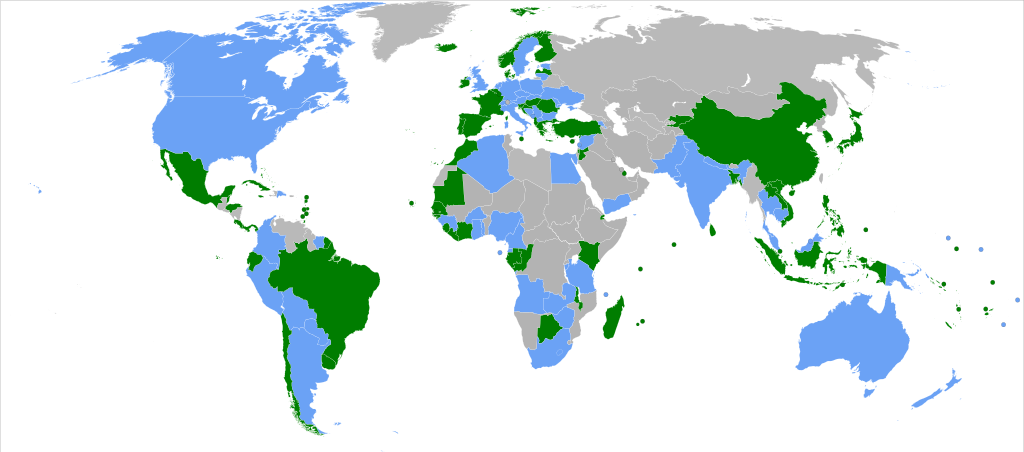
Signatories and Parties of the High Seas Treaty as of Feb. 9, 2026. Light blue: signatories; green: ratifiers; grey: non-signatories. Muso, CC BY 4.0 <https://creativecommons.org/licenses/by/4.0>, via Wikimedia Commons.
The High Seas constitute more than two-thirds of the world’s Ocean and host a great part of marine biodiversity, which is increasingly exposed to major human-driven threats. For decades, governance in these waters has been fragmented, with different institutions regulating isolated sectors without coordination. This generated endless gaps in regulation, monitoring, and enforcement that now stand to be better addressed by the Treaty.
Since its entry into force, states are legally bound to implement the Treaty’s provisions. The upcoming Preparation Commission and the first Conference of the Parties will take place in the course of 2026 to decide the institutional set up and rules of procedure of the newly established Convention-system. In the meantime, parties can begin by checking the consistency of existing national laws with the BBNJ, enacting relevant measures and fostering capacity-building.
The BBNJ Agreement imposes obligations under four main areas: Marine Genetic Resources (MGRs), including the fair and equitable sharing of benefits; Area-based Management Tools (ABMTs); Environmental Impact Assessments (EIAs); and capacity building. States must put in place mechanisms to collect and share information about biodiversity in the High Seas, as well as instruments to manage specific geographical areas (such as Marine Protected Areas, MPAs) and processes to conduct EIAs and the transfer of marine technology. Beyond these baselines, the Treaty opens the door to new possibilities such as multinational collaborations on MPAs in the high seas, well-resourced and organized enforcement and monitoring networks, and so forth.
Most importantly, the High Seas Treaty represents the possibility of a shift from a purely human-centered perspective toward an integrated approach to Ocean governance. It adopts an ecosystem-based view and recognizes the interconnectedness of all Earth components as well as the “inherent value of biological diversity.” Earth law could provide a strong legal and ethical foundation to strengthen this new holistic approach, marking a critical step towards recognizing the Ocean as a right-bearing ecosystem. This year, 2026, affords the chance to build on the momentum of the BBNJ, including through the first Ocean Conference of the Parties, international collaboration on BBNJ implementation, and more.
2. The International Seabed Authority Negotiations on Deep-Sea Governance
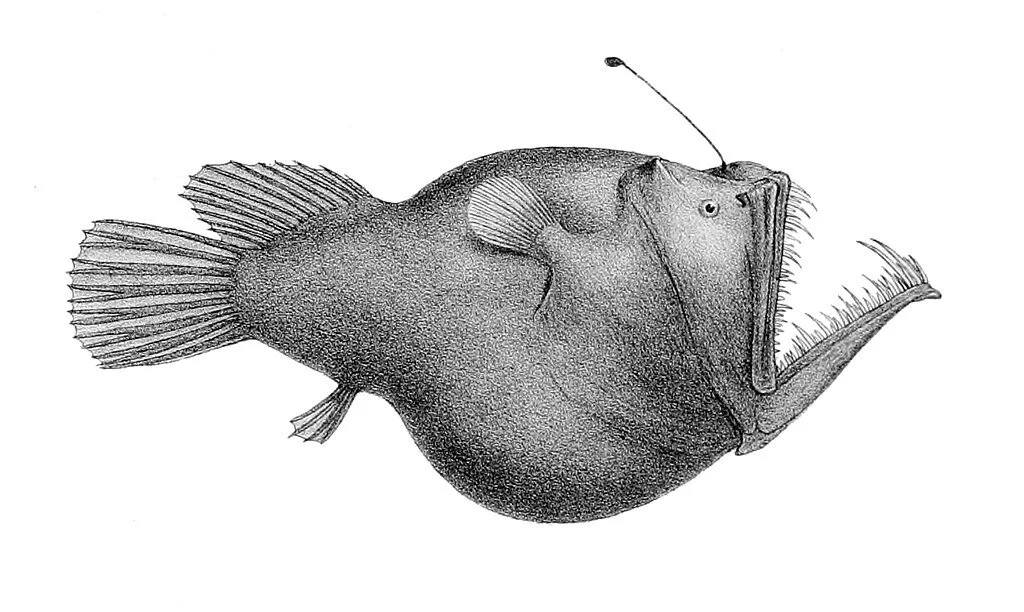
Melanocetus murrayi, Murrays Abyssal Anglerfish. R. Mintern, Public domain, via Wikimedia Commons.
The International Seabed Authority (ISA) is conducting negotiations to develop a regulatory framework for the exploitation of resources in international deep seabed areas. Established in 1982 under the United Nations Convention of the Law of the Sea (UNCLOS), the international organization is tasked with the responsibility to administer activities in the seabed in areas beyond national jurisdiction (ABNJ). In doing so, the body must balance commercial interests with the effective protection of the marine environment.
Negotiations for the Mining Code to regulate deep-sea mining have been ongoing since 2017. Deep-sea mining involves extracting mineral deposits at depths of 2000 to 6000 meters. The process has been recognized to have devastating environmental costs, among which are ecosystems suffering disruption through pollution, underwater noise, and sediment plumes. While the private sector is in favor of an early start to mining, several state and environmental organizations called for a moratorium or precautionary pause in negotiations, advocating against deep-sea mining permits. During the 30th session of the Assembly (July 2025), a second reading of the Revised Consolidated Text of the Draft Exploitation Regulations was completed, but no final agreement was reached. The next session of the Assembly is scheduled for July 2026, and the outcomes will be fundamental to determine the future of the deep seas.
The ISA is a promising negotiating forum to advance Ocean Rights proposals at the international level, and shift how we relate to and view the Ocean and its inhabitants, especially those we cannot see. With partners, ELC is advocating to introduce a new seat at the ISA Council, currently composed of 36 seats rotating between member states. The 37th seat would be for a Guardian of the Deep – legal guardians or proxies with expertise in deep-sea ecology, ecocentric law, and environmentalism to formally advocate for the interests of the deep sea.
An alternative proposal provides for the inclusion of an additional seat at the Assembly, which includes all ISA members. This would allow legal guardians to advocate for the interests of currently voiceless ecosystems in the proceedings where policies and work plans are decided.
With the support of international advocacy and public awareness building, as well as national legislation and corporate governance reforms, giving a voice to the deep sea would represent an incredible step forward in the protection of the planet’s largest biome. To make this happen, ELC is also working to advance the Declaration of Rights for Deep-sea Species and Ecosystems, calling for international actors to recognize these intrinsic rights though a nonbinding legal instrument.
You can support the deep-sea rights declaration right now by signing this petition and sharing it with your networks.
3. Applications of Coral Reefs Rights

Christian Gloor from Wakatobi Dive Resort, Indonesia, CC BY 2.0 <https://creativecommons.org/licenses/by/2.0>, via Wikimedia Commons
Coral reef ecosystems are extremely important to the health of the Ocean, yet without a change in course for human greenhouse gas emissions, pollution, and industrial Ocean activity, nearly all reef systems are predicted to die by 2050. Recognizing their right to exist, thrive, regenerate, and evolve can better protect their ecological integrity, enhance restoration, and improve our relationship with them.
ELC published a three-part toolkit, A Voice for Coral Reef Ecosystems Through the Rights of Nature and Ecocentric Law, designed to equip policymakers and communities with legal strategies to recognize the intrinsic value and voice of coral reefs. The toolkit, launched at the UN Ocean Conference in Nice (June 2025), includes model legislation to advance Earth law principles in different jurisdictions, applying a transformative, ecocentric approach. The first part delves into the idea that coral reefs are not merely resources but living beings deserving inherent rights. The second part reflects on the broader application of ecocentric law to marine environments. The third part provides adaptable legislation to operationalize coral reefs rights in practices. The key strategy requires granting legal personality and representing coral reefs through guardianship councils.
Model language for the establishment of a Coral Reef Guardianship Council:
The Council shall consist of [e.g., 7-11] members appointed by [Appointing Authority, e.g., Head of State on recommendation of a multi-stakeholder panel]. Nominees shall be selected based on their demonstrated expertise, commitment to coral reef conservation, and ability to act in the best interests of Designated Coral Reef Ecosystems. The Council shall reflect a balance of scientific expertise, community representation, and legal acumen, and, where applicable to the national context and the specific coral reef ecosystems, Traditional Ecological Knowledge.
ELC is partnering with Healthy Reefs for Healthy People to draft a report that explores possible bioregional RoN applications in the Mesoamerican Reef across Belize, Mexico, Guatemala, and Honduras. A recent webinar drew 80+ participants, with several expressing interest in piloting ecocentric approaches within their local context while in parallel exploring a coordinated bioregional approach.
ELC is also working with partner organizations Ecoforensic and OurConservaSea to embed community-led scientific research and Earth law into reef protection in West Papua. The project includes providing Earth law training to strengthen and codify Sasi Laut, a traditional governance system that regulates fishing closures, while also piloting model legislation for a new Marine Protected Area. This coalition project seeks to integrate ancestral stewardship, scientific monitoring and reporting, and legal recognition in a way that could provide a replicable model for reef protection in the region and beyond.
4. Three Landmark Advisory Opinions
During the past two years, three international courts delivered landmark Advisory Opinions on environmental and Ocean justice. The increasing use of this legal instrument to seek clarifications about international environmental commitments shows an unprecedented interest in environmental and Ocean protection.
Advisory Opinions are requests made to international courts about the application of international law. Despite their non-binding nature, they carry legal and moral authority and can influence the development of international rules and the conduct of states, especially over time.
Requested by the Commission of Small Island States (COSIS), the International Tribunal for the Law of the Sea (ITLOS) delivered an important opinion in May 2024 (Advisory Opinion). The question regarded the specific obligations of State parties in relation to climate change. The decision categorized greenhouse gas (GHGs) as a form of marine pollution under Art.1 (1) (4) UNCLOS, reaffirming the obligations to take “all necessary measures” to prevent, reduce, and control pollution of the marine environment, as required by Art. 194(1) UNCLOS. This decision connected climate change to ocean conservation, providing a legal basis to coordinate the efforts in the two areas.
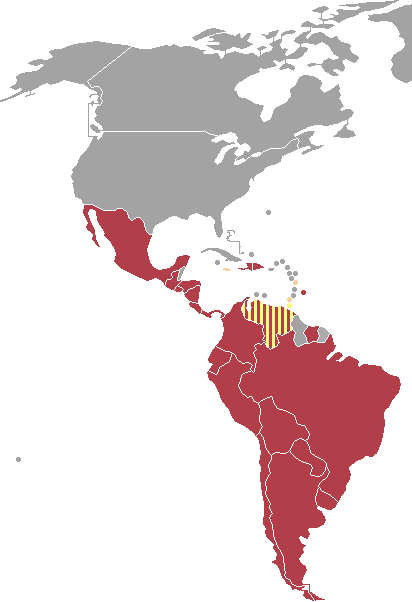
Members of the IACHR. Burgundy: accept blanket jurisdiction of the court. Coral - signatories not accepting full jurisdiction. Yellow - former members. Kwamikagami, CC BY-SA 4.0 <https://creativecommons.org/licenses/by-sa/4.0>, via Wikimedia Commons.
In July 2025, Chile and Colombia requested the Inter-American Court of Human Rights (IACHR) to clarify when climate inaction represents a human rights violation (Advisory Opinion). The opinion recognized the existence of a right to a healthy climate as deriving from the right to a healthy environment, restating the obligations of States to prevent, mitigate, and remedy the human rights harms caused by the climate emergency. This includes adopting science-based mitigation and adaptation measures. Importantly, it noted that the recognition of Nature and its components as subjects of rights provides a framework to advance environmental objectives.
Lastly, a coalition of activists and States led by Vanuatu requested the International Court of Justice (ICJ) to clarify the duties of states to protect current and future generations from climate harm (Advisory Opinion). The ICJ affirmed that all States have binding obligations to limit emissions under existing international and customary international law, as well as liability for climate harm in case of failure to take appropriate action.
By clarifying norms, Advisory Opinions provide legal certainty and translate abstract principles into concrete legal obligations. In the last few years, more and more courts have been called to decide environmental claims at the national and international levels. At the international level, these opinions have been seen to encourage young guardians to bring cases to court, seeking the enforcement of commitments and the gradual advancement of international environmental law as a whole.
5. The Republic of Panama Continues Leading the Way in Ocean Protection

Leatherback Turtle. Ernst Haeckel, Public domain, via Wikimedia Commons.
In March 2023, the Republic of Panama became the first country in the world to pass a species-specific national Rights of Nature law, Law 371 for the Protection and Conservation of Sea Turtles and their Habitats. This law supplemented Panama’s national Law 287 of 2022, which recognized Nature as a subject of rights, including the right to exist, regenerate, and be restored. Introduced by Congressman Gabriel Silva, and drafted with the help of the The Leatherback Project and ELC, Law 287 was named winner of the 2025 World Future Policy Award (WFPA) for Living in Harmony with Nature and Future Generations. It was recognized to promote a social and cultural change in human relationship with Nature, through the recognition of the interconnectedness of human beings and natural entities.
To complement legislative action Panama implemented the Saboga Wildlife Refuge, the first protected area in the world created to support RoN initiatives in collaboration with the local community, governments, and organizations. This initiative is an instance of the importance of parallel action to support and implement ecocentric legislation.
From Panama, inspiring advocacy is being carried out at international conferences by Congressman Juan Diego Vásquez Gutierrez, a former civil society activist and the youngest candidate nationwide.
“This law aims, first and foremost, to acknowledge Nature as a subject of law, therefore redefining its legal scope of protection and guaranteeing an inherent list of rights to be safeguarded,” said Congressman Vásquez. “It also creates a normative framework that enhances and complements the legal and judicial means, resources and arguments available for environmental lawyers and activists.”
Panama is leading the way in Ocean protection and Ocean Rights, and its experience provides important historical data useful to evaluate the impact of RoN legislation and foster its application in other jurisdictions.
At the closing statements of the 2025 UN Ocean Conference in Nice, Congressman Vásquez called for more ambitious action by governments and international organizations in all fields related to Ocean protection – from the need to conclude the Global Plastic Treaty negotiations to efficiently regulate plastics, to the necessity to set global standards to stop underwater noise, and the imperative for decisive action toward a precautionary pause of deep-sea mining. Furthermore, he asked for more access to civil society and young people to intervene at international conferences, recalling that what is at risk is our own future.
The year 2026 will illuminate further how Panama’s progressive RoN laws are being implemented in the country and, we hope, emulated in other countries.
Conclusion
From the entry into force of the High Seas Treaty to Panama’s national legislation implementing the Rights of Nature, we are witnessing the international community begin to acknowledge the intrinsic value of the Ocean and the interconnectedness of all Earth’s ecosystems. These developments provide an opportunity to continue advancing the Rights of Nature at the national and international level. The journey toward the Universal Declaration of Ocean Rights by 2030 is underway, and these five things to watch in 2026 are among the developments offering hope for a brighter future for the Ocean and ourselves.