
What If the High Seas Were a Country?
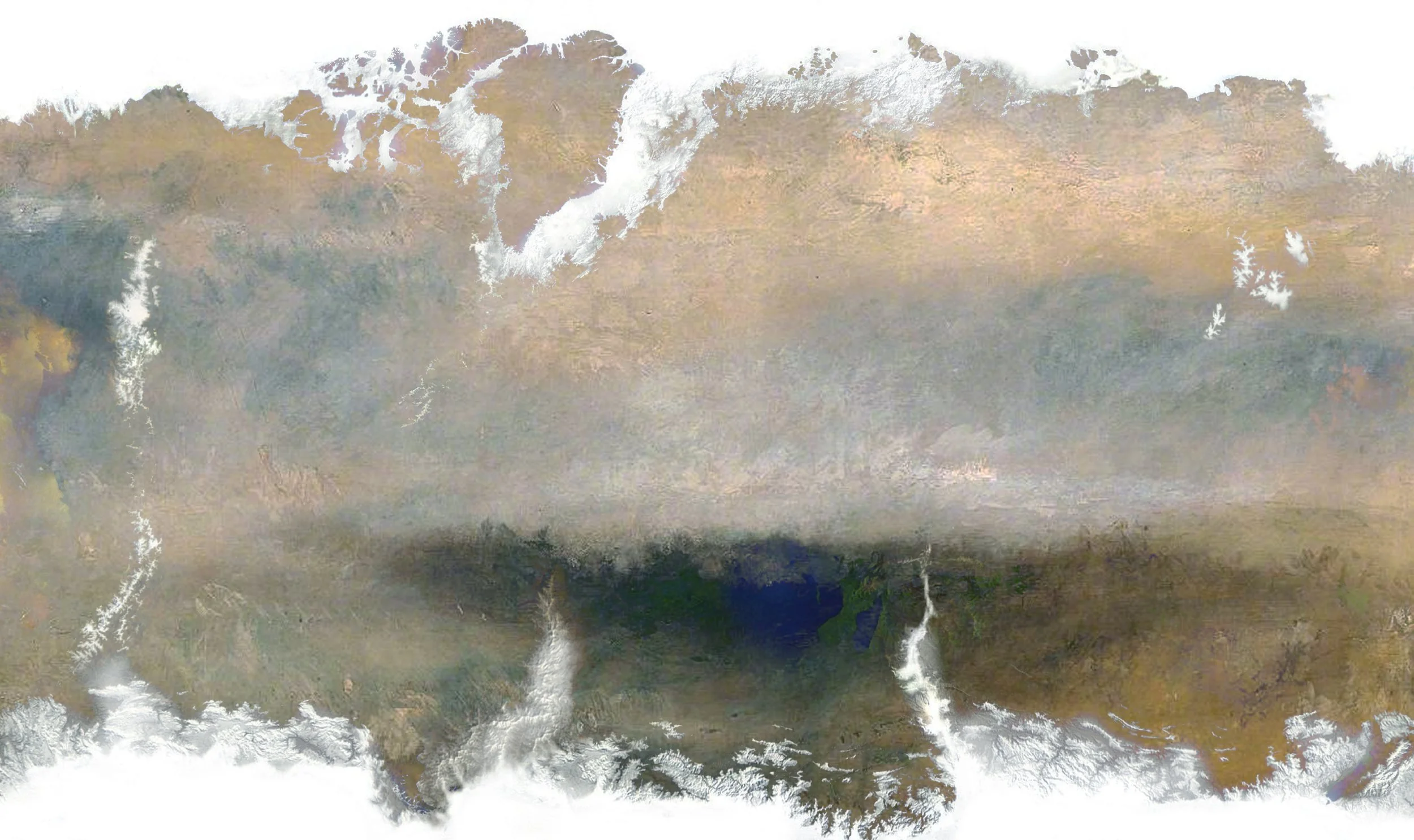
‘What if the High Seas were a country?’ by Francesca Norrington (2023)
As of January 17, 2026, the Agreement on Marine Biological Diversity of Areas beyond National Jurisdiction (BBNJ), or High Seas Treaty, is in force as a legally binding international agreement. As it begins to go into effect, this treaty lays the foundation for multilateralism in Ocean stewardship—an area that, so far, has been ruthlessly governed by industrial interests. The outcome of the BBNJ remains to be seen: if the treaty gets co-opted by industry, that will be a tragedy. Yet its passage offers a new opening to imagine how we might improve our relationship with the Ocean by enacting a paradigm shift toward ecocentrism.
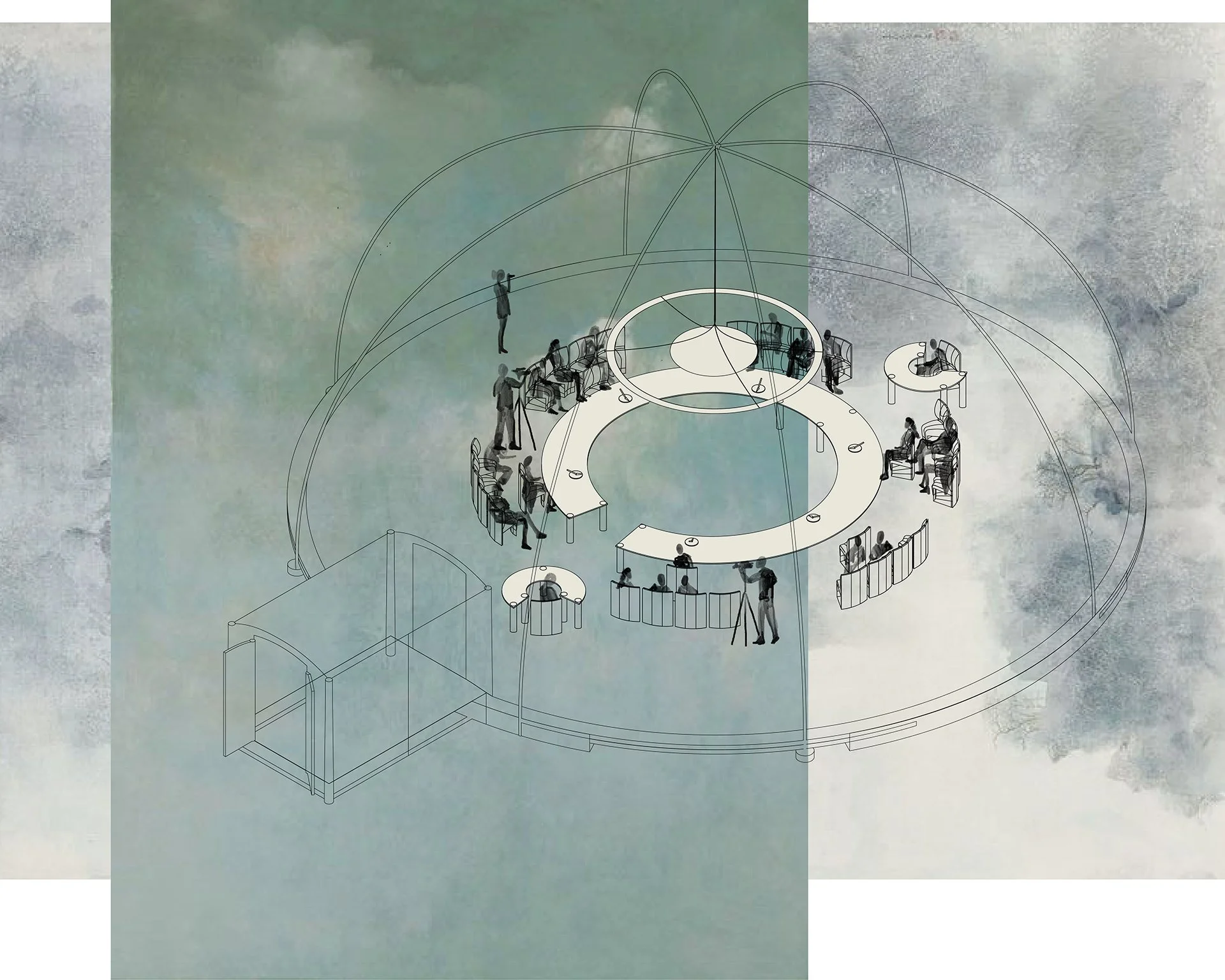
‘Ocean Nation Parliament’ Concept Illustration by Francesca Norrington (2023)
The Ocean as a nation offers a provocative, albeit purely fictional, thought experiment designed to challenge stagnant conservation policies and stimulate alternative conceptualizations of harmony with the Ocean. Though anthropomorphizing the Ocean may seem contradictory to its fluid, non-human “nature,” this framing materializes abstract ideas into something legible within rigid human systems. The Ocean Nation is not intended as a literal proposal but as a tool to disrupt entrenched narratives of the Ocean as merely a “resource” or “untapped frontier.”
If envisioned as a country, the Ocean Nation would rank as the world’s fourth-largest economy, valued at approximately $24 trillion, and would exercise sovereignty over 70 percent of global territory. The High Seas alone, covering 64 per cent of the Ocean’s surface—and 43 per cent of the Earth’s surface—remain beyond any single nation’s jurisdiction, spanning an estimated 57.1 million square miles (148 million square kilometers). This imagined Ocean Nation controls the arteries of globalization: 90 percent of global trade traverses its waters, and beneath its surface lie over 550,000 miles (885,000 kilometers) of fibre-optic cables enabling internet connectivity, data storage, and international communication.
The Ocean is the largest source of oxygen in the atmosphere through photosynthesis by marine organisms, particularly phytoplankton. And yet, today, only 8.3 percent of the world’s seas are designated as marine protected areas (MPAs), 2.8 percent of which are protected “effectively” under the broad definition of MPAs. Within that 8 percent, only 1 percent is in the High Seas (marine territory beyond Exclusive Economic Zones).
The High Seas nourish an extraordinary diversity of life, from the largest animal ever to have lived—the blue whale—to vast migratory populations. In the deep sea, hydrothermal vents host microorganisms that form the base of entire food chains, independent of sunlight. Nearer to shore, coral reefs teem with fish and invertebrates, forming ecosystems as complex and vital as rainforests. Seagrass meadows and kelp forests stabilize coastlines and provide nurseries for countless species.
The open Ocean, once thought to be a watery desert, is, in fact, oozing with life.
This biological abundance supports not only marine food webs but also the global systems that regulate climate and sustain life on land. What then explains the profound discrepancy between the Ocean’s physical, chemical, and biological centrality to life and the prevailing human treatment of the Ocean as something removed, even inert?
I began the exploration of the Ocean Nation during a Capstone Course in Design in my Bachelor’s program. The initial project, then limited to a research design inquiry, was to use stories and illustration to visualize the origins of the Ocean as a mythological subject present across the globe. I found that this living subject had been gradually molded into an object through means of human intervention and industrialization. Across this historical process, the seas came to be thought of as a soup of material resources rather than any fearful god or goddess. In erasing the Ocean as a subject, we also erase valuable lessons in respecting the more-than-human.
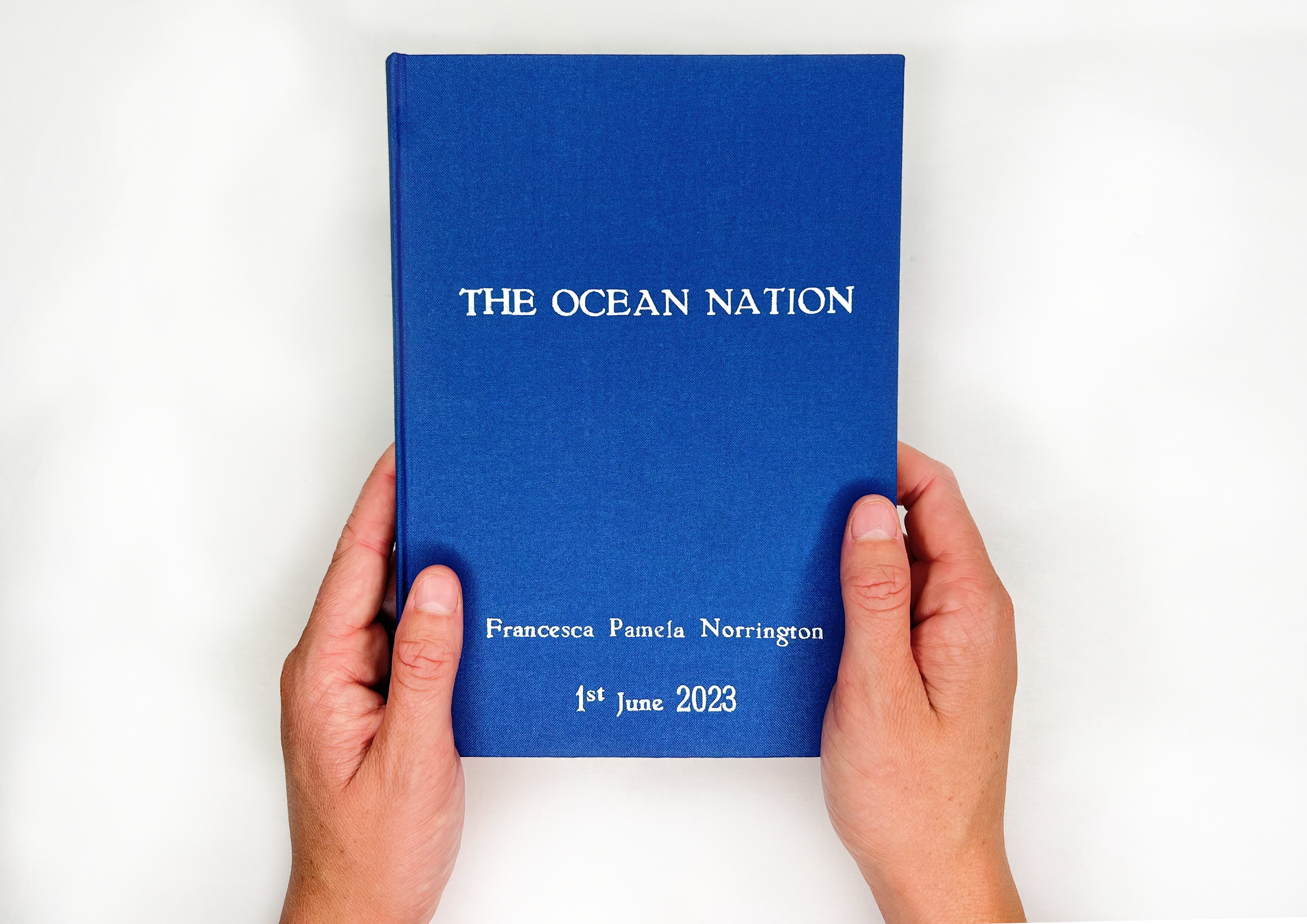
Printed Handbound Book
In the years since the design project began, it has evolved into a one-of-a-kind book that tells various stories from around the world and traces the transitions between Then, Now, Soon, and Next. The “Next” in question draws from the Rights of Nature (RoN) movement and suggests that, through legal language, the Ocean’s subjectivity might be restored. The various visualizations throughout this article are samples from that as-yet-unfinished book, which will more thoroughly explore the idea of an Ocean Nation—a government of representatives selected through expertise rather than nationality, a transboundary bioregion that can activate hard-fought Earth (and marine) law.
The Crisis Facing Our Ocean
Ocean acidification, overfishing, bottom trawling, and deep-sea mining are not the crises; rather, they are outcomes. The crisis facing our global seas is not even that they are dying; it is that they have not died yet, so they are still an economic opportunity for people. The economic value of the Ocean has increased as the rest of the world’s “resources” diminish.
Over one-third of the world’s fish stocks are overexploited. If current trends continue, plastic pollution will outweigh fish by mass in the Ocean by 2050. Meanwhile, vast swaths of the seafloor are scraped bare by bottom trawling every year, equivalent to clearing forests with bulldozers, destroying habitats that may take centuries to recover, if they ever do.
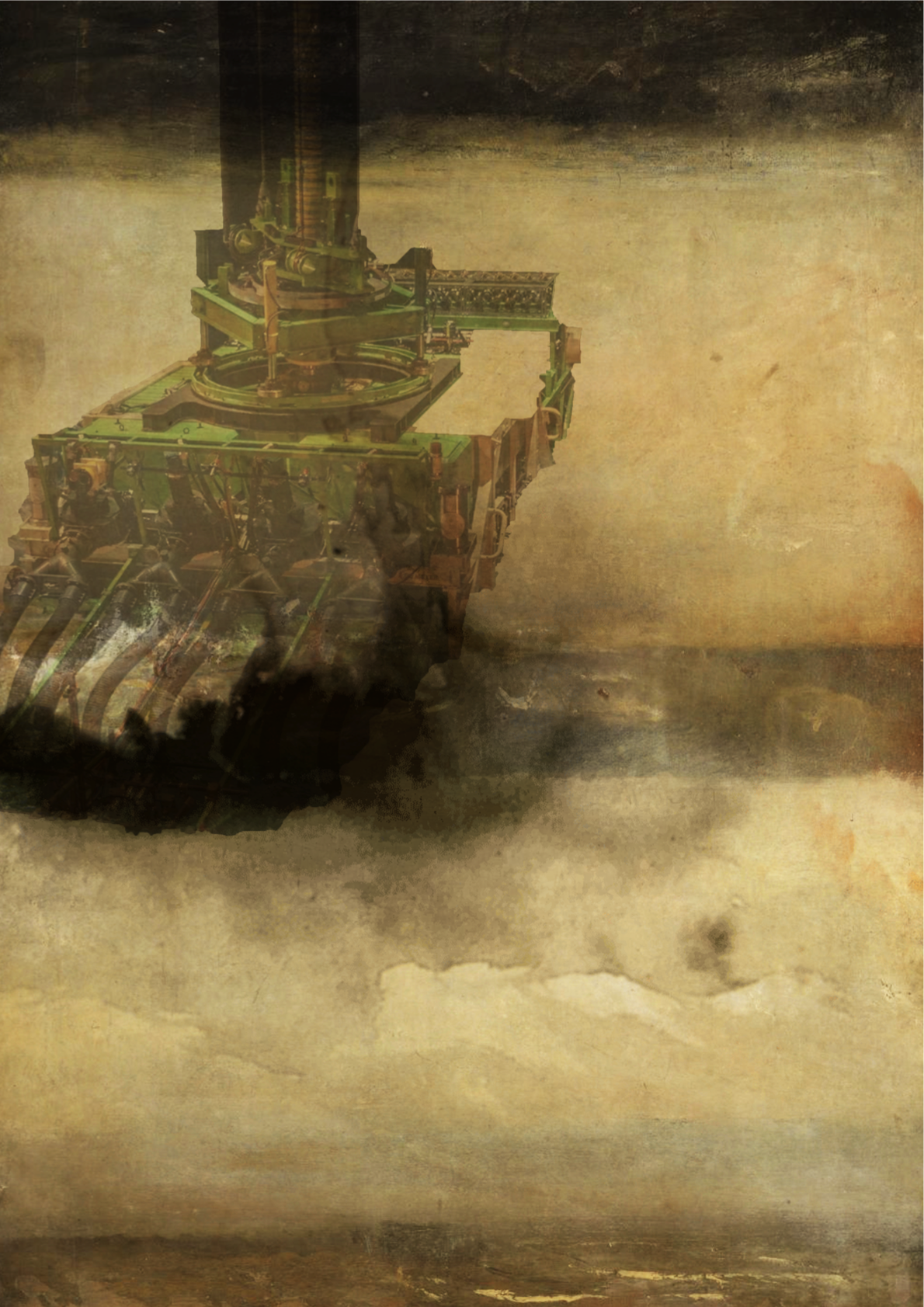
‘Deep Sea Mining Mechanism’ | ‘Three Seascapes’, Joseph Mallord William Turner, c.1827, edited by Francesca Norrington (2025)
And now, commercial attention is turning to the deep seabed. Alongside an astonishing array of marine life at depths of thousands of meters below the surface are significant reserves of copper, cobalt, nickel, zinc, silver, gold, and rare earth elements. Exploitation of international waters, where the bulk of the Ocean's critical minerals are found, awaits regulations from the UN’s International Seabed Authority (ISA). The ISA council and assembly are holding sessions throughout 2026 as negotiations continue. As terrestrial mineral reserves decline, deep-sea mining is increasingly framed as the solution to powering the “green transition.” In the U.S., signals from the Trump-aligned political wing suggest potential support for bypassing international governance altogether and issuing unilateral permits. The Bureau of Ocean Energy Management has already begun the process to lease parts of the seafloor in American Samoa. With the closure of the ISA’s 30th convention, neither those opposed to mining nor those in favor saw any written regulation or vote.
The crisis, then, is not purely one of environmental degradation; it is a crisis of imagination and governance. It would be naive to ignore that amazing advances in science, as well as much of the material support for the everyday lives of Western and other industrialized peoples, has been made possible through minerals such as those listed above: the laptop on which I’m writing, and likely the device on which you’re reading, depend on them. How can a formulation such as more-than-human rights value both the tens of thousands of species that have been found in the deep Ocean and a laptop? (Or the electric car we excitedly describe as “green”?)
By continuing to view the Ocean as a reservoir of commodities, the deep sea may become the next—and possibly the ultimate—sacrifice zone. No matter how important a product may be to the everyday life of a consumer, the RoN movement posits that those marine species—and the many other human and more-than-human lives which are linked to their survival—inherently deserve the right to live and thrive. We do not accept the premise that human economic well-being and growth is categorically more important than the continued well-being, or simply existence, of wild ecosystems and species. We call instead for meaningful representation of Nature in our discussions of what harmony with Nature could, and should, entail.
Vivifying the Language of Conservation
Conservation biology is a vital and growing discipline that contributes to solving environmental problems and real-world changes, such as revising economic theory. This vitality relies, in part, on the recognition of intrinsic natural value. Recognizing this value entails an obligation to do what is right, namely, to protect the good. Addressing the current crises facing the Ocean requires new ways of thinking, conceptualizing it as a unit that we live as part of and not despite.
Western conservation efforts, limited by a lack of language, have yet to build a sufficient discourse on harmony with Nature. Too often, discussions about environmental conservation adopt language consonant with—if not borrowed from—the discourse of natural resources and economics.
‘Do Glaciers Listen?’ (2005) by Canadian anthropologist Julie Cruikshank, which resonates with some Aboriginal Canadian cultures, does not translate as easily into contemporary Western discourse. Likewise, the celebrated environmentalist Aldo Leopold’s mandate to “Think Like a Mountain” (1949) would strike many as unrelatable. In the language of the market, all objects, things, and people can be allocated a value, reducing everything to an equivalence.
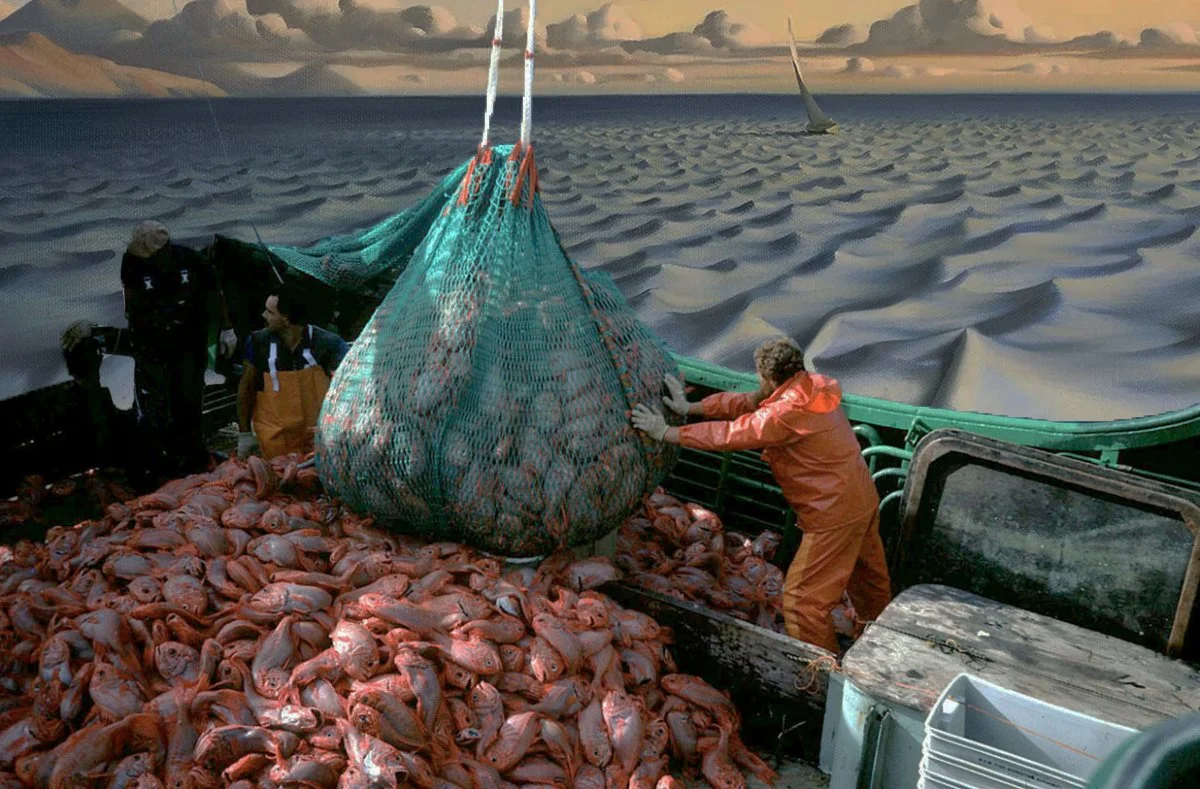
‘Industrial Fisheries of Orange Roughy’ © Australian Fisheries Management Authority; ‘Ripple on the Ocean’ (n.d.) by Vladimir Kush, edited by Francesca Norrington (2023)
To take a particular example, environmental governance scholar Jennifer E. Telesca challenges the term stock and its commonplace in today’s policy and conservation frameworks. Over time, fisheries experts have used statistical measures as their primary tool of authority, representing the object of marine conservation not as fish in being but as stock (Telesca, 2017, p. 145; my emphasis). To commodify a body by categorizing it according to weight, age, gender, or energy output eliminates any subjectivity, rendering “biological beings—slave and animal, chattel and beast—into populations capable of being pledged as assets appropriate for absolute possession and therefore for trade.” (Telesca, 2017, p. 145)
In the treaty for the ‘International Convention for the Regulation of Whaling’ (IWC) (1946), the preamble states the convention’s purpose as “safeguarding for future generations the great natural resources represented by whale stocks” (IWC, p. 1; my emphasis). And indeed, in its provision on the “Conservation and Sustainable Use of Marine Biological Diversity of Areas Beyond National Jurisdiction,” the BBNJ Agreement of 2023 refers to the more-than-human as “marine genetic resources” (my emphasis). This logic has designed a hierarchy of value, from the origins of slavery to the classification and quantification of complex species, which has led to their inevitable demise.
The point is not to mistake language for reality: I’m sure individual fish and fish populations would rather be referred to as stock while remaining alive than be properly addressed while being pushed to the brink of extinction. Yet language matters precisely because it shapes how we perceive and interact with the more-than-human world. Anthropocentric and resource-oriented legal language is often the best we have to work with until such time as truly ecocentric language adoption and lawmaking become much more widely possible.
Likewise, making compromises on language is crucial for passing major legislation. This is not to say that advances in treaty design are not well-intended; rather, it is to acknowledge the limitations of these treaties in an industry-led environment, where they are often rendered redundant by economic incentives. With every step forward in the application of conscious law comes compromise whereby the needs of humans have to also be met to the degree that these laws do not jeopardize genuine economic need. Strict all-out bans are likely to be met with strong resistance, causing further friction rather than much-needed conversation. The industrial bias that tends to characterize international treaties suggests that the direction for the RoN movement may be toward bioregions and species-based efforts. Or, in supporting localized efforts with legal language that might validate and empower their campaigns.
Liquid Cartography
In modern Western discourse, the term territory is central to discussions of “natural” space, and the Ocean has increasingly felt the pressure of such territorial delineations, for instance as imposed by Exclusive Economic Zones and poorly governed Marine Protected Areas. Treating the sea as a zone to be contained has led to what anthropologist Gísli Pálsson (1998), drawing on Michel Foucault, describes as “the birth of the aquarium”—an enclosure predicated on a separation of “nature” and “culture,” carefully obscuring the remnants of these separations. As an unbounded nature, the Ocean is connected to colonial projects of keeping the high seas “free,” outside sovereign territorialization. Nature, however, must be confronted as an artefact of empire, one whose definition within a Western (or Eurocentric) context cannot entirely be trusted. The Ocean must be understood as emergent with—and not merely as an underlying context for—human activities. The human mind cannot truly visualize the expansive oceanic realm; a Westernized perspective thus pollutes any alternative design.
The Spilhaus projection, developed by Athelstan Frederick Spilhaus in 1979, breaks the convention of a humanized Ocean, depicting the Ocean instead as a single unbroken water body bounded by continental landmasses. This projection swaps out the familiar prominent representations of land in favor of the all-important oceanic interchange, showing the Ocean as a continuous unit. The title of this study is especially intriguing: “To see the Oceans, slice up the Land” (Spilhaus, A., 1979).
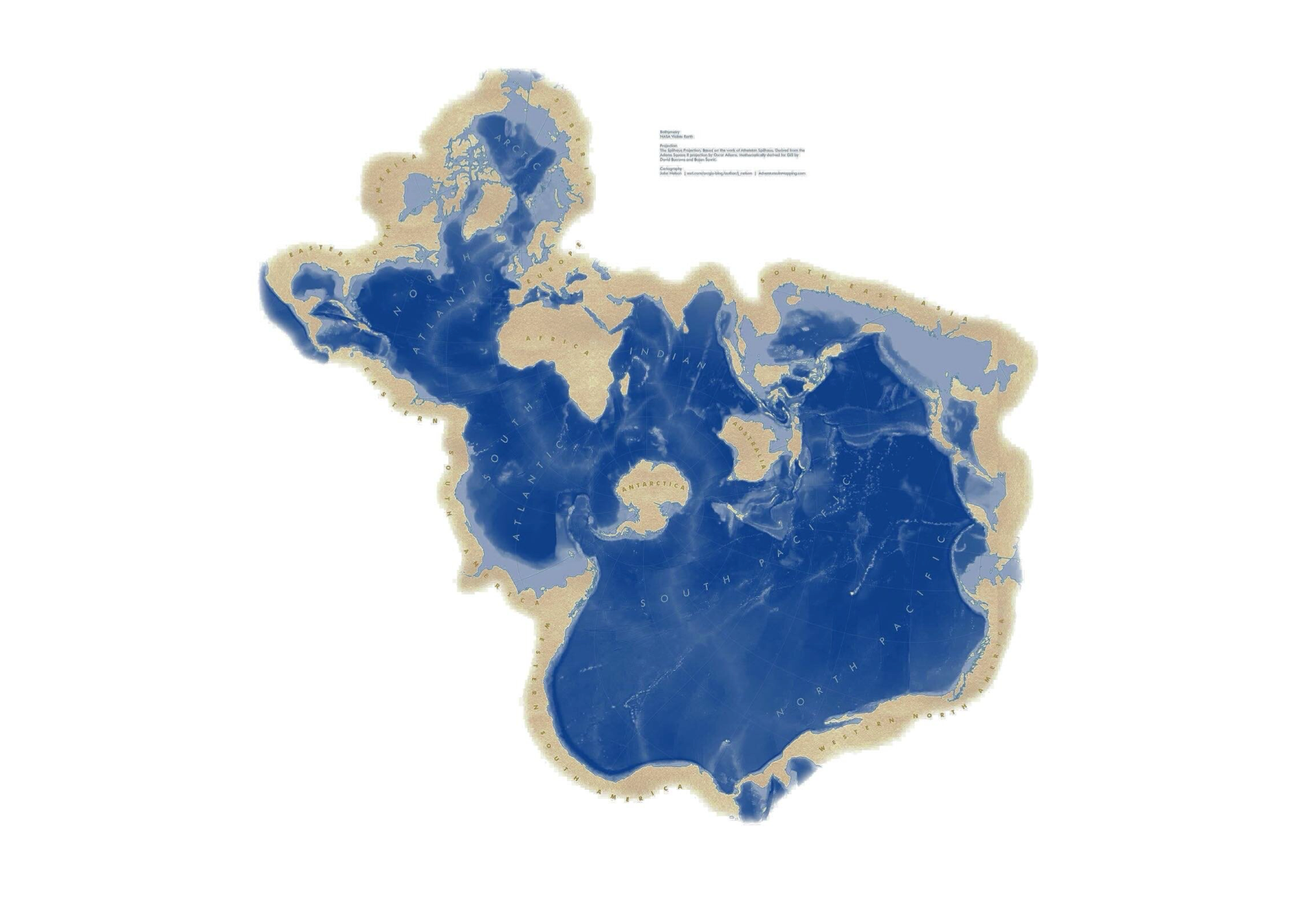
Spilhaus, ‘To see the oceans, slice up the land’, Smithsonian, (1979)
The Spilhaus projection connects to the decolonizing vision of Tongan and Fijian writer and anthropologist Epeli Hau‘ofa’s “Oceanic Identities.” Hau’ofa critiques dominant colonial and postcolonial representations of the Pacific Islands as empty, small, and lacking true value. Western epistemological cartography portrays the Ocean as limiting and isolating those who live in the Pacific, as if their location put them in a position of weakness.
In contrast to the distancing implications of such physical maps, Ocean advocates have offered an intimate ontological view of humans and the Ocean, characterized by salty water. The late American marine biologist Rachel Carson writes: “Fish, amphibian, and reptile, warm-blooded bird and mammal—each of us carries in our veins a salty stream in which the elements […] are combined in almost the same proportions as in seawater” (1991, p. 20). Banaban poet Theresa Teaiwa, as quoted by Epeli Hau’ofa, echoes this sentiment: “We sweat and cry salt water, so we know that the ocean is really in our blood” (1998, p. 392). Although we find ourselves detached from our ancient birthing grounds, our lives and existence are nonetheless determined by the life therein. Realizing this makes the idea of an Ocean Nation seem closer to home.
The Ocean Nation and Ocean Rights
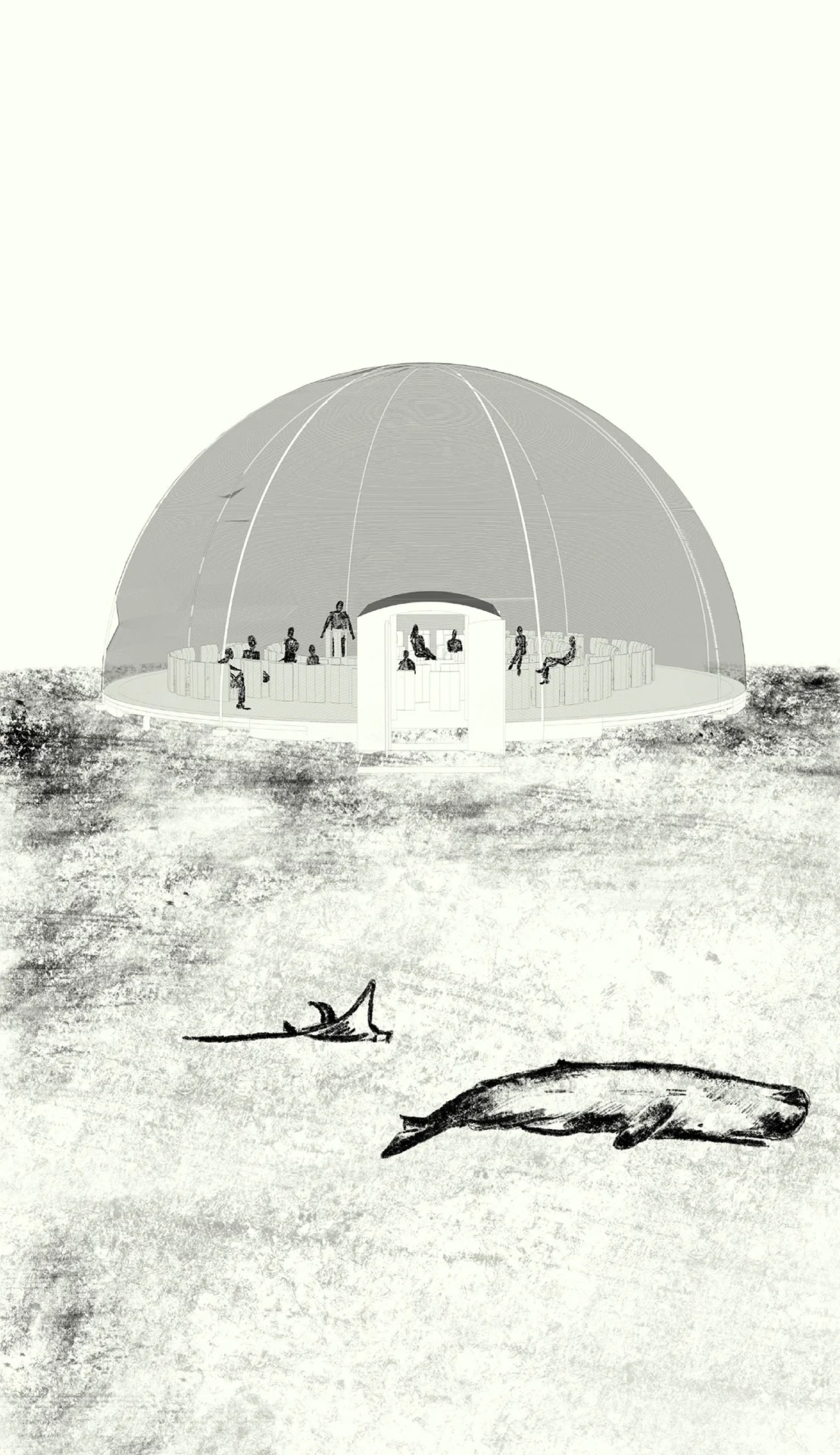
‘Ocean’s Embassy’ Concept Illustration by Francesca Norrington (2023)
I conceive of the Ocean Nation partly in light of historian Dipesh Chakrabarty’s United Organisation for Multi-Species Governance (2021), a framework through which the Rights of Nature could be accessed and realized. The terms country or nation, both as words and as material delineations, are deeply entrenched in the legacies of globalization, imperialism, and colonialism. Chakrabarty warns that confronting these mechanisms requires “work[ing] towards a planet that no longer belongs to the human-dominant order” (2021, p. 203; as cited in Epstein, 2023). Embracing species' legal identity may be one practical step toward withdrawing from that order.
Rights of Nature in practice is shaped by the biases of state sovereignty, while simultaneously emerging in postcolonial states as a strategy to assert sovereignty over land and its more-than-human population, including as a means of environmental agency for Indigenous Peoples. Rights of Nature scholar Mihnea Tănăsescu (2020), for example, has pointed out that the arrangements arrived at in two of the most prominent examples of Rights of Nature, those in Ecuador and New Zealand, were principally inspired not by environmental concerns but by power relations between state governments and Indigenous Peoples.
How might the Ocean Nation draw knowledge from these conversations? Voices like those of the Ocean advocates cited in this article can inform an oceanic parliament or government, reforming these structures to consolidate human and more-than-human agency in pursuit of the right to a healthy planet. Human bias is pervasive; this framework provides a potential means of granting political agency to voices whose biases may be less detrimental than those of industry representatives currently dominating the High Seas.
Rights of Nature has been proposed as a legal mechanism to “dampen the threat of the Anthropocene to non-human species” (Seth Epstein, 2023, p. 416). Establishing rights for Nature requires addressing human limitations in our ability to represent non-humans. Ocean Rights lawyer Michelle Bender explained to me some time ago something seemingly obvious yet commonly overlooked: oceanic creatures have different needs than humans. I take as a corollary that Ocean Rights cannot be a simple projection of human rights onto Ocean creatures and ecosystems. Philosopher Thomas Berry (1914-2009), believing that all beings are unique in their ecosystems, depending on their characteristics, writes that humans have human rights, fish have fish rights, trees have tree rights. An insect would hold different rights than a river based on its particular role within a functioning system.
Marine ecosystems thrive within their own design, one that has evolved over millennia. However good the intent, a humanized approach to “protect” an ecosystem would be entirely to our own reference points. This may explain why some Indigenous Peoples, through long and unbroken relationship with their lands and waters, have proven the most effective guardians and stewards of wild places. The Western RoN movement likely has a long way to go to achieve similar depths of understanding. Nonetheless, passing laws that acknowledge Ocean species and ecosystems as rights-holders may prove an imperfect but still useful step toward their more meaningful representation in the human legal systems that hold so much power over them. The idea of an Ocean Nation can contribute a north star for such efforts—do we even dare imagine that degree of sovereignty for our wild kin?
Francesca Norrington is an environmental journalist and writer with a background in design research. She holds a Master of Science from the University of Edinburgh, where she specialised in environmental ethics and the socio-political implications of space expansionism. More recently, she has worked as a freelance editor and writer, supporting research on nature rights and ocean rights, while reporting on the everyday lives of those most affected by the climate crisis. She also works as an illustrator and sketch artist.
Sources
Carson, R. (1991). The sea around us. Oxford University Press.
Chakrabarty, D. (2021). The Climate of History in a Planetary Age. University of Chicago Press.
Epstein, S. (2023). Rights of nature, human species identity, and political thought in the Anthropocene. The Anthropocene Review, 10(2), 415–433. https://doi.org/10.1177/20530196221078929
Hau‘ofa, E. (1998). The ocean in us. The Contemporary Pacific, 10(2), 392–410. University of Hawai‘i Press.
Pálsson, G. (1998). The birth of the aquarium: The political ecology of Icelandic fishing. In T. Gray (Ed.), The politics of fishing (pp. 209–227). Macmillan.
Piccolo, J. J. (2017). Intrinsic values in nature: Objective good or simply half of an unhelpful dichotomy? Journal for Nature Conservation, 37, 8–11. https://doi.org/10.1016/j.jnc.2017.02.007
Spilhaus, A. (1979). To see the oceans, slice up the land. Smithsonian, 10, 116–122.
Telesca, J. E. (2017). Accounting for loss in fish stocks. Environment and Society, 8(1), 144–160. https://doi.org/10.2307/26661567.