
Assessing the Impact of the Inter-American Court of Human Rights’ 2025 Climate Advisory Opinion
One year in, OC-32/25 has been cited by courts in Latin America and beyond—yet its application remains narrow
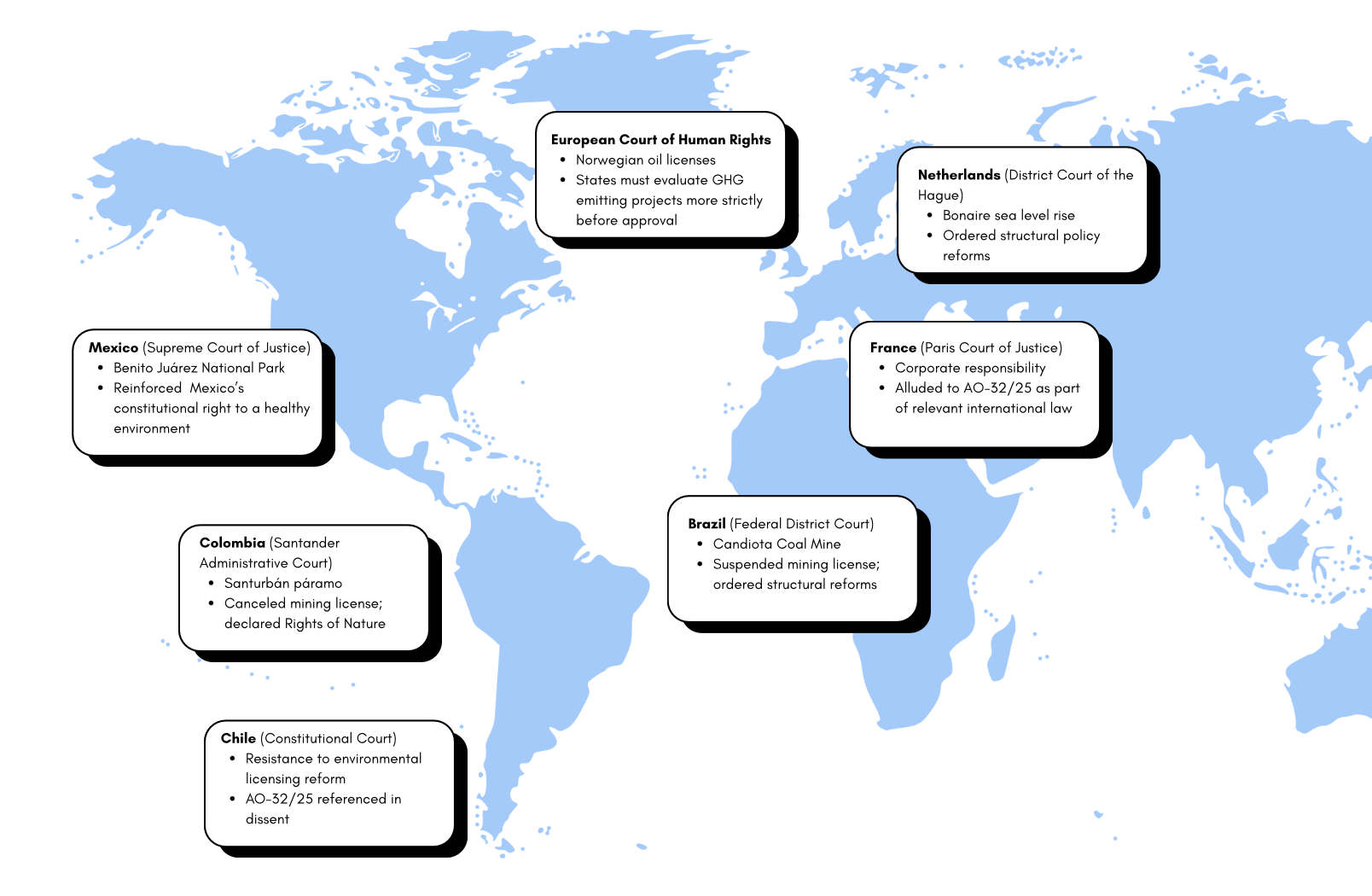
Image credit: Madeleine Cepeda-Hanley
On July 3, 2025, the Inter-American Court of Human Rights (IACtHR) issued its landmark Advisory Opinion OC-32/25, declaring the existence of a climate emergency and affirming that states have obligations under international human rights law to address it [1].
The opinion articulated the legal duties of states bound by the American Convention to prevent, mitigate, and address the impacts of climate change, including an enhanced due diligence standard for responding to climate harm and a prohibition against irreversible environmental harm [2]. The Advisory Opinion came in response to a joint request by Chile and Colombia, two countries with developing ecocentric law. In a first for an international tribunal, the Court also addressed Nature as a subject of rights.
This article examines seven cases to assess how OC-32/25 has been absorbed into domestic and regional jurisprudence in the past year [3]. Within the Inter-American system, these cases occurred in Colombia, Chile, Brazil, and Mexico. And beyond it, they took place in the European Court of Human Rights, the Netherlands, and France.
These decisions engage the opinion across three main lines:
the recognition of Nature as a subject of rights
due diligence and greenhouse gas (GHG) mitigation obligations
and access to justice.
Together, they show that OC-32/25 is being received as a key piece of converging international law on the climate emergency. Yet the application of these rulings remains narrow, and OC-32/25 is unlikely to generate meaningful ecocentric reform without extrajudicial support from institutional, legislative, and civil actors.
Rights of Nature in OC-32/25
The concept of ecocentric rights seeks to go beyond conventional, anthropocentric environmental law, in which ecosystems are generally protected only insofar as they are resources for human use or habitats for human life. Applying this logic, Rights of Nature treats natural entities—including rivers, forests, ecosystems, or plant and animal species—as legal subjects in their own right. In the event of environmental harm, these entities hold enforceable rights independent of any human injury as a result of that harm.
Rights of Nature has spread largely through domestic constitutional and judicial developments since the mid-2000s, with Latin American countries leading much of that development. OC-32/25 marks the first time an international tribunal has addressed the concept directly. The Court explained:
[R]ecognition of Nature’s right to conserve its essential ecological processes contributes to strengthening a truly sustainable development model that respects planetary limits and ensures the availability of crucial resources for present and future generations. Making progress towards a paradigm that recognizes rights inherent in the ecosystems is fundamental for the protection of their long-term integrity and functionality, and it provides coherent and effective legal tools in relation to the triple planetary crisis to prevent existential harm before the latter becomes irreversible [4].
The Court did not treat this as an aspirational doctrine standing apart from existing human rights law. Instead, it noted that it is compatible with obligations the American Convention already imposes on states parties. The Court gave particular attention to Article 26 of the Convention, which supports the progressive realization and development of rights under domestic law:
The Court also emphasizes that this approach is fully compatible with the general obligation to adopt domestic legislative provisions . . . as well as the principle of progressivity that governs the realization of the economic, social, cultural and environmental rights . . . . [T]he protection of Nature as a collective subject of general interest provides an appropriate framework for States . . . to advance towards building a global legal system for sustainable development. . . . This understanding is coherent with a harmonious interpretation of the pro natura and pro persona principles [5].
Pro persona is an interpretive canon of the Inter-American system which requires that any legal provision open to multiple readings be construed in whichever way most favors the protection of human rights [6]. By contrast, pro natura is a newer interpretive approach that prioritizes the protection of Nature—though it is not an explicit recognition of ecocentric rights. In Advisory Opinion OC-32/25, the Court listed it among the “fundamental principles and obligations” governing the climate emergency, alongside the precautionary principle, intra-and inter-generational equity, and the polluter-pays principle [7]. While OC-32/25 did not invent pro natura—it has developed in international law since the late 1970s [8]—it formally imports it into Inter-American human rights doctrine and reads it together with pro persona. The Court thus considers the pro natura and pro persona principles as mutually reinforcing, treating ecocentric rights as compatible with the American Convention’s core human rights objectives. The Court also grounded its recognition of ecocentric rights as part of a broader legal trend across the Americas:
Finally, the Court notes a growing tendency in legislation and case law to recognize Nature as a subject of rights. This tendency is reflected in judicial decisions at the regional and global level, as well as in the domestic laws of several countries of the Americas, such as Canada, Ecuador, some subnational entities in the United States of America, Bolivia, Brazil, Mexico, Panama and Peru [9].
Graphic credit: Aitana Rosas Linhard
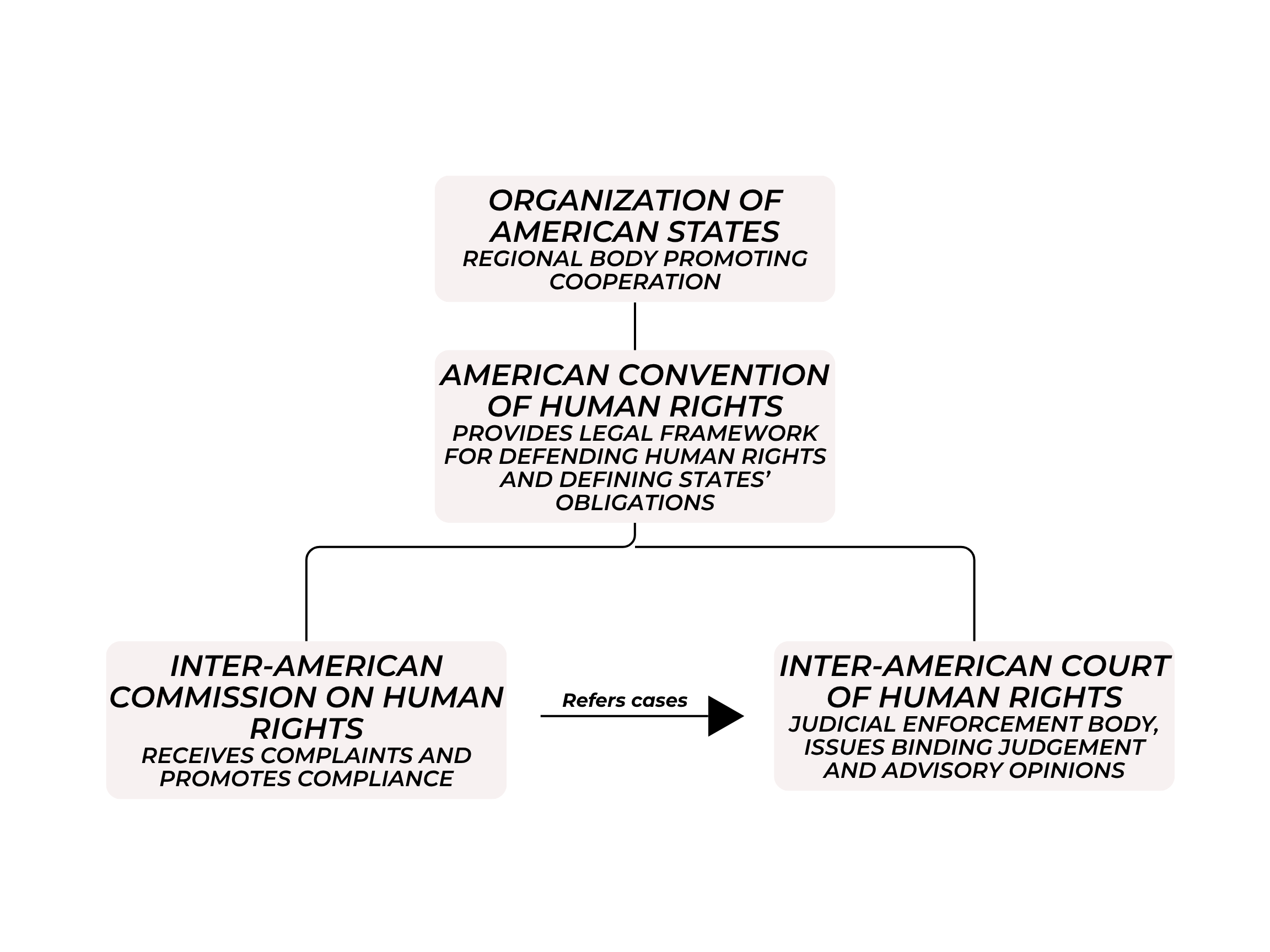
While advisory opinions carry significant interpretive and normative authority, OC-32/25’s endorsement of expanded environmental rights possesses no binding force. Unlike a contentious IACtHR judgment, which imposes obligations on the parties to a case, OC-32/25 cannot command any state to a particular action or result. The IACtHR has nonetheless stated that judiciaries within the Inter-American system should take IACtHR advisory opinions into account in their decision-making, and it reiterated in OC-32/25 that national authorities should apply IACtHR standards when deciding legal issues that arise in the context of the climate emergency [10].
Outside of the Inter-American system, there is no such suggestion. OC-32/25’s legal significance is therefore constituted by the extent to which courts independently choose to integrate it into their judgments. Rights of Nature has so far proven the narrowest in its domestic uptake, and was also tested first.
Colombia & Mexico: OC-32/25's Rights of Nature Language
Colombia and Mexico demonstrate two distinct but complementary paths through which OC-32/25 is reshaping domestic environmental law.
In Colombia, where domestic courts had already established ecocentric personhood, the Santander Court used OC-32/25 as part of a mutually reinforcing feedback loop that framed domestic legal innovation as part of a consolidating regional jurisprudence. In Mexico, where courts have not yet embraced Rights of Nature, OC-32/25 functioned instead as an interpretive tool that guided the Supreme Court of Justice in lowering procedural barriers and expanding access to justice without any radical legal overhaul.
Together, these cases suggest that OC-32/25’s influence may spread through incremental procedural doctrine as much as through landmark rulings on environmental personhood.
Colombia
Just eighteen days after OC-32/25 was issued, a Colombian court invoked the Advisory Opinion to issue new Rights of Nature jurisprudence [11]. This decision offers the earliest evidence of what the IACtHR’s recognition of ecocentric rights has accomplished in practice.
On July 21, 2025, the Administrative Court of Santander annulled mining licenses granted to a Canadian gold-mining project in the Santurbán páramo, a wetland ecosystem in the Colombian Andes that supplies drinking water to more than two million people in Bucaramanga and its metropolitan area [12]. The wetland is also highly lucrative—a decade earlier, Colombia’s environmental protection laws triggered three multimillion-dollar investment arbitration claims from other mining companies over disrupted mineral claims in Santurbán [13]. Following years of legal advocacy to prevent large-scale mining in the area, the Santander Court declared the páramo a subject of inherent rights [14,15]. On that basis, it imposed a series of consequences beyond blocking the mining concessions. It ordered priority protection measures for the ecosystem, appointed legal representation to act on the páramo’s behalf in future proceedings, mandated preventative measures against further degradation, and required that the ruling be integrated into future environmental policy [16].
In evaluating whether the Santurbán páramo should be granted legal personhood, the Court drew on OC-32/25, citing its recognition of ecocentric rights in particular:
[T]he Inter-American Court . . . consolidates a paradigm shift in the legal understanding of the environment by recognizing nature as a subject of rights endowed with intrinsic value. This normative and hermeneutic development contributes to strengthening Latin American ecological constitutionalism by promoting an integrative vision that articulates the principle of interdependence, intergenerational justice, and an ethic of responsibility in the face of the ecological crisis. Thus, the ontological dignity of nature and its recognition as a collective subject of public interest serve as indispensable normative foundations; these allow for the transformation . . . of the contemporary constitutional state's legal architecture to harmonize environmental justice, addressing it not only at the local level but also . . . at the global level [17].
Here, the Court contextualized the Santurbán ruling within a regional legal genealogy. The Court situated the decision with a wave of constitutional and jurisprudential change that began in Ecuador’s 2008 constitution, which broke from conventional environmental law by treating Nature as a right-bearing subject with intrinsic value [18]. By invoking OC-32/25 in these terms, the Santander Court asserted that the Advisory Opinion validates and consolidates a Latin American legal trend which Colombian courts themselves have helped develop.

The Atrato River. Photo credit: Luukslegers, CC BY-SA 4.0, via Wikimedia Commons.
Colombian courts had already established that ecosystems could hold legally cognizable rights nearly a decade earlier. In 2016, the Constitutional Court recognized the Atrato River, its basin, and its tributaries as a subject of rights entitled to protection, conservation, and restoration by the state and ethnic communities in the surrounding region. The Court based this holding in constitutional law, the precautionary principle, and the biocultural rights of affected Afro-descendant and Indigenous communities [20]. The ruling also created a guardianship system, appointing state and local representatives to act on the river’s behalf, drawing on comparative precedents such as the Whanganui River’s legal personhood in Aotearoa New Zealand [21].
The Supreme Court of Justice extended this logic in 2018 when it recognized the Colombian Amazon as an entity subject to rights of protection, conservation, maintenance, and restoration [22]. Rather than focusing strictly on anthropocentric harm caused by Amazon deforestation, the Court cited principles of intergenerational equity and precaution in its reasoning [23]. It found that unchecked deforestation and the resulting emissions posed an imminent threat to current and future generations, and it ordered the national government along with affected municipalities to formulate a comprehensive action plan [24].
These two landmark decisions, alongside a handful of others granting legal personhood to various natural entities, show Colombian courts moving toward ecocentric jurisprudence well before the IACtHR endorsed Rights of Nature [25]. The Santander Court’s framing of OC-32/25 emphasizes this. The invocation of “interdependence,” “intergenerational justice,” and an “ethic of responsibility” echoes Indigenous and Andean cosmovisions that have already been formally incorporated into other Latin American constitutions (e.g., Ecuador and Bolivia), and which Colombian courts have themselves developed [26]. In pointing to OC-32/25’s recognition of Nature’s “ontological dignity,” the Court suggests that the IACtHR has endorsed a legal cosmology that originated in domestic jurisprudence across the region. Rather than the IACtHR exporting doctrine to Colombia, the Court framed OC-32/25 as the international legal order catching up to, and lending global legitimacy to, ecocentric innovation that Latin American courts and lawmakers have built independently.
Mexico
Just seven months later, Mexico’s Supreme Court of Justice referenced the same Advisory Opinion. In Amparo en Revisión 450/2025 (Feb. 24, 2026), an Indigenous Zapotec community representative sued federal, state, and municipal authorities for failure to protect Benito Juárez National Park from human occupation and construction, as well as a failure to properly delineate the park’s boundaries to encourage awareness and environmental protection [27]. After a district court denied relief based on the petitioner’s failure to show a direct, concrete injury, the Supreme Court reviewed the case.

Cerro de San Felipe within Benito Juárez National Park, Oaxaca, Mexico. Photo credit: Prsjl, CC BY-SA 4.0, via Wikimedia Commons.
The Court’s holdings were narrower than in the Santurbán case and did not explicitly apply Rights of Nature doctrine. First, it reaffirmed standing for any person who inhabits an ecosystem or uses its environmental services to bring a case in its defense [28]. Second, the Court held that a dynamic burden of proof applies to environmental omissions cases. Due to the structural asymmetry between an individual claimant and state authorities, cases like these require shifting the evidentiary burden onto the government to disprove alleged omissions, rather than requiring the claimant to prove environmental harm. The Court grounded this in Article 8.3 of the Escazú Agreement, which obligates states parties to facilitate proof of environmental harm through burden-shifting mechanisms, and in the Court’s own precedent [29]. The Court ordered the case remanded for a new evidentiary proceeding, declining to resolve the merits [30].
However, the Court considered Mexico’s obligations under developing ecocentric international jurisprudence, noting that the existing framework has been most recently advanced by OC-32/25:
Inter-American jurisprudence has evolved to acknowledge that nature itself may, in certain contexts, be recognized as a subject of rights; this reinforces a robust, preventive approach to environmental protection aimed at the comprehensive safeguarding of ecosystems. . . . Moreover, in light of the comprehensive treaty framework to which the Mexican State is a party, the special protection of the environment is evident . . . when viewed from the perspectives of both international human rights law and international agreements and treaties [31].
The Court addressed this as part of the international legal context that informs Mexico’s existing constitutional right to a healthy environment, which provides that “every person has the right to a healthy environment for their development and well-being” [32]. This preserves the traditional anthropocentric framework in which the right belongs to persons, with the environment as an object of protection rather than a subject of rights. However, the Court layered other constitutional provisions around it that align with OC-32/25’s “comprehensive safeguarding” and emphasis on human rights. These include provisions concerning Indigenous rights and sustainable development, and they point to a more expansive reading of environmental rights in Mexico [33].
The Court’s discussion of the right to a healthy environment further suggests an openness toward ecocentric reasoning. It previously identified two distinct dimensions within the right [34]. The first is an “objective” or “ecological” dimension, which protects the environment as a legal good that is “deserving of protection in [its] own right [35].” The second is a “subjective” or “anthropocentric” dimension, which posits the human right to a healthy environment as a prerequisite for the realization of other individual rights [36]. Violation of either dimension is sufficient to trigger the constitutional right, meaning that a violation can exist even in the absence of a plaintiff’s ability to demonstrate direct personal impact. This dual-dimension structure allowed the Court to consider OC-32/25’s more ecocentric language without formally applying Rights of Nature. Because Mexican law already recognizes an ecological dimension under which Nature should be protected as such, the Court was able to read OC-32/25’s recognition of Nature’s intrinsic value alongside existing, if underdeveloped, domestic doctrine.
Notably, the Mexican Supreme Court maintained the precedent set in its 2018 Laguna del Carpintero case, wherein it determined that environmental damage to a wetland ecosystem constituted a violation of the human right to a healthy environment, including protection of the environment for its inherent value [37]. Noting a “trend towards recognizing legal personhood and, consequently, rights for nature,” the Court referenced OC-23/17, a 2017 IACtHR advisory opinion that highlighted the importance of protecting the environment for its own sake [38].
The 2026 ruling is thus part of a developing jurisprudential tradition in Mexico with respect to emerging ecocentric rights. Taking international obligations into consideration gives the Mexican right to a healthy environment a broader doctrinal reach than the constitutional text alone suggests. Here, OC-32/25 acts as an interpretive reference that allowed the Court to recognize broader duties of state protection under Mexico’s existing constitutional framework. The Court considered regional standards to justify heightened state duties and procedural safeguards, such as a dynamic burden of proof, while maintaining the anthropocentric character of existing Mexican law. The Advisory Opinion’s emphasis on comprehensive ecosystem protection, which highlights the development of ecocentric rights, was used to reinforce Mexico’s anthropocentric environmental protection framework.
Chile and Brazil: OC-32/25 Beyond Rights of Nature in Latin America
The Advisory Opinion’s reach in the Inter-American system has not been confined to decisions on the Rights of Nature. The bulk of OC-32/25 itself is devoted to other areas, including due diligence obligations, GHG emissions, and access to justice. Courts in Chile and Brazil have tested some of these areas, with outcomes ranging from outright refusal to engage with OC-32/25 to treating it as binding law.
Chile
In July 2025, Chile’s Chamber of Deputies—part of the National Congress—challenged the constitutionality of the Framework Law on Sectoral Authorizations, a reform law aimed at accelerating environmental permit evaluations. The law replaces prior administrative requirements with low-barrier alternatives and delays regulatory obligations for approved projects [39]. Critics argued that the law would limit the state’s capacity to police environmental risk and negatively impact vulnerable Indigenous communities [40]. The law, which ultimately passed, was framed as essential to unlocking stalled investment opportunities in mining and energy infrastructure. Chile’s Constitutional Court declined to hear the challenge, holding that the deputies had failed to properly follow procedural rules [41].
Three dissenting judges invoked OC-32/25 against the Court’s dismissal, referencing the Advisory Opinion's access-to-justice findings rather than any ecocentric content. Here, the dissent focused on OC-32/25’s endorsement of the pro actione principle, under which procedural rules must not be read to obstruct a court’s substantive review, with any doubt resolved in favor of jurisdictional access [42]. Quoting OC-32/25 directly, the dissent argued that it was “paradoxical” for the Court to bar substantive review of a petition alleging the regression of environmental protection standards based on a procedural technicality [43]. This was noted with some irony; Chile itself was a co-petitioner in requesting the IACtHR deliver OC-32/25 in the first place.
This illustrates an uptake distinct from both Colombia and Mexico. Here, dissenting judges used the Advisory Opinion to argue for an aspirational norm and push back against the majority’s refusal to engage with an environmental petition. New petitioners have filed for reconsideration and public hearings, and whether OC-32/25’s pro actione doctrine ultimately overcomes the Court’s procedural gatekeeping remains open [44]. However, the dissent’s use of the Advisory Opinion suggests that Chilean jurists can use it as ammunition in cases concerning environmental harm, even if courts have not accepted it as governing law. For now, its value may lie in its ability to lend regional legitimacy to developing domestic norms and values.
Brazil
Brazilian courts saw much deeper engagement with OC-32/25, and they offer the clearest example thus far of OC-32/25 functioning as operative law in a domestic court. In August 2025, the Federal District Court of Porto Alegre suspended the operating licenses of the Candiota Coal Mine and its adjacent power plant in a case brought by Brazilian environmental organizations [45]. Advocates argued that the site’s licenses had been renewed without any climate-specific conditions, in violation of Brazil’s National Policy on Climate Change and local climate policy in Rio Grande do Sul, and that the site had outsized health and environmental impacts on local communities [46]. Among other relief, the Court ordered the relevant Brazilian licensing agencies to incorporate climate conditions into the facilities’ licenses before they could be renewed, with fines for continued noncompliance [47].
Unlike the three jurisdictions previously surveyed, here the Court treated OC-32/25 as a source of binding interpretive obligation rather than persuasive authority or a norm-setting tool. The judgment invoked controle de convencionalidade (conventionality control), quoting OC-32/25’s instruction that domestic courts resolving climate-related disputes in the Inter-American system “must carry out due conventionality control with the standards developed by the [Inter-American] Court in its jurisprudence, and in particular, in this Advisory Opinion” [48]. Crucially, this aligns with domestic law developed by the National Council of Justice, an administrative and oversight body of the Brazilian judiciary. The Council has previously directed the Brazilian judiciary to apply IACtHR jurisprudence and advisory opinions in its rulings [49].
Following this strict application of OC-32/25, the Court delivered significant additional holdings. First, it held that Brazil’s existing environmental licensing framework was legally deficient because it did not comply with OC-32/25’s emissions requirements. The Advisory Opinion says that states should regulate emissions-generating activities occurring both inside and outside their territories (e.g., when coal is extracted domestically but exported and combusted abroad) [50]. It also urges states to compel businesses to exercise due diligence and disclose GHG emissions across their entire value chain, not only direct emissions-producing activities [51].
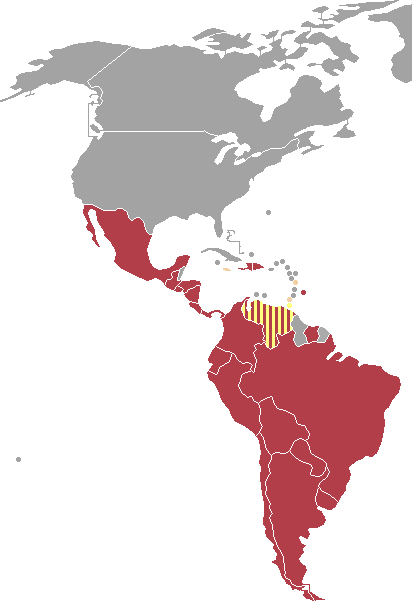
Members of the IACtHR. Dark red – accept blanket jurisdiction of the court. Orange – signatories not accepting full jurisdiction. Yellow – former members. Image credit: Kwamikagami, CC BY-SA 4.0, via Wikimedia Commons.
The Court ordered Brazil’s licensing agencies to reform their licensing terms to include full value-chain emissions analysis. Moreover, the judgment incorporated OC-32/25’s five-part test for what effective climate impact assessment regimes must specify: which activities and impacts are covered, what procedure governs the assessment, which duties fall on developers versus regulators, how results impact the approval decision, and what consequences follow noncompliance [52]. Second, the Court applied OC-32/25’s access-to-justice and participation doctrines. Citing the Advisory Opinion on the right to public participation in climate decision-making, the Court ordered Rio Grande do Sul to restructure its climate governance council to ensure better parity between civil society, scientists, and government representatives [53].
*
OC-32/25’s authority has not been applied evenly within the Inter-American system—barely a month apart, references to it produced a losing dissent in Chile and a governing standard in Brazil. Similar to the decisions seen in Colombia and Mexico, the key difference between these outcomes was the domestic architecture available to apply OC-32/25. Brazil’s courts operate under an explicit institutional mandate to treat IACtHR jurisprudence as binding. Chilean courts have no comparable instruction, and OC-32/25 was treated there as one possible argument among many rather than as a source of any obligation. The Advisory Opinion’s application in Colombia and Mexico suggests that OC-32/25 gains the most traction where domestic courts already share its normative values, while the examples from Chile and Brazil similarly suggest that its authority increases where domestic judicial architecture tells courts to apply it. All four cases provide different and instructive uptake models, and, as Chile shows, the judiciaries of states that requested the Advisory Opinion are not any more likely to honor it.
OC-32/25’s Impact Outside of the Inter-American System
While OC-32/25 emerged from the regional context of the Inter-American system, its influence has spread to jurisdictions beyond Latin America. Although IACtHR judgments and advisory opinions lack any force outside of states that have ratified the American Convention, the European Court of Human Rights (ECtHR) has drawn inspiration from the IACtHR’s jurisprudence on human rights and other areas [54]. In the past year, the ECtHR and domestic courts in France and the Netherlands have used OC-32/25 as a reference point within a converging field of international law on the climate emergency. Notably, none of these decisions draw on OC-32/25’s ecocentric reasoning.
European Court of Human Rights
In Greenpeace Nordic and Others v. Norway, the ECtHR cited OC-32/25 to clarify the required scope of domestic Environmental Impact Assessments (EIAs) ahead of industrial development projects [55]. Reviewing the Norwegian government’s approval of new oil exploration licenses in the Barents Sea, the Court examined whether the authorization of extractive activities without evaluating downstream GHG emissions violated the obligation to protect individuals from the serious adverse effects of climate change on their life, health and well-being under the European Convention [56].
Invoking OC-32/25’s due diligence framework, the Court affirmed that state-mandated EIAs cannot be restricted to an assessment of localized environmental harm [57]. OC-32/25 recommends that states assess all foreseeable GHG impacts, including downstream emissions, before granting permits to projects with the potential to cause “significant” climate harm. By integrating the Advisory Opinion into the interpretation of the European Convention, the ECtHR signaled a growing cross-regional consensus that comprehensive climate impact assessments are an essential component of human rights obligations.
The Netherlands
In Stichting Greenpeace Nederland v. De Staat der Nederlanden, the District Court of the Hague referenced OC-32/25 to resolve a case brought on behalf of the residents of Bonaire, a Dutch municipality in the Caribbean facing severe sea-level rise [58]. The claimants argued that the state’s failure to establish adequate adaptation and emission-reduction plans for Bonaire violated human rights under the European Convention. On emissions reductions, the Court held that wealthy, high-emitting states—those which the Paris Agreement expects to take the lead in combating climate change— have flexibility to decide how to meet their climate obligations. However, there are limits. Here, the Netherlands relied on “grandfathering,” a controversial approach that bases a country’s allowable carbon use on its past emissions levels—so that a country with high emissions keeps a large allowance—rather than an equitable, per-capita share of the remaining global carbon budget [59].
The Court drew on OC-32/25’s reasoning about historical responsibility and intergenerational fairness to hold that the state needed to explain why grandfathering was nonetheless fair, given principles of equity established by international law [60]. The Netherlands failed to justify its policy, and the Court held that its failure to protect Bonaire residents from the effects of climate change violated the European Convention [61]. OC-32/25 did not create any new legal obligations, but it supported the Court’s evaluation of the Netherlands’ climate policies.
France
Finally, France offers more subtle engagement with OC-32/25. In Notre Affaire à Tous v. TotalEnergies SE, the Judicial Court of Paris held that French law on corporate responsibility required TotalEnergies, an oil company, to address the climate risks generated by its GHG emissions resulting from the downstream combustion of its oil and gas products [62]. The Court drew from ECtHR jurisprudence and the International Court of Justice’s 2025 advisory opinion on climate change, and it identified OC-32/25 as part of a convergent body of international law establishing state obligations to protect the climate system [63]. While it did not rely on OC-32/25 in any way, the Court’s reference to the Advisory Opinion suggests that it is becoming part of a shared vocabulary that international and domestic courts can look to when reasoning through climate-related cases.
*
Together, these decisions outside the Inter-American system suggest that OC-32/25 is functioning as a key part of international climate jurisprudence rather than as an isolated regional opinion. The ECtHR and the Dutch court cited the Advisory Opinion directly, using its understanding of relevant issues to reach their decisions. While the French court did not reference any specific language from OC-32/25, it nonetheless entered the Court’s reasoning as part of a lineage of climate-related advisory opinions that the court evidently considered worth acknowledging. While OC-32/25 had no real authority in any of these courts, each used it to interpret existing obligations within their own bodies of applicable law. National and regional courts outside of the Inter-American system can thus extend OC-32/25’s influence by invoking it as evidence of an emerging international consensus on issues related to the climate emergency, without exceeding their own judicial mandates.
Pattern Analysis
Across the seven decisions surveyed, OC-32/25 has functioned as a source of interpretive material that different courts have drawn on for different purposes. No court has treated the Advisory Opinion as binding law or applied it in its entirety. Instead, each utilized a specific piece of OC-32/25—Rights of Nature, due diligence, equity principles—that complemented applicable domestic or international law. Eighteen months after the Advisory Opinion was issued, the result is a body of citations that is both geographically broad and narrow in its actual import. Three patterns in that narrow use are particularly interesting: the uptake of substantive content, the types of relief ordered, and remaining gaps in courts’ reference to OC-32/25.
Substantive Uptake
Thus far, OC-32/25’s Rights of Nature language remains confined to the Inter-American system. Colombia and Mexico are the only two countries that have engaged with Rights of Nature, and these cases treated the doctrine very differently. Colombia’s Administrative Court of Santander, which has a pre-existing domestic basis for the concept, granted legal personhood to the Saturbán páramo and quoted OC-32/25 on Nature’s “ontological dignity” to frame the ruling as part of a consolidating regional jurisprudence. Mexico’s Supreme Court did not go as far, using OC-32/25 merely to reinforce the ecological dimension of Mexico’s constitutional right to a healthy environment. There, the Court used the Advisory Opinion as interpretive support for an anthropocentric framework.
Three cases (Brazil, the Netherlands, and the ECtHR) referenced OC-32/25 primarily on GHG mitigation and due diligence. Of these, Brazil’s Federal District Court gave OC-32/25 the fullest effect, treating it as binding and applying substantive due diligence standards. In the Netherlands, the District Court of the Hague used a different piece of the same framework, referencing OC-32/25’s reasoning on state responsibility and intergenerational equity to test Dutch climate policy. The ECtHR’s Greenpeace Nordic decision similarly drew on OC-32/25’s due diligence framework to hold that Norway’s EIAs had to account for all foreseeable GHG impacts before permitting activity capable of causing significant climate harm.
Methods of Relief
Despite OC-32/25’s disparate application, the courts referencing it have produced effective remedies in climate-related cases. Courts in Colombia and Brazil provided injunctive relief against environmental harm via license annulment and suspension, respectively. Both also ordered significant structural relief: Colombia established Santurbán páramo as a subject of legal rights, and Brazil ordered the reform of licensing terms and climate governance participation. The Dutch court similarly imposed a structural remedy in the Netherlands’ climate obligations, ordering the Dutch state to develop a national climate adaptation plan that includes Bonaire [64]. Mexico produced a procedural judgment, ordering a remand for new evidentiary proceedings consistent with a burden of proof shifted off of the claimants. Finally, France’s Judicial Court provided the most conservative relief, ordering TotalEnergies to revise its corporate vigilance plan but imposing no damages or substantive targets [65].
Notable Gaps in Implementation
First, outside of Colombia, no court has delivered a Rights of Nature judgment. Colombia and Mexico remain the only two jurisdictions to engage with OC-32/25’s ecocentric language. Both cases suggest that, even within the Inter-American system, the uptake of ecocentric rights depends heavily on a country’s existing domestic framework.
Second, OC-32/25 does not merely instruct states to prevent climate harm. One of its most radical statements is that the obligation to protect the planetary ecosystem against “massive and irreversible” anthropogenic damage is a peremptory norm of international law—jus cogens [66]—on par with prohibitions against genocide or slavery [67]. The IACtHR reasoned that it is impossible to protect well-recognized human rights, including the rights to life, health, and non-discrimination, without a stable ecosystem [68]. The obligation to preserve ecosystems is thus a precondition for the enjoyment of fundamental human rights which must itself carry peremptory force. In theory, this would allow a court or litigant to invoke the prohibition on massive and irreversible ecological harm without needing to anchor their claim in domestic law or a human rights convention, since jus cogens norms bind states regardless of consent or ratification, and are non-derogable by ordinary treaty or domestic law.
Thus far, none of the courts referencing OC-32/25 have invoked its jus cogens language. Brazil’s court came closest in a practical sense, treating OC-32/25 as binding law. However, its decision to do so was grounded in Brazilian law requiring compliance with the Advisory Opinion’s standards, not in any recognition of a jus cogens obligation. The other courts addressed here similarly relied on more conventional doctrine. Given that the category of recognized jus cogens norms is historically narrow, this may suggest that courts see OC-32/25’s jus cogens language as too doctrinally aggressive, aspirational, or simply unnecessary where domestic or more established international legal routes exist.
Conclusion
Eighteen months after its issuance, OC-32/25 has become an important reference in climate jurisprudence throughout the Inter-American system and well beyond it. Given Latin American states’ record of leading global climate jurisprudence, the IACtHR might be a natural origin for OC-32/25’s progressive and ecocentric language—but in its first year and a half, the Advisory Opinion has acted as much more than a reflection of regional legal innovation. Its geographic reach marks OC-32/25 as part of a growing shared vocabulary for climate-related cases across the globe. However, the substance that courts have actually drawn from OC-32/25 remains narrow. Rights of Nature application remains largely confined to Colombia’s Santurbán decision, and the Advisory Opinion’s most ambitious claim—that the prohibition on ecological harm is jus cogens—has not been invoked by a single court.
This uneven uptake exposes the limited effectiveness of litigation in developing ecocentric law. Litigation resolves a specific dispute before the court but does not address the governance apparatus that a judgment might depend on. Courts can impose new environmental protection obligations on actors, but they cannot supply the institutions, budgets, or ongoing governance capacity required to give effect to those obligations. The Santurbán court, for example, declared the páramo a legal subject and established a guardianship structure to ensure its protection, but it did not provide any technical or administrative support. Whether the decision will survive under Colombia’s recently elected right-wing government remains unclear. Similarly, the licensing reform and climate-adaption plan orders from Brazilian and Dutch courts will depend on strong regulatory bodies actually implementing those frameworks. Without such practical support, progressive judicial decisions like these are little more than symbolic.
This limitation helps explain why OC-32/25’s uptake closely follows existing institutional capacity. Rights of Nature have traveled furthest where there is already a legal framework to absorb an ecocentric ruling, and due diligence has been invoked in jurisdictions with a strong basis for it. As no domestic architecture yet exists to receive it, the jus cogens argument remains untouched. Still, OC-32/25 has done real work in accelerating global conversations about climate jurisprudence. Whether that work lasts will depend less on future judicial decisions than on whether legislatures and administrators successfully build the institutions that these rulings presuppose.
Ultimately, the development of ecocentric rights depends on a fundamental shift in legal culture. Judicial endorsement of an international advisory opinion supporting Rights of Nature lends real legitimacy to that shift, but most of this work remains outside the courts. Where Rights of Nature has been successful, it has been accompanied and supported by open democratic participation, progressive institutional design, and legislative development often deemed radical. Until that work is done, OC-32/25 will likely remain a reference point for how far climate jurisprudence could go, rather than proof that it has effectively advanced.
Notes:
[1] Climate Emergency and Human Rights, Advisory Opinion OC-32/25, Inter-Am. Ct. H.R. (ser. A) No. 32 (July 3, 2025), https://www.corteidh.or.cr/docs/opiniones/seriea_32_en.pdf.
[2] The American Convention on Human Rights (1969) is an international human rights treaty ratified by many countries in the Americas, excluding the United States, Canada, Venezuela, and Trinidad & Tobago. The IACtHR oversees state compliance with the Convention and interprets its implementation.
[3] See Institute for Governance & Sustainable Development, Compendium of Key Climate Change Jurisprudence (2026), https://www.igsd.org/publications/compendium-of-key-climate-change-jurisprudence/ and Judicial Responses to the Advisory Opinion from the Inter-American Court of Human Rights on the Climate Emergency, Inst. for Governance & Sustainable Dev. (July 27, 2026), https://www.igsd.org/judicial-responses-to-the-advisory-opinion-from-the-inter-american-court-of-human-rights-on-the-climate-emergency/.
[4] Advisory Opinion OC-32/25 at ¶ 279.
[5] Advisory Opinion OC-32/25 at ¶ 281.
[6] Hayde Rodarte Berbera, The Pro Personae Principle and Its Application by Mexican Courts, 4 QMHRR 1, 2 (2017), https://www.qmul.ac.uk/law/humanrights/media/humanrights/news/hrlr/2018/Hayde-Rodarte-Berbera.pdf.
[7] Advisory Opinion OC-32/25 at ¶ 216.
[8] Lavinia Stoppani, In Doubt, Favour Nature? Analysing Status and Justifications for In Dubio Pro Natura as a Rule for Environmental Treaty Interpretation, Opinio Juris (June 10, 2026), https://opiniojuris.org/2026/06/10/in-doubt-favour-nature-analysing-status-and-justifications-for-in-dubio-pro-natura-as-a-rule-for-environmental-treaty-interpretation/.
[9] Advisory Opinion OC-32/25 at ¶ 286.
[10] Rights and Guarantees of Children in the Context of Migration and/or in Need of International Protection, Advisory Opinion OC-21/14, Inter-Am. Ct. H.R. (ser. A) No. 21, ¶¶ 31–32 (Aug. 19, 2014); Advisory Opinion OC-32/25 at ¶ 560.
[11] See Acción Popular, No. 680012333000-2018-00196-00, Trib. Admin. de Santander [Admin. Ct. of Santander] July 21, 2025 (Colom.).
[12] Interamerican Ass'n for Env't Def. (AIDA), Protecting the Santurbán Páramo from Mining Damage, https://aida-americas.org/en/protecting-santurban-paramo-minings-damages.
[13] See Nicolò Andreotti, The Colombian Santurbán Páramo Saga and Its Contribution to the Development of International Investment Law and Arbitration, 41 Arb. Int'l 401 (2025).
[14] Acción Popular, No. 680012333000-2018-00196-00 at 100.
[15] See Eco Jurisprudence Monitor, Summary: Bucaramanga (Colombia) Court Case: Rights of the Santurbán Páramo, https://ecojurisprudence.org/initiatives/santander-colombia-court-case-rights-of-the-santurban-paramo/.
[16] Id.
[17] Acción Popular, No. 680012333000-2018-00196-00 at p. 53.
[18] See Constitución de la República del Ecuador [Const.] arts. 71-74.
[19] See Sentencia T-622/2016, Corte Constitucional [Constitutional Court], Nov. 10, 2016 (Colom.).
[20] See Eco Jurisprudence Monitor, Colombia Constitutional Court Case: Rights of the Atrato River, https://ecojurisprudence.org/initiatives/principle-of-environmental-precaution-and-its-application-to-protect-peoples-right-to-health/.
[21] Sentencia T-622/2016 (Colom.) at ¶¶ 87, 315.
[22] See Sentencia STC4360-2018, Corte Suprema de Justicia [Supreme Court of Justice], Sala de Casación Civil, April 5, 2018 (Colom.).
[23] See Eco Jurisprudence Monitor, Colombia Supreme Court Case: Rights of the Amazon, https://ecojurisprudence.org/initiatives/colombian-amazon/.
[24] Id.
[25] Other Colombian rights of Nature cases have granted legal personhood to the Magdalena, Cauca, de la Plata, Coello, Combeima, Cocora and Otún rivers, as well as other ecosystems such as lake Tota, the Pisba highlands, and Los Nevados National Park. See Philipp Wesche, Rights of Nature in Practice: A Case Study on the Impacts of the Colombian Atrato River Decision, 33 J. Env't L. 531 (2021), https://doi.org/10.1093/jel/eqab021
[26] See Constitución de la República del Ecuador; Constitución Política del Estado (Bol.)
[27] See Amparo en Revisión 450/2025, Suprema Corte de Justicia de la Nación [Supreme Court of Justice of the Nation], Feb. 24, 2026 (Mex.) at ¶¶5-6.
[28] Id. at ¶¶ 57-63.
[29] Id. at ¶ 75; See Amparo en Revision 207/2016, Suprema Corte the Justicia de la Nación [Supreme Court of Justice of the Nation], Nov. 14, 2018 (Mex.).
[30] Id. at ¶ 68.
[31] Id. at ¶¶ 43-44.
[32] Constitución Política de los Estados Unidos Mexicanos, art. 4.
[33] Amparo en Revisión 450/2025, SCJN at ¶¶ 25, 26, 48.
[34] See Resumen de Sentencia Emblemática: Amparo en Revisión 307/2016, Dirección General de Derechos Humanos de la Suprema Corte de Justicia de la Nación [DGDH-SCJN] (Dec. 2020), https://www.scjn.gob.mx/derechos-humanos/sites/default/files/sentencias-emblematicas/resumen/2020-12/Resumen%20AR307-2016%20DGDH.pdf.
[35] Amparo en Revisión 450/2025, SCJN at ¶ 29.
[36] Id. at ¶ 30.
[37] See Amparo en Revisión 307/2016, Suprema Corte de Justicia de la Nación [Supreme Court of Justice of the Nation], Nov. 14, 2018 (Mex.). This case is part of a longer line of rulings applying IACtHR standards with respect to environmental protection, including Amparo en Revisión 953/2019 and Amparo en Revisión 610/2019.
[38] Id. at 42.
[39] See Ley N° 21.770, Establece una Ley Marco de Autorizaciones Sectoriales e Introduce Modificaciones a los Cuerpos Legales que Indica, Diario Oficial [D.O.] (Chile).
[40] See Requerimiento de Inconstitucionalidad contra la Ley Marco de Autorizaciones Sectoriales, Tribunal Constitucional [Constitutional Court], Rol No. 16625-25-CPT, July 24, 2025, at 5, 7 (Chile) (citing Acta de Sesión en Sala de la H. Cámara de Diputados, Sesión 43ª, Legislatura 373ª, July 1, 2025).
[41] Id. at 10.
[42] Id. at 20.
[43] Id.
[44] Reposición [Motion for Reconsideration], Requerimiento de Inconstitucionalidad contra la Ley Marco de Autorizaciones Sectoriales, Tribunal Constitucional, Rol No. 16.625-25-CPT, fzs. 4279–4292, July 28, 2025 (Chile).
[45] Case No. 5050920-75.2023.4.04.7100, 9ª Vara Federal de Porto Alegre [9th Federal District Court of Porto Alegre], Aug. 22, 2025 (Braz.).
[46] Id. at 10; See also Lauri Myllyvirta et al., Coal in Candiota: Health Impacts of a Coal Mining and Power Generation Cluster in Rio Grande do Sul, Brazil, Ctr. for Rsch. on Energy & Clean Air (Nov. 29, 2021), https://energyandcleanair.org/publication/coal-in-candiota-health-impacts-of-a-coal-mining-and-power-generation-cluster-in-rio-grande-do-sul-brazil/.
[47] Case No. 5050920-75.2023.4.04.7100, supra note 43 at 171.
[48] Id. at 84.
[49] Id. at 85.
[50] Advisory Opinion OC-32/25 at ¶ 337.
[51] Id. at ¶ 347; Case No. 5050920-75.2023.4.04.7100, supra note 43 at 264.
[52] Case No. 5050920-75.2023.4.04.7100, supra note at 136–37.
[53] Id. at 236.
[54] See, e.g., Mamatkulov and Askarov v. Turkey, 2005-I Eur. Ct. H.R. 293, ¶¶ 49–53; Marguš v. Croatia, 2014-III Eur. Ct. H.R. 281, ¶¶ 60–64.
[55] See Greenpeace Nordic and Others v. Norway, App. No. 34068/21, Eur. Ct. H.R. ¶¶ 11.13.4–.5, (Oct. 28, 2025).
[56] Id. at ¶ 1.
[57] Id. at ¶ 134–35.
[58] See Stichting Greenpeace Nederland v. De Staat der Nederlanden, Rechtbank Den Haag [District Court of The Hague], Case No. C/09/659832 / HA ZA 24-53, Jan. 28, 2026, ¶¶ 4.7, 11.13.4, 11.13.5 (Neth).
[59] Id. at ¶ 11.13.5.
[60] Id.
[61] Id. at ¶ 12.1.
[62] Case No. 22/03403, Tribunal Judiciaire de Paris, 34ème chambre [Paris Court of Justice], June 25, 2026, ¶ 221 (Fr.).
[63] Id. at ¶ 96–97.
[64] Stichting Greenpeace Nederland, Case No. C/09/659832 / HA ZA 24-53, at ¶ 12.4.
[65] Case No. 22/0340, supra note 60 at 54.
[66] Jus cogens, or “compelling law,” refers to a set of norms that govern customary international law. They are considered mandatory by the international community, meaning that if another law (e.g., an international treaty provision) conflicts with a jus cogens norm, that law is invalid.
[67] Advisory Opinion OC-32/25 at ¶ 289, 294.
[68] Id. at ¶ 293.