
The Atrato River Was Given Rights: What Happened Next?
A decade later, Colombia’s landmark Rights of Nature ruling reveals the challenge of implementation.
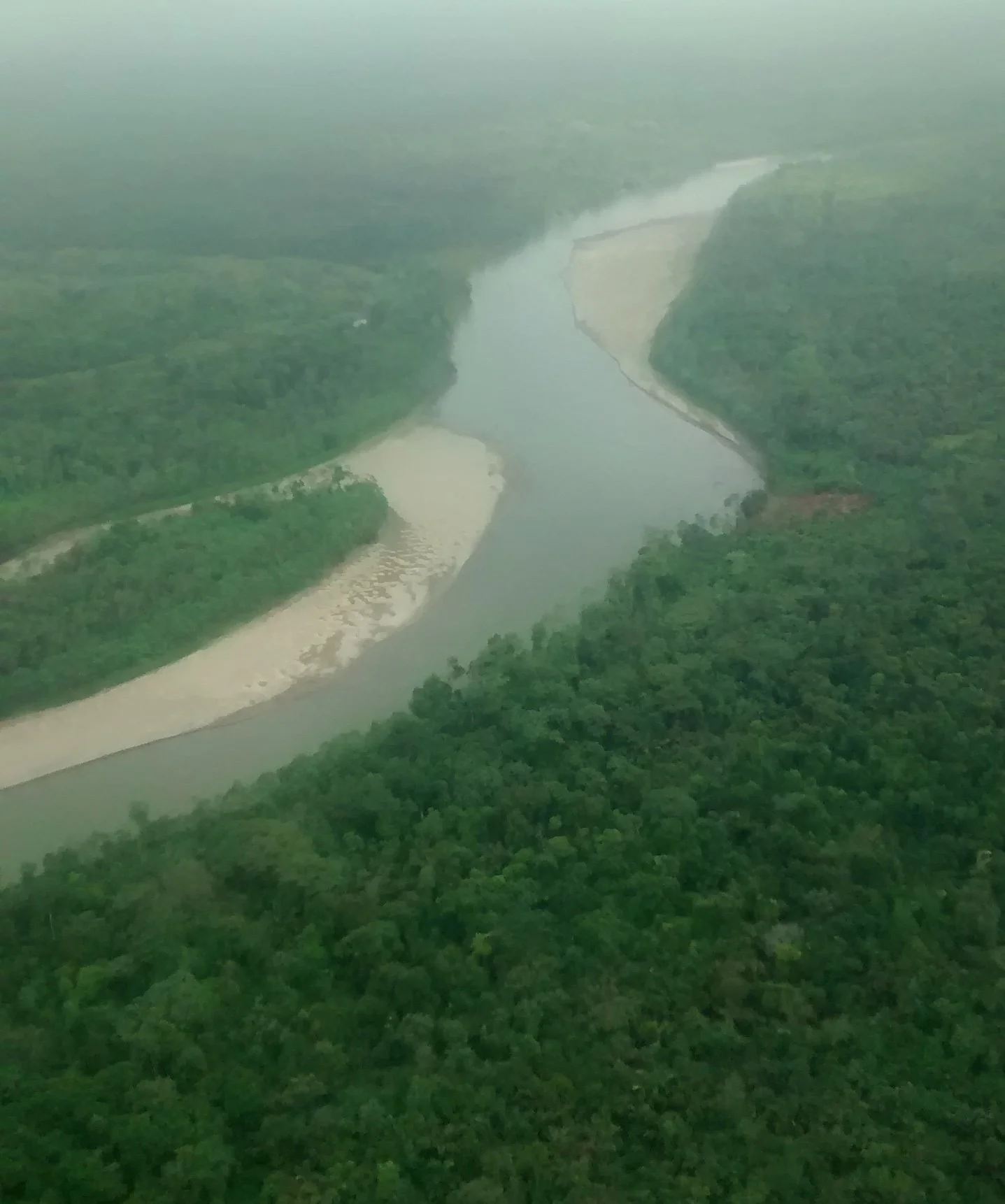
The Atrato River. Luukslegers, CC BY-SA 4.0, via Wikimedia Commons.
It’s been ten years since Colombia made history by recognizing the Atrato River as a legal subject with rights. In Decision T-622 (2016), the Colombian Constitutional Court declared that the river is not merely a resource but a living entity entitled to protection, restoration, and representation.[1] This marked the first time a national-level constitutional or supreme court recognized a river as a rights-bearing entity.
Subsequent to the Atrato case, Colombian courts recognized the Colombian Amazon as an “entity subject of rights,” reinforcing a growing connection between climate protection, intergenerational justice, and Rights of Nature (RoN) jurisprudence.[2] Colombia thus joined a group of Latin American nations at the forefront of judicial efforts to rethink the relationship between law, ecology, and human communities, including through the RoN movement.[3]
The Atrato ruling was celebrated globally as a landmark victory for RoN. Yet, a decade later, the river’s experience poses a difficult question: what happens after recognition? Illegal gold mining continues to contaminate its waters with mercury, threatening biodiversity and human health.[4] Armed groups remain active in parts of the basin, complicating governance and enforcement.[5] And communities who depend on the river continue to face environmental degradation. As legal scholar Erin O’Donnell’s work on river rights has emphasized, legal recognition raises equally important questions about how those rights are implemented in practice.[6]
An Innovative Legal Paradigm for the Chocó Region
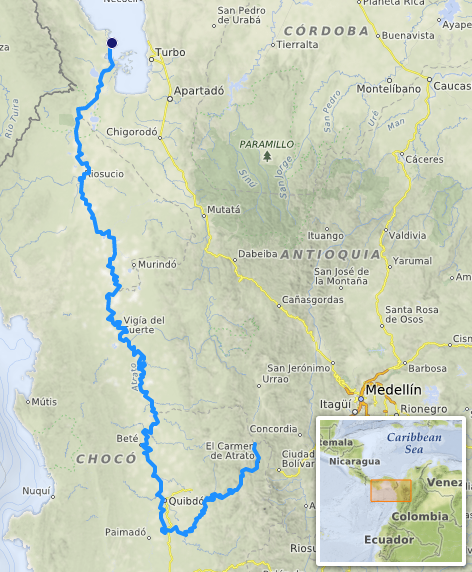
The course of the Atrato River. OpenStreetMap contributors, Ccmpg, CC BY-SA 2.0, via Wikimedia Commons.
The Atrato River Basin lies within Colombia’s Chocó Department. Part of the Chocó-Darién bioregion (extending through parts of Panama, Colombia, and Ecuador), this region makes Colombia one of the most biodiverse countries on Earth. This vital ecological corridor connects forests, rivers, wetlands, and coastal ecosystems. For Native and Afro-Colombian communities, the river is far more than a “natural resource.” It is a source of food, transportation, spirituality, culture, and collective identity.
The Chocó region has experienced decades of marginalization, extractive exploitation, and armed conflict. In Decision T-622, the Colombian Constitutional Court described the crisis in Chocó as historic and structural, shaped by poverty, weak institutions, illegal armed groups, and the rapid expansion of illegal mining (T-622/16, paras. 9.4–9.5).[1] Mercury contamination from mining operations severely affected rivers, forests, fisheries, and public health, leading the Court to characterize the situation as an environmental emergency and humanitarian crisis.[1]
The Court’s ruling reflects a principle central to the Earth law movement: Nature possesses intrinsic value beyond its utility to humans. The Court not only recognized the Atrato River as a subject of rights but also linked the protection of ecosystems directly to human dignity, cultural survival, and the rights of future generations. The Atrato ruling therefore became something larger than a dispute over environmental regulation. It represented an attempt to confront the interconnected crises of ecological destruction, inequality, and governance through a new legal paradigm grounded in biocultural rights and ecological interdependence.
The Atrato decision did not emerge in isolation. It built on Colombia’s constitutional recognition of environmental protection and the biocultural rights of Indigenous Peoples and Afro-Colombian communities. Colombia’s development of Rights of Nature has occurred largely through judicial decisions recognizing specific ecosystems as subjects of rights, particularly the Atrato River Basin and later the Colombian Amazon.[3] These developments build on the country’s 1991 Constitution, especially its recognition of ethnic and cultural diversity and what the Constitutional Court has described as Colombia’s “Ecological Constitution” or “Green Constitution.”[3] The Atrato ruling emphasizes the “profound unity between nature and human species” as a foundation for the biocultural rights that the Court sources in the Constitution (T-622/16, paras. 9.31–9.32).[1]
What made the ruling distinctive was its integration of these principles into a new legal framework. The Court recognized that ecosystems and cultures are inseparable, and that protecting one requires protecting the other.
It also introduced an innovative governance model. The Court ordered that the Atrato River be represented jointly by the Colombian State and the ethnic communities inhabiting the basin, while also establishing a commission of Atrato River guardians to support the river’s protection, conservation, and restoration (T-622/16, para. 9.32).[1] This hybrid structure sought to bridge formal legal systems with local ecological knowledge.
As O’Donnell’s scholarship suggests, Rights of Nature can be transformative when it reshapes the legal relationship between people, place, and ecosystems, rather than merely creating another mechanism for regulating environmental harm.[6] The Atrato ruling sought to do precisely that, reframing environmental law as a question of rights, relationships, and responsibility. In one of the ruling’s most significant formulations, the Court stated,“Justice for nature must be applied beyond the human scenario and must allow nature to be subject to rights.” (T-622/16, para. 9.31).[1]
The Implementation Gap: When Law Meets Structural Impediments
Rights recognition for the Atrato by the Colombian judiciary was only the first step. In the years following the decision, Colombia took important actions: guardians were appointed, institutions mobilized, and restoration plans developed.[7] The ruling reshaped legal discourse and inspired new advocacy strategies. Yet on the ground, implementation has been uneven.
The Atrato ruling was attempting to transform environmental governance in a territory where the causes of ecological harm—including poverty, weak institutions, extractive industries, and isolatio—are deeply embedded.
The challenges facing the Atrato are both legal and structural. Environmental harm in the region is tied to complex dynamics including illegal economies, governance fragmentation, and ongoing security challenges. Illegal mining persists as a major economic driver in the region, fueled by global demand and inadequate local economic opportunities.[4]
Mercury contamination continues to affect water quality, fisheries, and public health.[4] In the ruling itself, the Court referenced studies finding mercury levels of 60 parts per million in water sources used by affected populations along the Atrato Basin, far exceeding internationally accepted thresholds (T-622/16, para. 9.14).[1] Nearly a decade later, scientific studies continue to identify mercury contamination as a significant ecological and public health concern throughout the Atrato Basin. Recent environmental assessments found mercury contamination in sediments at levels posing moderate to high ecological risk, particularly in areas affected by illegal gold mining, while studies of fish populations continue to document widespread mercury bioaccumulation that threatens both aquatic ecosystems and communities relying on fish for subsistence.[4][8][9] Together, these findings illustrate an implementation gap, meaning the distance between legal recognition and practical enforcement.
RoN frameworks cannot, on their own, dismantle illegal mining networks or resolve governance gaps. Legal recognition can open new pathways, shift narratives, empower communities, and create accountability mechanisms. But without enforcement, resources, and political will, rights will remain at least partly aspirational.
Rights of Nature Beyond the Courtroom
The Atrato experience also raises a deeper question about the role of courts in building Rights of Nature governance. Strategic litigation has been an indispensable catalyst for legal recognition in Colombia and elsewhere in Latin America. Courts can recognize new rights, create innovative legal arguments, and seek to compel governments to act. But recognizing rights and designing institutions capable of realizing them are different tasks.
The challenge becomes particularly visible during implementation. Courts may establish guardianship structures, restoration obligations, or new forms of ecological representation, but these mechanisms still require budgets, administrative capacity, coordination among public authorities, and sustained participation by affected communities. The Atrato therefore invites us to ask not only whether RoN can be successfully enforced but also which institutions are best equipped to translate ecological rights into durable systems of governance.
This points to a tension within the broader RoN movement. Litigation can open the door to profound legal transformation, particularly where legislative or executive institutions have failed to respond to ecological harm. Yet a durable RoN framework may ultimately require something courts alone cannot provide: sustained democratic deliberation over institutional design, legislative frameworks defining responsibilities and resources, administrative structures capable of implementation, and meaningful participation by the communities whose lives are intertwined with the ecosystems concerned.
Political transitions test precisely this institutional resilience.
Colombia’s 2026 Presidential Election
This dependence on political institutions becomes especially important during periods of political transition. Under Colombia’s outgoing Petro administration, the country sought to position itself as a global environmental and climate leader. The government promoted a just transition away from fossil fuels, hosted international climate discussions in Santa Marta, and connected environmental policy to Indigenous Peoples’ rights, territorial protection, and the future of the Amazon.[10] These priorities were not always easy to implement domestically, but they gave Colombian environmental governance unusual visibility within national and international politics.
The 2026 presidential election may mark a significant shift. Abelardo de la Espriella’s narrow victory over Iván Cepeda has been described as a sharp turn to the right in Colombian politics.[11] During the campaign, environmental issues were closely tied to broader debates over security, economic growth, fossil fuel development, the Amazon, Indigenous rights, and the role of the state.[12] Reporting on the election suggests that De la Espriella has promised to expand oil and gas production, reduce the size of government, and pursue a more hardline security agenda.[11][13] Environmental observers have warned that such priorities could weaken climate commitments, environmental licensing, and protections for territories affected by illegal economies and armed actors.[12][13]
For the Atrato River, this political context matters. If the incoming administration weakens environmental agencies and prioritizes extractive industries, or if security policy treats territorial conflict separately from ecological harm, implementation may become even more difficult.
The Atrato case shows why RoN cannot depend only on a single administration. Long-term implementation and ecosystem protection will require continuity across governments, active guardianship by local communities, judicial oversight, civil society pressure, and sustained public investment. Courts may recognize rights, but governments allocate budgets, enforce regulations, implement restoration programs, and determine environmental priorities.
The future of the Atrato River may therefore depend less on judicial rights recognition and more on whether Colombia’s institutions and communities can continue to defend those rights through changing political cycles.
Lessons from the Atrato for the Rights of Nature Movement
The Atrato River remains one of the most important test cases for the RoN movement, and it offers several critical lessons:
First, rights must be backed by authority and resources. Without enforcement mechanisms, legal recognition cannot deliver robust ecological protection.
Second, recognition must be accompanied by institutional design. Courts can catalyze change, but durable RoN governance requires clear responsibilities, adequate resources, administrative capacity, and legal frameworks capable of carrying ecological rights beyond the courtroom.
Third, community leadership is essential. In many contexts, Indigenous Peoples and local communities provide the most consistent foundation for environmental governance.
Finally, legal innovation must be paired with efforts toward structural change. Addressing environmental harm requires confronting the economic and political systems that drive it.
Colombia’s experience with the Atrato River suggests to the international RoN community that judicial innovation is an indispensable beginning, but not necessarily an endpoint. Strategic litigation has helped move RoN from the margins of legal thought into courts and public debate. The next challenge may be to translate that recognition into legislative frameworks, adequately resourced institutions, participatory governance, and administrative practices capable of surviving changes in government.
In that sense, the Atrato’s most important lesson may not turn out to be that RoN litigation has failed. Rather, it may be that a judicial victory can begin an ecological transformation, but courts cannot complete that transformation alone.
Notes
[1] Colombian Constitutional Court, Decision T-622 of 2016, paras. 9.4–9.5, 9.14, 9.31–9.32, recognizing the Atrato River as a subject of rights and establishing legal guardianship protections (Atrato River Decision (T-622 of 2016) – Colombian Constitutional Court).
[2] Future Generations v. Ministry of the Environment (STC4360-2018), Colombian Supreme Court decision recognizing the Colombian Amazon as an entity subject of rights and linking deforestation to climate change and intergenerational rights.
[3] Earth Law Center, Earth Law Coursebook, chapter on Colombia and Peru, section on Colombia’s development of Earth law and the Atrato River ruling. Internal educational material cited with permission / on file with author.
[4] United Nations Environment Programme (UNEP) – Global Mercury Assessment and UNEP materials on illegal mining and mercury contamination in Colombia.
[5] Inter-American Commission on Human Rights – Environment and Human Rights in Colombia.
[6] Erin O’Donnell, Legal Rights for Rivers: Competition, Collaboration and Water Governance (Routledge, 2018); see also Erin O’Donnell, “Rivers Have Rights. What Happens Next?”, Melbourne Law School (21 May 2024), discussing the need to move beyond recognition toward the practical implementation of river rights. Melbourne Law School – “Rivers Have Rights. What Happens Next?”.
[7] Colombian Ministry of Environment and Sustainable Development, Cumplimiento de la Sentencia T-622 de 2016 – Cuenca del río Atrato and Avances de la Sentencia T-622 de 2016, documenting the guardianship structure and periodic implementation reports through December 2025; see also Contraloría General de la República, Informe Auditoría de Cumplimiento de las Sentencias T-622 de 2016 y T-445 de 2016, identifying shortcomings and delays in implementation. Official T-622 Implementation Portal; Official Progress Reports; Contraloría Audit Report.
[8] On recent scientific evidence of continuing mercury contamination and ecological risks in the Atrato Basin, see L. Córdoba-Tovar et al., “Ecological and Human Health Risk from Exposure to Contaminated Sediments in a Tropical River Impacted by Gold Mining in Colombia,” Environmental Research 236 (2023), Article 116759, available at: ScienceDirect.
[9] On ongoing mercury bioaccumulation in fish and associated risks to aquatic ecosystems and local communities in the Atrato Basin, see L. Córdoba-Tovar et al., “Influence of Environmental and Biological Factors on Mercury Accumulation in Fish from the Atrato River Basin, Colombia,” Environmental Pollution 361 (2025), Article 125511, available at: ScienceDirect.
[10] On Colombia’s outgoing climate and environmental agenda under the Petro administration, including its role in international fossil fuel phaseout discussions, see The Guardian, “Historic breakthrough: Colombia climate talks end with hopes raised for fossil fuel phaseout” (30 April 2026).
[11] On the 2026 presidential election results and the victory of Abelardo de la Espriella over Iván Cepeda, see Reuters, “Colombian right-wing candidate De La Espriella wins tight presidential race” (21 June 2026); and The Guardian, “Far-right millionaire wins Colombia’s razor-tight presidential election” (21 June 2026).
[12] On environmental stakes in the 2026 Colombian election, including the Amazon, fossil fuels, Indigenous rights, and environmental governance, see Mongabay Latam, “Elecciones en Colombia: los retos ambientales que le esperan al nuevo gobierno” (June 2026); and Mongabay, “What’s at stake for the environment in Colombia’s upcoming election” (June 2026).
[13] On concerns regarding the incoming administration’s approach to oil, gas, mining, fracking, environmental licensing, and climate policy, see Inside Climate News, “A Trump Ally’s Rise in Colombia Could Mean the End of Landmark Climate Policies” (22 June 2026); The Guardian, “Colombia’s climate crossroads: Trumpism casts shadow over presidential battle” (21 May 2026); and The Guardian, “Institutional threat: election of far-right leader raises fears for democracy in Colombia” (22 June 2026).