
Reciprocity with Nature: Understanding the Concept and Enacting It at the Local Government Level
By Gary Bowitch, Esq. and Ed Proctor, Esq.
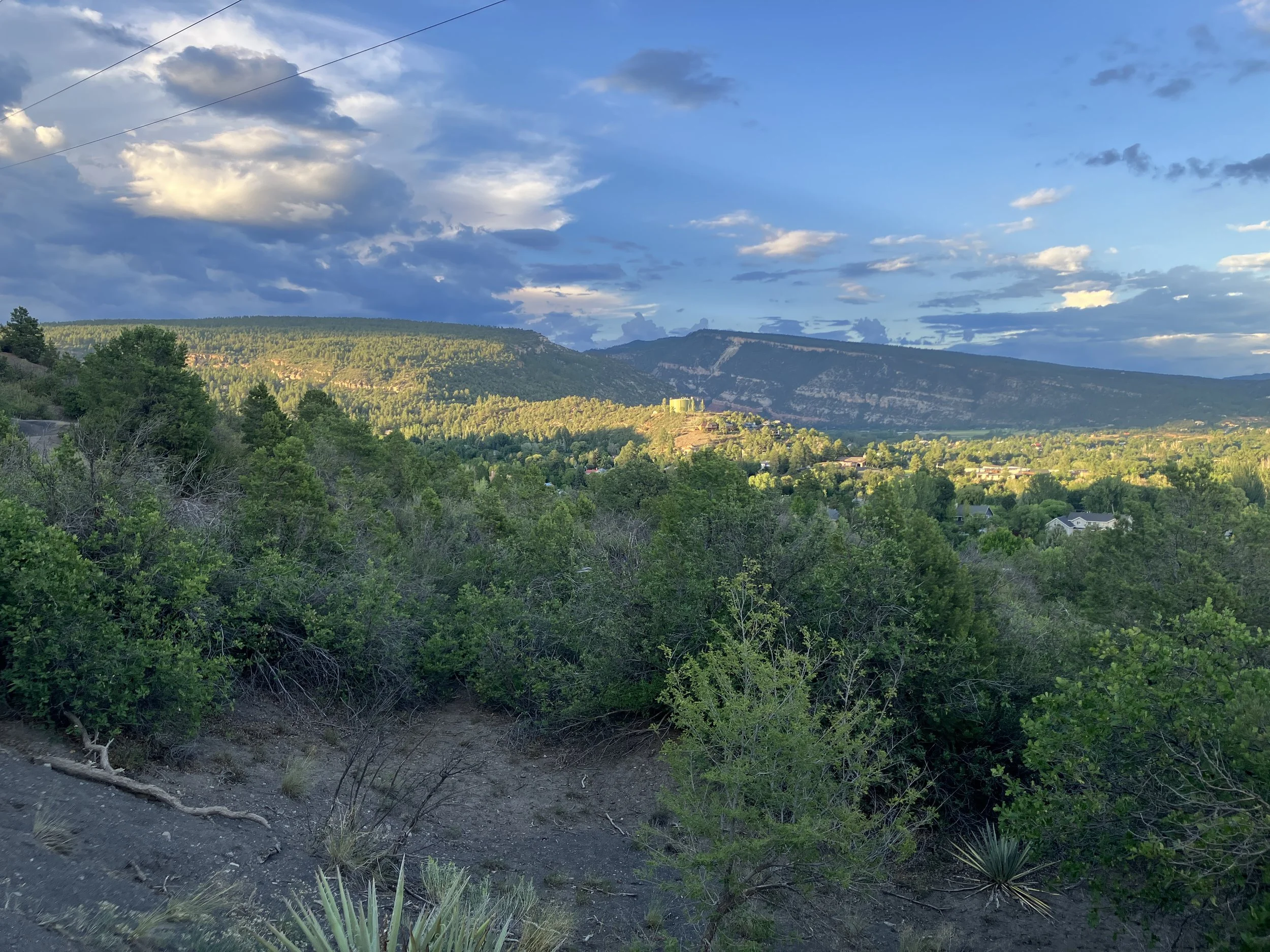
Hills, homes, and a water storage tank in Durango, Colorado. Photo credit: Matt Zepelin.
Imagine that you are a longtime member of your town’s planning board, which has just reviewed an application from a developer to build 30 new high-end houses in your town. The proposed project complies with all relevant zoning laws and has gone through a lengthy environmental quality review, which showed that the project will minimize (though not eliminate) all relevant adverse environmental impacts. As such, though the proposed project will be developed on many acres of a mostly rural and forested area of the town, your board was obligated to approve the application.
But you think to yourself, Shouldn’t there be something more we could do now that a large swath of undisturbed, natural land will no longer exist in our town?
You wonder whether the board could require the developer to give something back to the natural world: to reciprocate with nature.
This blog aims to answer such questions by exploring the concept of reciprocity with nature, then explaining how local governing boards can incorporate this approach into policies, practices, and local laws.
Defining Reciprocity With Nature
Reciprocity with nature begins with the recognition that human use and benefit of land and natural systems carry a corresponding responsibility to protect, enhance, and restore the interconnected health of those systems. The shift to reciprocity with nature is an integral element of the Rights of Nature movement.
The levels of extraction required for continued consumption of nature’s resources involves destruction of ecosystems and ongoing pollution of the planet. These choices, coming without regard to their impact on future generations of humans and other species, is plainly unsustainable. The late Native American (Kiowa) writer N. Scott Momaday describes this unsustainable human endeavor as recognizing that nature is not a resource to be controlled, but a living universe in which humans are an equal part, and which must include actions based on a respectful reverence for, rather than dominance over, nature.
“None of us lives apart from the land entirely; such an isolation is unimaginable,” wrote Momaday. “We have sooner or later to come to terms with the world around us—and I mean especially the physical world, not only as it is revealed to us immediately through our senses, but also as it is perceived more truly in the long turn of seasons and of years. And we must come to moral terms. There is no alternative, I believe, if we are to realize and maintain our humanity, for our humanity must consist in part in the ethical as well as in the practical ideal of preservation. And particularly here and now is that true. We Americans need now more than ever before—and indeed more than we know—to imagine who and what we are with respect to the earth and sky. I am talking about an act of the imagination, essentially, and the concept of an American land ethic.”
The chart below illustrates one vision of the human stages of reciprocity with nature in practice.
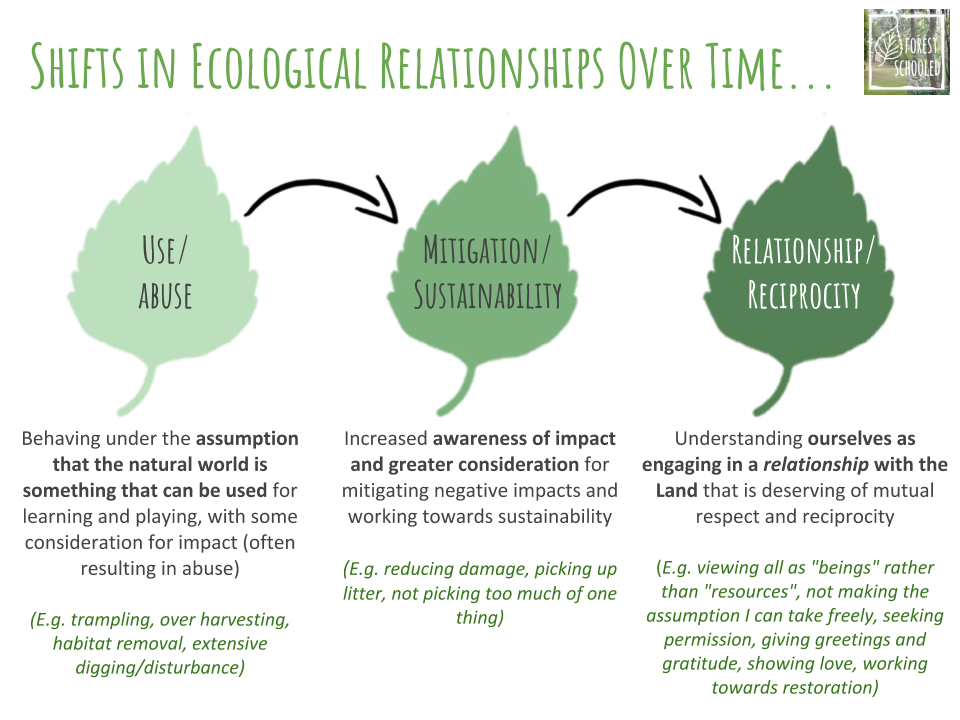
This image shows how the relationship between humans and nature have shifted over time (Forest Schooled, 2020).
Thoughts on Reciprocity With Nature
Many thought leaders have addressed reciprocity with nature. Wendell Berry, the renowned writer and cultural critic who passed away recently, expresses this principle simply by stating that true reciprocity with nature means giving back as much as we take. Author, scientist, professor, and naturalist Robin Wall Kimmerer, describes this new relationship this way:
“When I speak about reciprocity as a relationship, let me be clear. I don’t mean a bilateral exchange in which an obligation is incurred and can then be discharged with a reciprocal ‘payment.’ I mean keeping the gift in motion in a way that is open and diffuse, so that the gift does not accumulate and stagnate, but keeps moving, like the gift of berries through an ecosystem.”[1]
As Kimmerer indicates, reciprocal “payment” is not the goal of reciprocity with nature. Reciprocity with nature seeks to change the relationship of humans to nature by embedding principles of mutual benefit between humans and ecosystems into individual and collective behavior, local laws, regulations, and government policies.
Incorporating reciprocity concepts can be accomplished in diverse natural ecosystem environments. For example:
● Urban areas: Improving water quality entering nearby streams or wetlands; fostering healthy soil biomes in yards; safeguarding pollinator pathways.
● Forested regions: Establishing no-logging buffer zones around water sources while actively restoring native vegetation to enhance watershed health and improve downstream ecosystems.
● Deserts: Restoring native plant landscapes to not only improve soil retention but also replenish groundwater, support biodiversity, and reverse desertification.
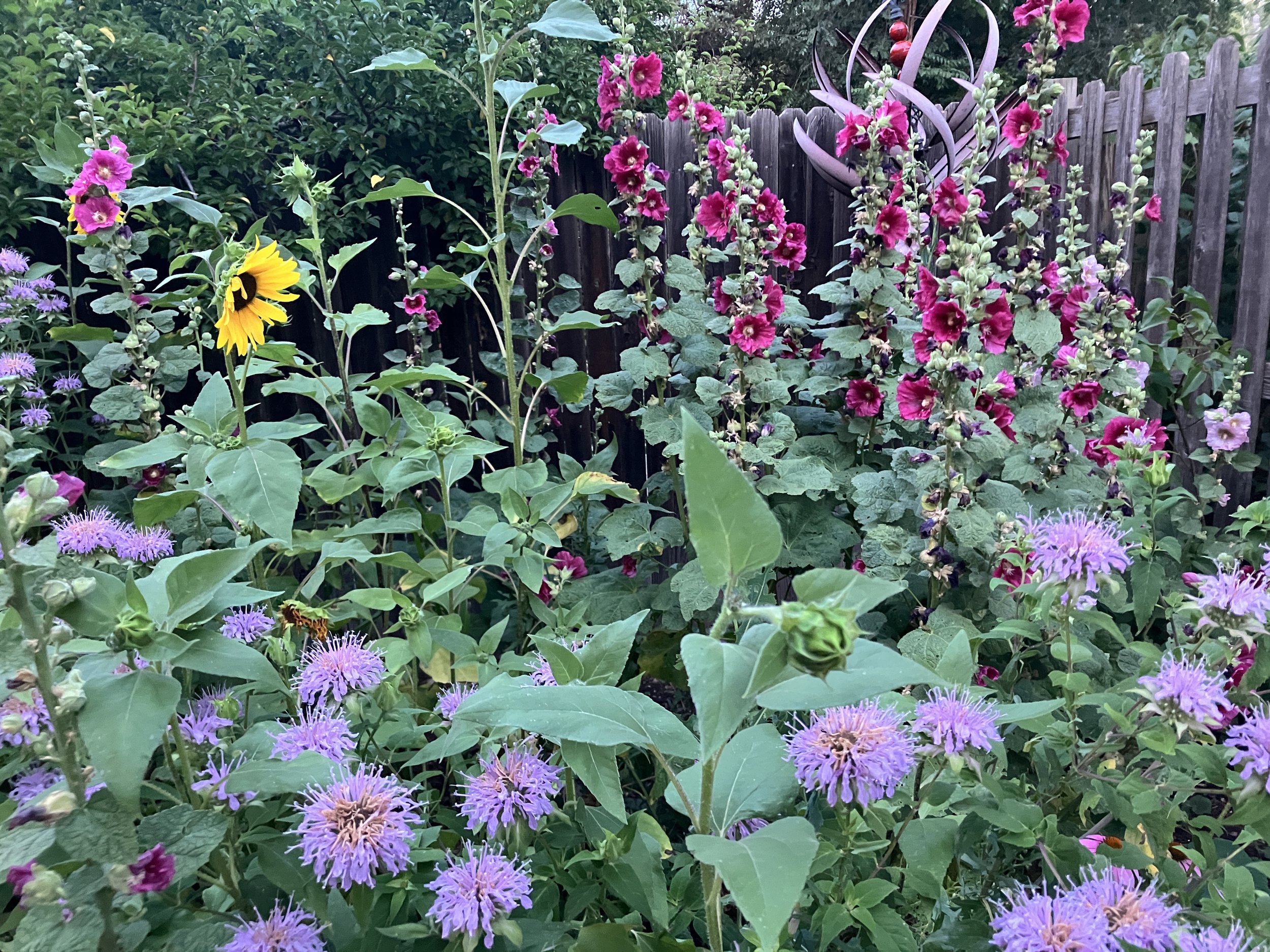
A backyard pollinator garden. Photo credit: Matt Zepelin.
How Local Governments Can Foster and Facilitate This New Paradigm
Local governments are in a unique position to shift the existing paradigm through new policies and practices, including enacting zoning laws that incorporate and enhance the concept of reciprocal relationships with nature. Local governments have broad authority to amend their local laws in ways that can advance reciprocity with natural elements.
Zoning ordinances, for example, can have a great impact on facilitating reciprocity with nature. That’s because such laws govern how, when, and where changes to the municipality will be allowed. In particular, zoning laws limit and control the types of future development that a town or village desires.
New development projects usually require various environmental and other reviews, as well as planning and zoning board approvals. Typically, local governments review proposed development projects by assessing potential adverse environmental impacts that may arise from such proposals. But these reviews normally fail to incorporate any review or evaluation of whether or not the project includes reciprocity elements. To remedy this deficiency, local jurisdictions could, for example, pass a Resolution that supports incorporating reciprocity concepts into local policies and laws and that creates a working group empowered to identify specific ways to achieve this goal.
One specific method is for local governments to enact new zoning ordinances that would require a review by the applicable zoning, planning, or Town board of how a proposed development project incorporates, protects, and enhances a reciprocal relationship with nature. Such a review could include the use of a reciprocity with nature "scorecard" that enables local officials to more formally evaluate how reciprocity with nature is being addressed, if at all, in applications for zoning and planning approvals. You can get a more detailed look at how a municipality can enact zoning legislation to require such an evaluation in project reviews by reading the Reciprocal Zoning Concept Note and Template we created, which includes a model Reciprocal/Nature Scorecard.
Conclusion
Effecting a dramatic shift in how we view our relationship with nature is not an easy task. It will take a great deal of time and effort to inform and educate our fellow humans on vast benefits of this new sustainability paradigm. Local governments are in one of the strongest positions to facilitate this shift towards reciprocity with nature. Implementing specific policy changes on the local level is one of the best means of achieving this goal. It is now up to all of us to make this happen.
Notes
[1] Robin Wall Kimmerer, The Serviceberry: Abundance and Reciprocity in the Natural World, illustrated by John Burgoyne (New York: Scribner, 2024), 14.