
ELC's Anne Solgaard on Nature Joining the Board at Norwegian Outdoor Apparel Company Northern Playground
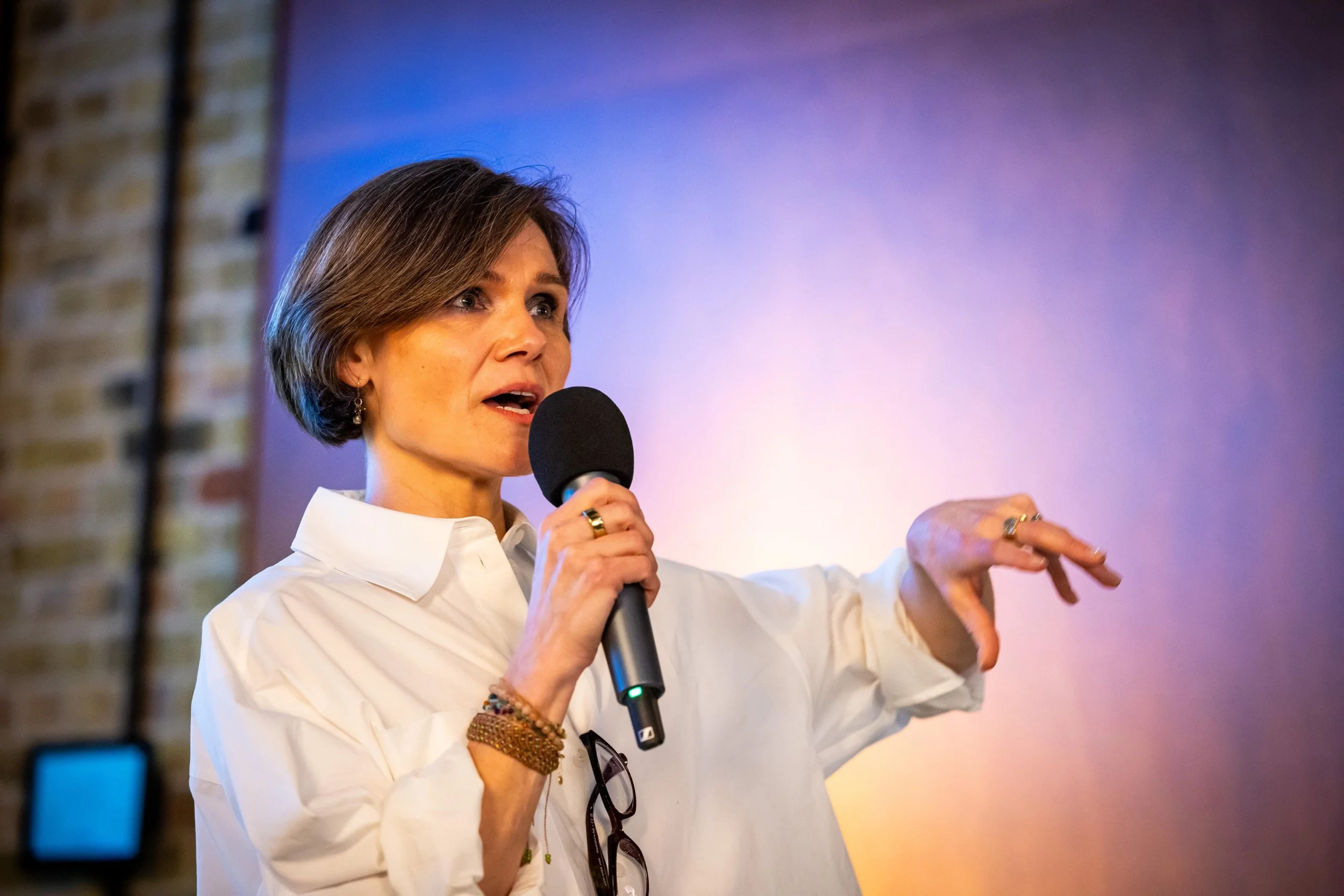
Earth Law Center summer intern Raphael Nahon interviews ELC’s Nature Governance Business Development Associate, Anne Solgaard.
How did you first hear about the idea of Nature on the Board?
I only stumbled onto this work about two years ago, and it arrived as two separate “seeds” that took a while to “sprout.”
The first landed almost as a throwaway line. I was traveling with a group of American entrepreneurs in the Arctic, and several of them mentioned, almost in passing, that they’d love to bring Nature onto their boards someday. As far as I could tell, none of them had actually done it—it was more of an aspiration floating around than a real plan. My first reaction was to dismiss the idea; it sounded a bit far-fetched to me at the time, maybe even a little pretentious.
The second seed landed differently. I was listening to a podcast in which Simeon Rose from the company Faith in Nature described, in very concrete terms, how Faith in Nature had actually onboarded Nature as a director. He mentioned working closely with Earth Law Center (ELC) and Lawyers for Nature to make it happen. That was the moment the idea stopped being abstract for me. I reached out to ELC’s Grant Wilson shortly after, and, as they say, the rest is history.
Were there aspects of your professional background that prepared you to take seriously the idea of bringing Nature's voice directly to the business world?
Honestly, I arrived at this work despite my professional background, not because of it. My career has been in international organizations, circular economy, and corporate strategy for a sustainable built environment. That world taught me the discipline of measurable targets and the habit of always translating action into both sustainability impact and cost. It’s a useful, grounding skill, but it’s not exactly a natural home for an idea like “Nature has a seat at the table.”
Where this work does feel like home is in my academic background and embodiment practices: holistic science, deep ecology, facilitation, and movement-based expressive arts. That’s the part of me that recognized this idea immediately, almost with relief, rather than skepticism.
So in a way, I sit between two worlds: one that speaks fluently in corporate sustainability (ESG) and cost-benefit, and one that speaks in interconnection and intrinsic value. What I’m doing now, in practice, is building the bridge between them. That bridging work is what keeps me engaged and inspired.
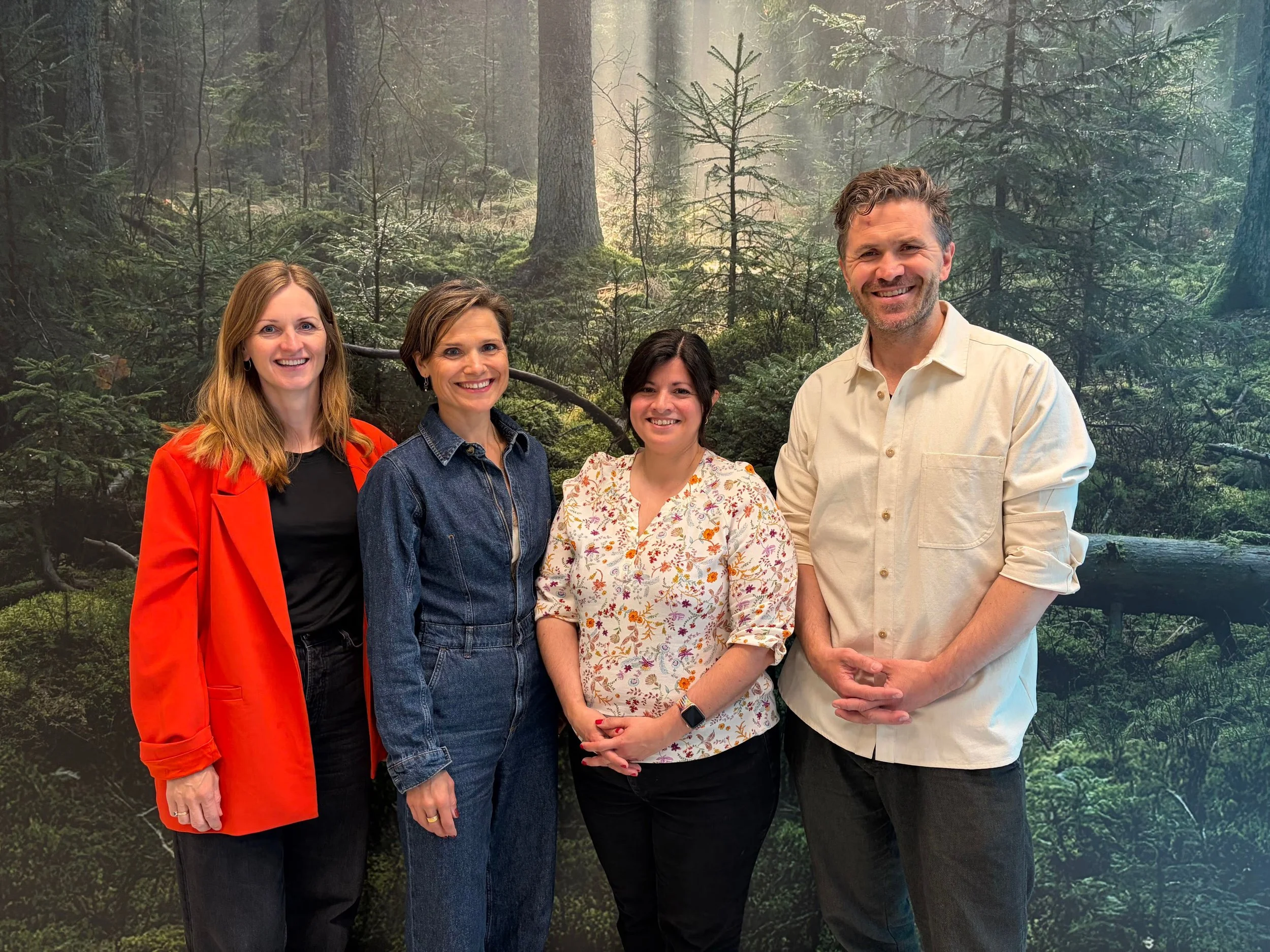
From left: Marita Sollien, CFO of Northern Playground; Anne Solgaard, Co-owner (and expert in integrating Nature into board decisions); Karoline Andaur, Nature’s representative; and Jo Egil Tobiassen, Founder and CEO.
Did your role as an investor play a part in the decision to put Nature on Northern Playground’s board?
The two roles are connected, but the causality runs the other way. I invested in Northern Playground (NP) because they already held an ecocentric perspective and because they were already well underway in preparing to bring Nature into the boardroom, not in order to push this idea onto their board. NP now has more than 1,200 investors.
More broadly, what was the relationship between Earth Law Center and Northern Playground prior to this move?
Our dialogue on onboarding Nature started in the winter of 2025, and I only committed to invest in January 2026. So, by the time the formal proposal was being drafted, the relationship between ELC and NP was already a working one, not an investor imposing a governance experiment on a portfolio company.
How did you develop this particular framework for the representation of Nature, with real voting rights and a speaking role on pertinent matters? Did you draw inspiration from earlier models ELC has worked on, like Faith in Nature or Hub Culture, or from conventional board structures?
This is very much built on existing work; we didn’t invent the framework from scratch. The backbone is ELC’s own work and our Onboarding Nature Toolkit, together with everything I’ve learned from following the Faith in Nature case closely. On top of that, my colleague Stian Lund wrote his master’s dissertation on exactly the question of representing Nature as Director, with Northern Playground as a case. For this he conducted a series of interviews with experts in the field as well as with NP’s own board. That research shaped a lot of the practical design choices.
The other input was more personal: I’ve spent years working at the intersection of governance and sustainability frameworks, from institutional roles to board work with smaller companies, and that experience mattered as much as the academic literature. The toolkit and the Faith in Nature precedent gave us theoretical grounding, while my time in corporate governance lent the real-world experience necessary to make such an undertaking successful.
Karoline Andaur, who is serving as the first Nature representative on NP’s board, is a deeply experienced advocate for Nature, having served as Secretary-General of WWF Norway. What qualities did you prioritize in selecting a proxy to represent Nature?
Karoline is highly qualified, and she continues to serve as Secretary-General of WWF-Norway alongside this role. What NP wanted, above a particular résumé, was someone who could carry the voice of an activist and agent for change. The Proxy needs to speak as Nature both inside and outside the boardroom, not just report on Nature’s behalf. Karoline was an obvious choice for that, and frankly a bit of a dream candidate.
To that end, what might future proxies look like in different organizational contexts, particularly for companies without access to someone of Karoline’s profile?
I don’t think her profile is what other companies should try to replicate. What matters more is clarity in what voice of Nature you want represented at your table, and then finding someone with the ability and the personal suitability to actually fulfill that role. Smaller companies especially shouldn’t assume they need a public figure of Karoline’s stature to do this well. It doesn’t have to be someone with an environmental science or legal background at all. I’ve seen people with completely different résumés hold this role well, as long as they’re aligned with the company’s vision for Nature’s voice and have the capacity to carry that voice under pressure. For people who want to build this capacity, ELC’s Nature Governance Agency (NGA) now offers the Dandelion training specifically for developing skills as a Proxy for Nature. This is a great starting point regardless of anyone’s professional background.
Nature’s representation is beginning with a pilot period, running through June of next year. What do you most want this pilot year to reveal?
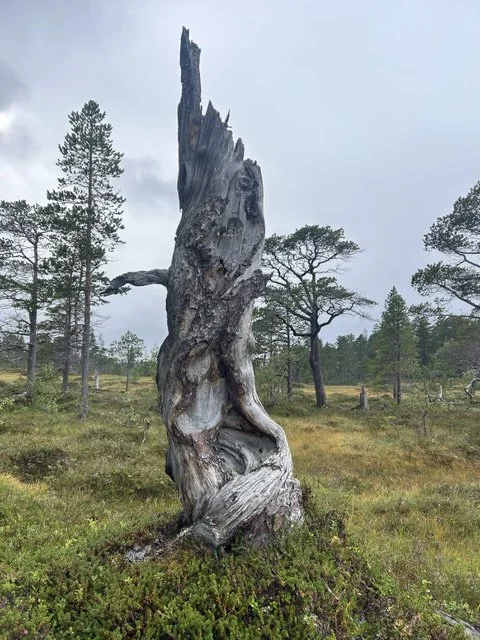
A northern Norwegian landscape. Photo credit: private.
As a starting point, we need to learn our way into Nature-conscious governance. Other companies have onboarded Nature before us, but every case is unique, so I’ve deliberately designed this as a learning journey rather than a rollout of a fixed template. We need to discover together, in practice, what it actually means for Nature to be a Director at Northern Playground specifically.
What would success for Nature’s representation look like to you?
Success, to me, isn’t a single metric. It’s if, a year from now, the board can point to a handful of concrete instances where Nature’s presence at the table changed the outcome of a decision. It’s if the boardroom conversation itself has shifted, so ecological consequence becomes part of the instinctive first pass on a decision rather than a check bolted on at the end. And it’s if we’ve built enough of a working structure that whoever comes after us—the next Proxy and the next board—inherits a living practice rather than a one-off experiment.
Could similar progress be made in corporations and industries whose financial success is less directly tied to Nature than that of an outdoor apparel company?
Yes, absolutely; this is where I’d like to take the work next. My dream now is to develop representation for Nature in very different types of organizations than NP.
Specifically, I would love to do so in an investment fund or a renewable energy company. The two would be very different cases. A fund’s relationship to Nature is indirect and mediated through capital allocation, which raises the question of what it means for Nature to have a voice in decisions that are several steps removed from any physical footprint. A renewable energy company faces the reverse problem: the industry gets treated as inherently “green,” which can gloss over real issues of land use, biodiversity trade-offs, and material sourcing. Both would teach us something very new about the role of Nature in the boardroom.
Up till its recent expansion to London, ELC has been a U.S.-based organization, yet much of the momentum of Nature-on-board has so far come from Europe. What might it take to expand the movement into the U.S. or other regions?
Frankly, I’m not sure. My hunch is that this reflects a budding curiosity around the more-than-human and around governance itself, surfacing in small pockets of European business. This interest, I believe, has found ground to stand on inspired by cases like Faith in Nature in the UK and others, anchoring what was until now a more diffuse, pro-environment sentiment.
On top of that, the regulatory scaffolding in Europe—the EU Green Deal, Corporate Sustainability Reporting Directive (CSRD), and the growing traction of Taskforce on Nature-related Financial Disclosures (TNFD)—made it easier to justify these conversations at board level in commercial terms. The U.S. doesn’t have that same regulatory backdrop right now, so the case there will probably have to be built more on fiduciary duty and reputational grounds than on compliance pressure. Maybe it’s time to set up an exploration effort specifically focused on the U.S. context, rather than assuming that what’s worked in Europe will necessarily translate across the pond.
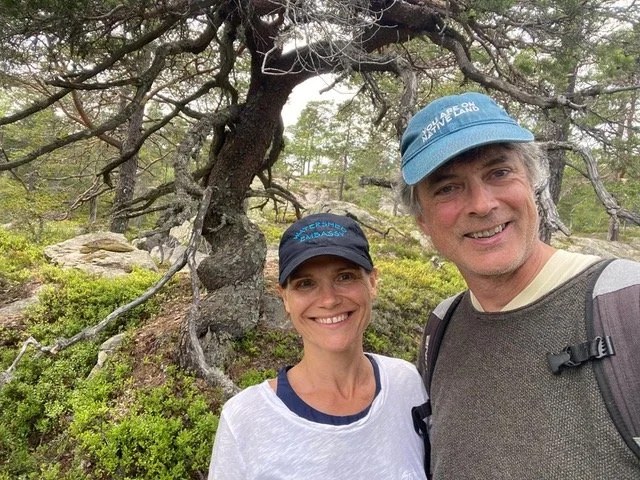
Solgaard and her husband on a hike in southern Norway. Photo credit: private.
Lastly, what advice would you give to a shareholder, board member, or company looking to give Nature more of a voice in their decision-making process?
Start by exploring your own assumptions before you try to answer what it should mean for the company. What does Nature mean to you, personally? Specifically, whose voice is being represented and spoken for, when we say “the voice of Nature”? Onboarding Nature is a journey, not a destination, and it’s simultaneously an awakening process to our own nature and to the nature of the company we’re part of.
For larger companies, I’d also say: go and look at TNFD and its Locate-Evaluate-Assess-Repair (LEAP) process. It gives you a structured process and a shared language for understanding and disclosing Nature-related risk, and that language is ultimately what boards can relate to. I’m a fan of compliance, but compliance without any real understanding of what Nature is, or its intrinsic value, becomes mechanical at best and meaningless at worst. Nature on the board is an invitation to walk, sense, and actually live what you believe, not just report on it.