
Small Island Developing States at International Climate Conferences: A Two-Step Approach to Advocacy
Advocates from around the world are now wrapping up the SB 64 climate meetings in Bonn, Germany. (The 64th sessions of the United Nations Framework Convention on Climate Change, or UNFCCC, Subsidiary Body for Scientific and Technological Advice and Subsidiary Body for Implementation.) This year, Parties were quick to adopt the agenda, in a sharp departure from recent meetings where they disputed the agenda until the last moment. However, progress was waylaid throughout by recurring disputes related to finance and implementation.
The June meeting marks the halfway point between 2025’s COP 30 and COP 31 in Antalya, Türkiye (November 2026), and is part of what sets the tone for the later meeting. This year, many advocates were coming off of talks in Santa Marta, Colombia at the 1st Conference Transitioning Away from Fossil Fuels. That Conference is designed to provide a horizontal dialogue that delivers on the implementation of the phase-out of fossil fuels. Tailored to implement an innovative and inclusive methodology, the Conference works separately from the UN process but is not meant to replace it. The convening was intended to exclude actors linked to the fossil fuel industry as a means to address the industry lobbyists who overrun UNFCCC meetings. At the Santa Marta conference, governments from nearly 60 countries gathered to discuss what will shape the transition away from fossil fuels, with topics including: just transitions and effective roadmaps, fossil fuel subsidy reform, international financial architecture and debt sustainability, investor-state dispute settlements, state-owned enterprises, and carbon pricing and energy taxes. Of the countries in attendance, at least 12 were small island developing states (SIDS).
SIDS are uniquely situated in the climate crisis, as they truly stand at the frontlines of the fight against climate change despite contributing to climate change the least. Small island populations feel the effects of climate change more acutely than most other parts of the world due to their exposure to hurricanes and other extreme weather events. And SIDS are at risk for sea level rise consuming their homes, with citizens seeing the very existence of their communities under threat. In Tuvalu, people are already migrating to Australia while the government builds a digital copy of the country in an effort to preserve culture and connection.
***
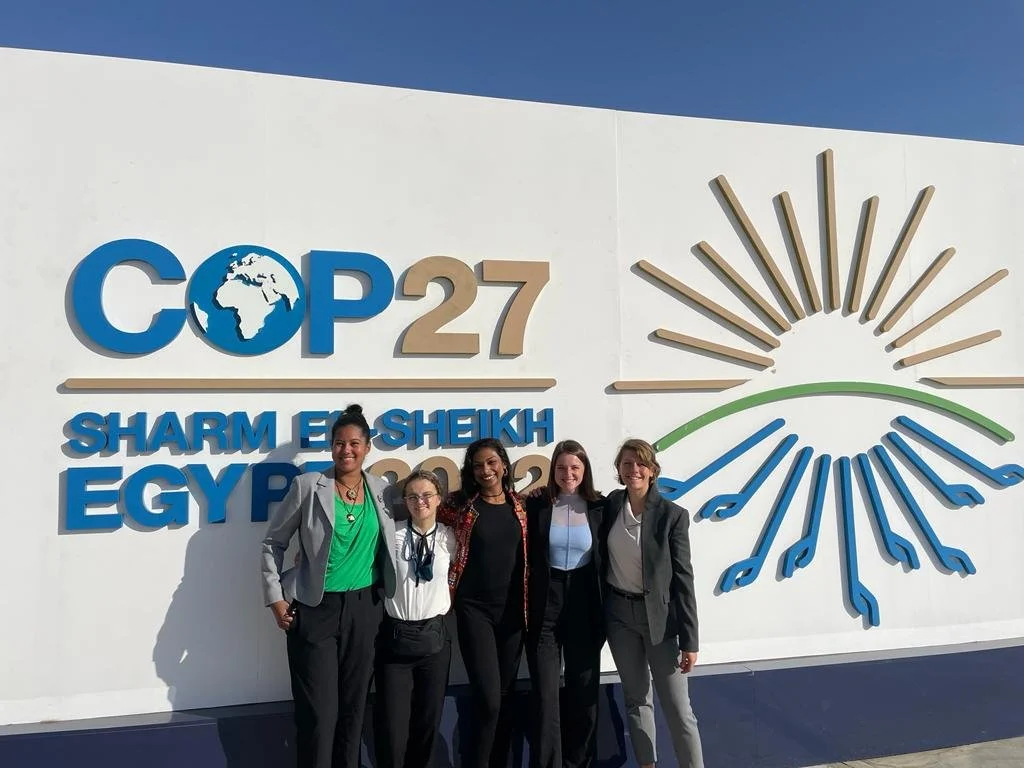
The author (second from left) with the Vermont Law School student team at COP27.
The first climate conference I attended was COP 27, which took place in Sharm el-Sheikh, Egypt in 2022. I went to the conference as a part of Vermont Law School’s International Climate Change course. Our class provided technical assistance to the Republic of Palau, a small island state in the Pacific. The task appeared simple: we were to attend negotiations, take notes, provide summaries to our teams, and offer other support where requested. We prepared all semester and learned everything we could about the UNFCCC. But there is very little that can prepare you for the hustle and bustle of the negotiations themselves.

Capitol building of Palau. Photo credit: Lukas. CC BY 2.0.
At COP 27, I followed climate finance, getting to shadow some very experienced negotiators. Despite my inexperience, they were patient and answered all of my questions. I learned a lot from them, such as what to prioritize in the grand expanse that is climate finance, an enormous amount about Palau’s priorities in the international sphere, and, above all, how to prioritize doing what Palau needed. SIDS often need more capacity at climate conferences—part of that is simply needing more people in the room. SIDS negotiation teams often have less than a quarter of the people of most Global North teams. That diminished capacity means that negotiators cannot be in every room.
Although I put my prior reading to use, my greatest accomplishment at COP 27 had little to do with mastery of arcane technical details. It was that a negotiator told me that they knew I would have Palau’s priorities at heart, and that I was a trusted member of their team.
The most important thing that I learned from my experience attending climate COPs was the power of listening in advocacy. I’m not a natural at listening, and I’d wager it doesn’t come naturally to many lawyers. In law school, we learn plenty about the law, about policy, and most of all about problem-solving, and we are trained to be right and to project confidence in our opinions. Yet we learn precious little about the importance of listening deeply to our clients.
Every advocate, particularly in the climate space, can practice and learn this skill, as well as encourage and inspire our colleagues to do the same. I hope my fellow advocates reading this find something new and valuable to add to their skillset in protecting Nature.
The Steps to Good Advocacy
Although there are exceptions, most of us who live in the Global North have yet to truly understand what it is like to be forced to migrate because of climate change—leaving your home and not knowing if it will be there when, or if, you return. As the reality of climate change has continued to press on SIDS, many nations are forced to make difficult decisions to protect their people and the lands that have sustained their families for generations.
For those of us who don’t understand on a personal level what that experience is like, can we still show up as good advocates, particularly as lawyers? According to the Alliance for Justice, advocacy is “any action that speaks in favor of, recommends, argues for a cause, supports or defends, or pleads on behalf of others.” In my opinion, this definition lacks the all-important pre-requisite of listening to others. As we move into a new season of climate advocacy, we have the chance to think more critically about the best ways to represent and uplift island voices.
It is my philosophy that good advocacy comes in two main steps.
Step one, listen.
Like, really listen. Attorneys are generally not accustomed to listening. Most of the time, we are shouting into the megaphone, zealously speaking on behalf of our clients. But when the client is the Earth, and we need to put our ear to her protectors, then sometimes we need to sit down, stop speaking, and start listening. This practice can be enhanced by what’s called “active listening,” the process of really hearing and fully comprehending a speaker. In the context of listening to people faced with climate-related displacement, there needs to be a high level of emotional intelligence, connecting with folks on a deeper level and truly meeting the moment.
A core tenet of my legal practice rests on climate justice and environmental justice, which means centering meaningful participation and fair treatment. To me, this involves showing up at the table with an open mind. As someone who grew up in the Global North, it also means letting go of my ego. We are taught how to be right in law school, but we might not always know what is best, at least not without listening first. We don’t live on those islands, don’t know the culture, and don’t know what is important to the people who live on and protect that land.
Putting the onus on listening doesn’t mean you should arrive at the conference as a blank slate. My biggest mistake from my first climate conference is that I did not walk in with a full grasp of the nuances of climate finance, which put a burden on the negotiators who supervised me. While some of it is simply learned on the job, more preparation would have allowed me to better serve the team and become a strong resource faster. Show up to the table as educated on the issue as you can. This means reading extensively about your area of advocacy. If you can, prioritize resources written by SIDS authors. Yet even with all that education, temper your opinions with an open mind—you might be wrong or might be surprised by what you learn.
There are a few techniques that you can use to be a more proactive listener, the most important of which is asking questions (the more open-ended, the better). A second simple technique is to reflect on and paraphrase what you’ve heard. This technique is great for preventing misunderstandings and making sure that action plans are on track. Third, listen patiently, without interruption. This seems simple yet is key to really understanding. It’s hard to truly listen and withhold judgment if you habitually treat listening as waiting for your turn to speak.
Instead of a megaphone, a good lawyer should be a toolbox. We listen and understand, fill in the gaps, and give clients the tools that we have to offer. Which leads to . . .
Step two, the action step, or as I’ve lovingly called it “raise hell.”
Once you’ve listened and offered the tools, ask what your client needs next. This is where another core tenet of lawyering, “zealous advocacy,” comes in. Once you understand the priorities of your client, you use your lawyer toolbox to advocate within those priorities. This can mean consulting your client often, and sometimes re-strategizing.
Rinse, repeat. Listening never ends, but it has to be the beginning.
***
After my experience at COP 27, where I dove into climate finance and came out a stronger advocate, I prepared to attend my next conference, SB 58. When I walked through the doors at Bonn, I found the Palau team. On the spot, I was assigned Article 6. If you know the Paris Agreement, you might know that Article 6 carbon markets are among the more technical areas under the UNFCCC umbrella—not to mention quite different than the climate finance on which I’d cut my teeth at the earlier COP. But I had proved my ability to think on my feet and catch-up quickly, and I knew enough background to be helpful while I was learning.
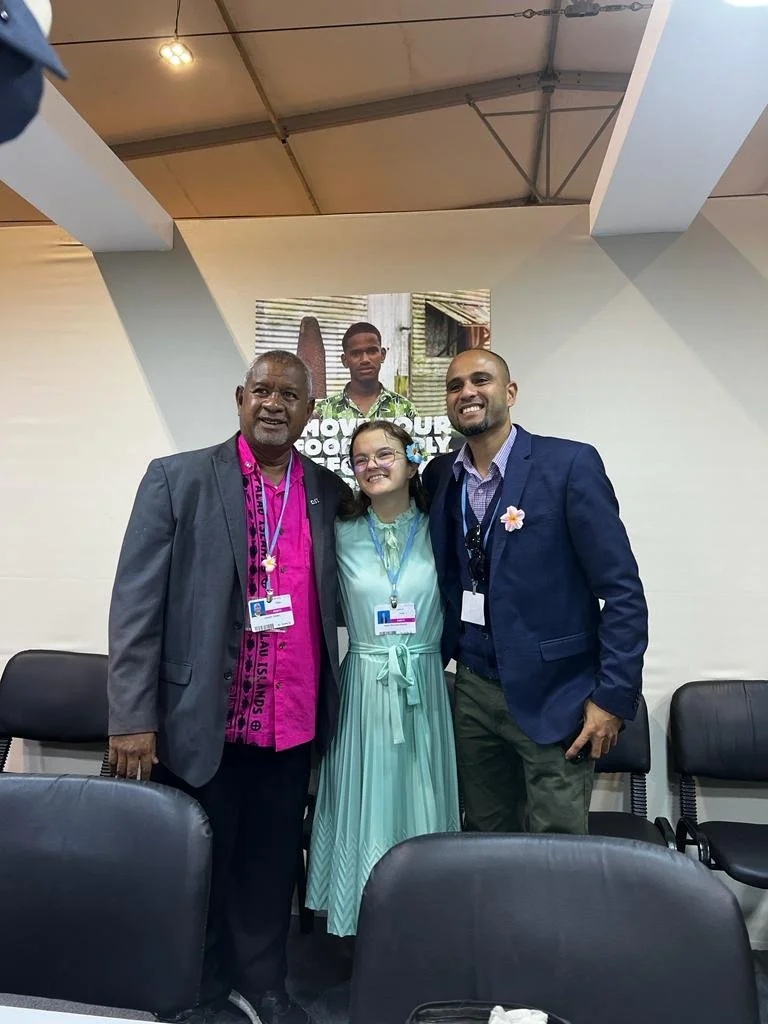
The author with members of Palau’s climate finance team at COP 27.
Over the next few days, I read as much as I could about Article 6, asking questions where relevant, and learning as much as possible from a negotiator who quickly became an incredible inspiration to me. By the time I left the conference, I fully understood Article 6 and had a strong sense of what Palau needed from me in relation to it. When I returned for COP 28, I was back on the Article 6 team—a strong listener, and a helpful tool for the team.
I will never forget my experience working with Palau. Negotiators at SIDS are among the smartest, kindest, and most dedicated people I have ever met. Listening not only made me a better advocate and taught me an incredible amount about the UNFCCC but also taught me a lot about myself.
As advocates, we are constantly learning and developing skills. Here is my plea to put good advocacy and strong listening at the top of the list.