
Pacha Mama vs. the State: Assessing Judicial Development and Implementation Challenges of the Rights of Nature in Ecuador
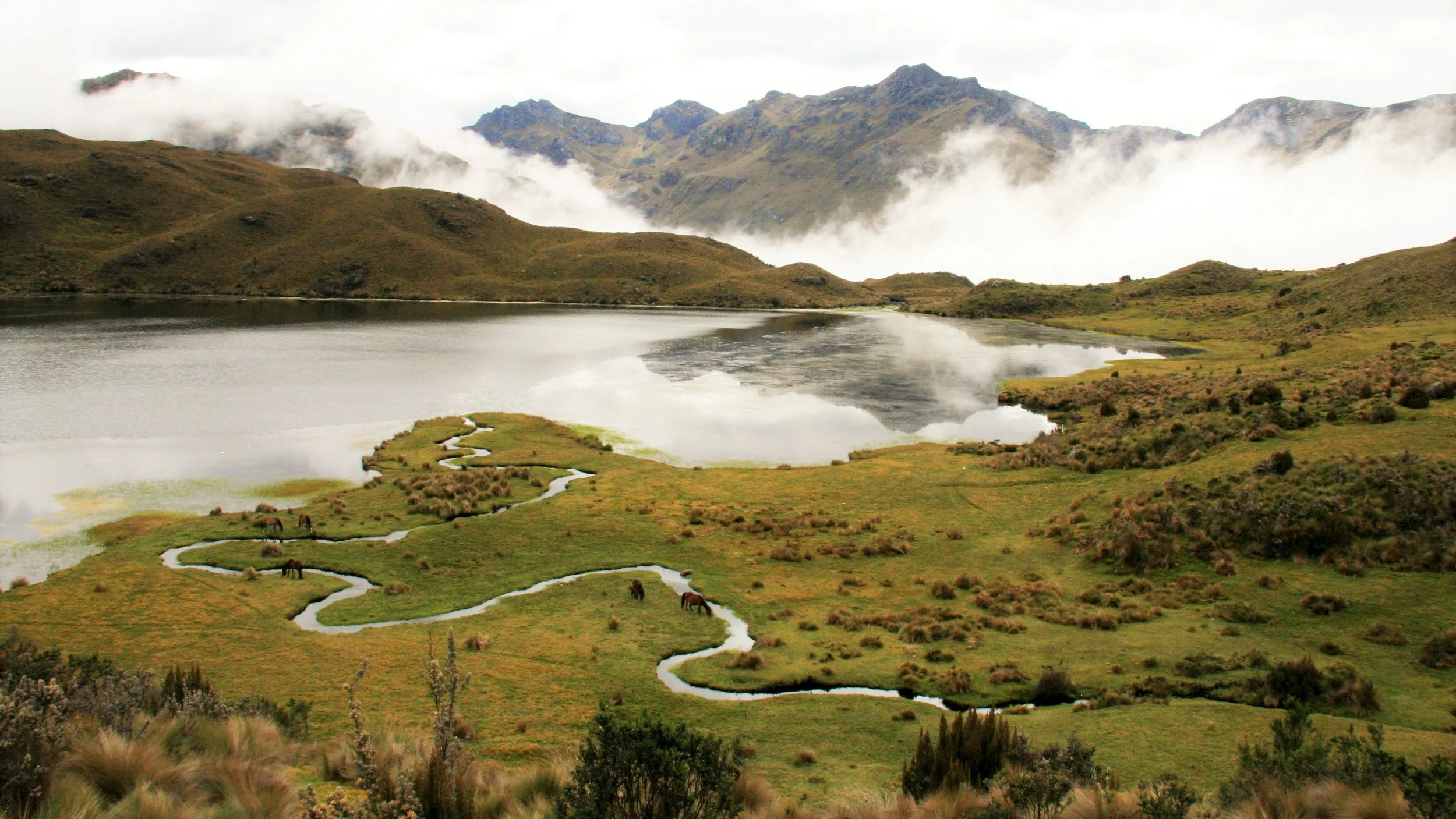
Andean páramo in Ecuador. Photo credit: Alicia Correa Barahona, public domain.
For most of modern legal history, Nature has been property. A river could be owned, a forest could be sold, and a coastline could be industrialized, but none of them existed as a rights-bearing entity. Ecuador changed that in 2008, when it became the first country in the world to recognize the inherent Rights of Nature (RoN) in its national constitution [1]. The change came through a constitutional referendum that recognized Pacha Mama—Mother Earth—as a legal subject, capable of being represented in court and protected by enforceable rights [2]. While Ecuador remains the only country to have enshrined rights for Nature at the constitutional level, today there are over 600 initiatives around the world using RoN frameworks to advance environmental protections [3]. Ecuador has inspired many of these initiatives. Eighteen years on from its historic constitution, however, the country also demonstrates how challenging it can be to achieve meaningful RoN implementation.
The 2008 Constitution and Rights of Nature Implementation
In September 2008, Ecuadorians voted by a nearly two-thirds majority to adopt a new constitution. Among its provisions were sweeping social guarantees, expanded Indigenous rights, and a commitment to sumak kawsay, the principle of “good living” espoused by Indigenous Kichwa Peoples that holds human wellbeing as inseparable from the health of the natural world [4]. The reform was largely rooted in an Indigenous worldview and was in part the product of decades of Indigenous organizing throughout Ecuador. When then-President Rafael Correa convened a Constituent Assembly in 2007 to draft the new document, Indigenous representatives and international environmental advocates helped shape much of the language that would become new constitutional law.
The new constitution guaranteed three rights to Nature—the right to exist, the right to maintenance and regeneration, and the right to be restored—that any person or community could “call upon public authorities to enforce” [5]. Importantly, a claimant could raise these rights whether or not they had suffered any personal harm. This is a departure from traditional environmental law, which generally conditions ecosystems’ legal protection on injury to human interests. The 2008 constitution discarded that logic and inhered rights in Nature as such. In theory, a claimant suing to enforce them would not have to prove that their own health, property, or livelihood had been damaged by a lack of environmental protections—only that Nature’s rights had been violated. Forests, animals, and waterways, rather than the people who depended on them, became protected parties.
RoN implementation, however, was complicated from the start. Correa had campaigned on an anti-neoliberal platform, promising a break with the foreign extractive industry that had harmed Ecuador’s environment and impoverished Amazonian Indigenous communities for decades [6]. Yet, to fund the 2008 constitution’s ambitious social reforms, Correa pursued an aggressive extractivist agenda [7]. In the following years, the Ecuadorian government expanded oil extraction in the Amazon, opened new mining concessions in previously protected territories, and pursued criminal prosecutions against Indigenous leaders who organized against extraction projects [8]. In practice, the RoN provisions would be developed through litigation as claimants began testing the new constitution case by case.
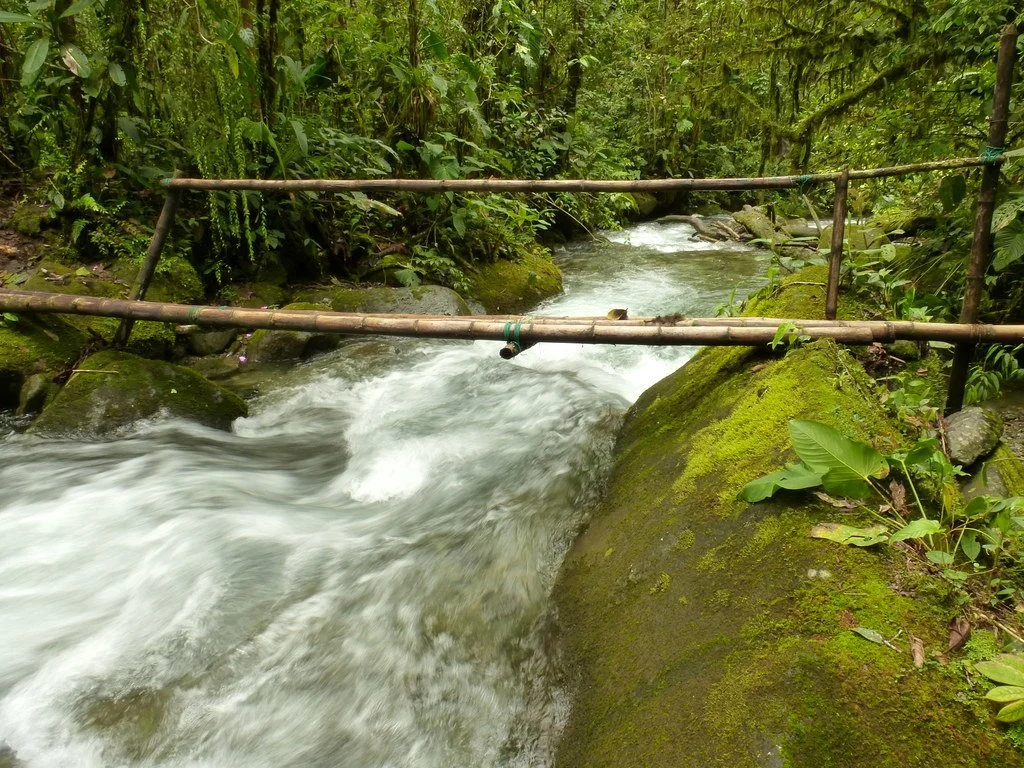
Bridge over Rio Los Cedros. Photo credit: Adreas Key, public domain.
Case-Based Development of RoN Jurisprudence
Because Ecuador’s constitutional language is abstract—for example, “Nature . . . has the right to integral respect for its existence”—it fell to the judiciary to determine what it actually meant to give Nature rights. This framework unfolded across a decade of jurisprudence, resulting in the creation of groundbreaking legal precedent.
The first test came in 2011, when international plaintiffs filed a constitutional protective action (acción de protección) before the provincial government of Loja on behalf of the Vilcabamba River [9]. A state-sponsored road project was dumping excavation debris into the river, damaging local ecosystems without permits or environmental impact assessments [10]. Invoking Article 71, the Loja Provincial Court held that the local government had failed to prove that the project would not permanently alter the Vilcabamba ecosystem, becoming the first court in history to enforce the constitutional rights of a non-human ecosystem [11]. As a remedy, the court issued an injunction against debris dumping and charged the government with creating a comprehensive environmental remediation plan [12]. Lacking administrative compliance frameworks, however, the local government largely ignored the ruling [13].
A decade later, the legal landscape shifted dramatically when Ecuador’s Constitutional Court—the highest court in the country—delivered its opinions in the 2021 Mangroves and Los Cedros cases. The Mangroves case arose from a challenge to Ecuador’s Organic Code of the Environment, a regulatory environmental code which did not specify the need to protect the integrity of mangrove ecosystems from human activity [14]. The Court declared the provision not in accordance with Rights of Nature, holding that public infrastructure may only be constructed if it can be proven that it will not disrupt the structure and function of affected ecosystems [15].
The second case centered on Los Cedros Protected Forest, a highly biodiverse cloud forest threatened by exploratory copper and gold mining concessions granted to Ecuador’s state mining company [16]. The Constitutional Court revoked the mining permits and declared that constitutional Rights of Nature prevail whenever it can be shown that an activity would cause severe harm to an ecosystem or species [17]. In a landmark ruling, the Court also declared that those rights apply throughout the entire country, not only in formally protected areas [18]. Los Cedros established precise legal criteria that transformed Ecuador’s RoN doctrine. Referencing Article 73, the Court ruled that the state has a constitutional obligation to establish precautionary and restrictive environments to respect the Rights of Nature [19, 20]. If an activity carries a plausible risk of species extinction or permanent ecological harm, it must be preemptively halted, even in the presence of scientific uncertainty [21].
Both cases also strengthened the public’s right to environmental consultation and the importance of free, prior, and informed consultation of Indigenous Peoples whose territories might be affected by development projects. In the Mangroves case, the Court reaffirmed Indigenous Peoples’ right to consultation under domestic and international law [22]. In Los Cedros, the Court noted that because the state failed to consult with neighboring communities regarding ecosystem risks, the mining concessions were legally invalid [23]. The next year, the A’i Cofán de Sinangoe Indigenous community successfully challenged mining concessions granted within its ancestral territory, with the Constitutional Court holding that the state’s failure to obtain free, prior, and informed consent rendered the concessions void [24]. This elevated the Court’s previous requirement of consultation to one of consent, effectively establishing a community veto right [25]. Another 2022 case further expanded Ecuador’s RoN framework, with the Court ruling in the Estrellita monkey case that individual animals, not only species, are protected by RoN [26].
Difficulties of RoN Implementation in Ecuador Prior to the Noboa Administration
Despite this doctrinal momentum, RoN implementation remained a challenge. Between 2012 and 2019, Ecuadorian courts applied “inconsistent and sometimes contradictory interpretations of the RoN concept,” and the relationship between RoN and human constitutional rights sometimes remained unclear [27]. During Correa’s presidency (2007–2017), the Vilcabamba case was the only one to result in a decision in favor of Nature, and the low success rate discouraged litigation [28]. Moreover, while the Los Cedros decision resulted in the cessation of mining activities, the government fell short of the Constitutional Court’s full remediation orders. Among other administrative shortcomings, the Ministry of Environment, Water, and Ecological Transition failed to comply with the Court’s orders to improve its environmental licensing processes and adopt necessary measures for the preservation of fragile ecosystems [29].
Even after the doctrinal victory in Los Cedros, lower courts resisted RoN expansion. In 2022, the Provincial Court of Loja denied constitutional protection to the Fierro Urco wetland on the grounds that, because it was not a forest, it was sufficiently different from Los Cedros Forest that the legal standard used in that case could not be transferred [30]. This ruling ignored that Los Cedros established a binding precautionary framework tied to the risk of severe ecological harm in any ecosystem, not just forests. A wetland facing comparable threats should have fallen within the obligations articulated in the Los Cedros, but the provincial court’s narrow reading effectively insulated certain ecosystems from the protections that the Constitutional Court had extended nationwide.
By 2022, Ecuador’s Constitutional Court had built some of the most ambitious RoN jurisprudence in the world. Enforcement, however, remained a persistent vulnerability, and the gap between doctrine and implementation has widened considerably in the following years.
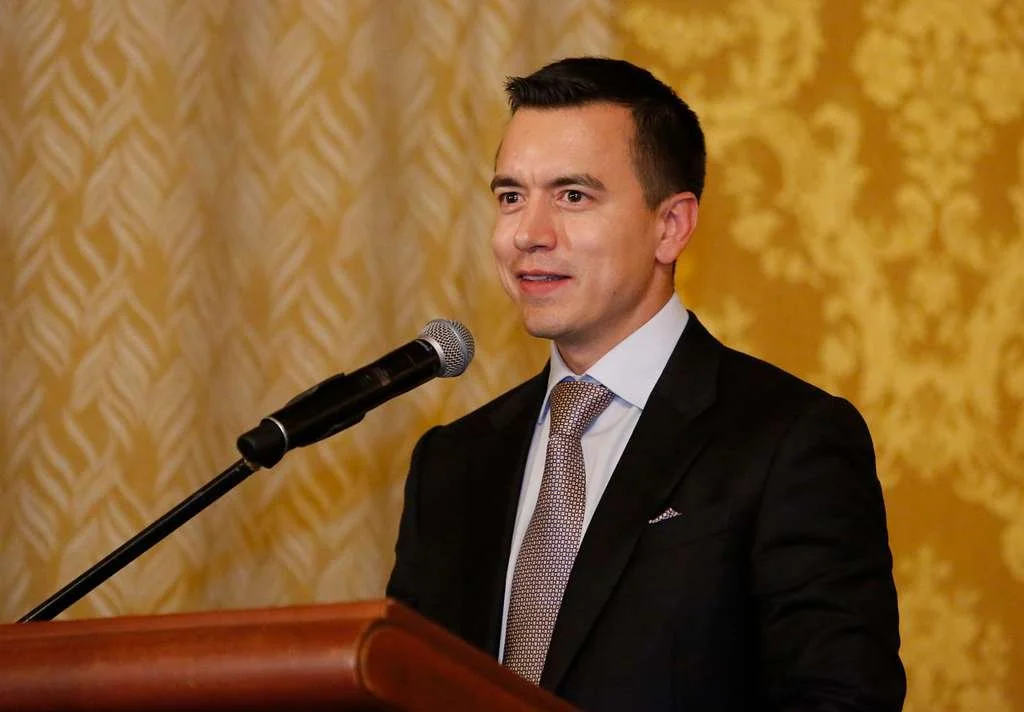
Daniel Noboa, President of Ecuador
Environmental Rollbacks Under the Noboa Administration
Daniel Noboa became President of Ecuador in 2023 when he won a snap election with the center-right National Democratic Action Party. He showed open support for increasing extractive mining projects and pursued an aggressive restructuring of Ecuador’s environmental and institutional infrastructure. These changes align with financial development plans supported by the International Monetary Fund (IMF). In its second review of Ecuador’s current agreement (adopted May 2024), the IMF promoted fiscal and structural reforms to attract private investment in “high potential” sectors like mining, hydrocarbons, and energy [31].
The most significant of these changes came in 2025 through far-reaching government restructuring. In July of that year, Noboa issued Executive Order 60, dissolving the Ministry of Environment, Water, and Ecological Transition and transferring its functions to the Ministry of Energy and Mines [32]. This effectively eliminated environmental oversight for the oil and mining industries and subordinated environmental protections to extractive policy [33]. Critics described the move as “a clear case of putting the fox in charge of the henhouse” that “leaves Ecuador without an independent institution to protect its extraordinary ecosystems” [34]. The executive order also dissolved the Ministry of Women and Human Rights [34].
The 2023 Yasuní Referendum and IACHR Mandate
Popular resistance to environmentally harmful policies has registered in Ecuador since the beginning of Noboa’s administration. In August 2023—the same month Noboa won the first round of the presidential election—nearly 60% of Ecuadorians voted to end oil drilling in Yasuní National Park in a binding referendum [36]. The initiative began more than a decade earlier with demands by Indigenous communities to halt oil exploitation within Ishpingo-Tambococha-Tiputini Block 43 inside the park [37]. Following the referendum, the Constitutional Court required the state to progressively dismantle all Block 43 extraction projects within one year [38]. The Noboa administration resisted implementing the mandate, announcing in January 2024 that a state of “internal armed conflict” in Ecuador necessitated continued oil drilling [39]. The Ministry of Energy proposed an alternative five-year phase-out plan that extends drilling through 2029 [40].
In November 2025, the environmental and Indigenous coalition Yasunidos filed an enforcement action (acción de incumplimiento) before the Constitutional Court, asserting that the government was in contempt of the Court’s Yasuní mandate by failing to decommission Block 43’s oil infrastructure within the one-year deadline [41]. While the action is still before the Court, it has been reinforced by concurrent international pressure. In March 2025, the Inter-American Court of Human Rights ordered Ecuador to immediately halt operations in Yasuní to prevent physical and cultural harm to Indigenous communities in the area [42]. Yet, as of May 2026, the government has closed only 10 of Block 43’s 247 oil wells [43].
Suppression of Popular Dissent
The administration’s disregard for RoN compliance has been accompanied by pressure on environmental advocates and civil society actors. Rather than obey the Constitutional Court’s Yasuní mandate, Ecuador has increasingly penalized organizations bringing legal challenges against the state. In April 2026, the Contentious Electoral Tribunal—a specialized court for electoral matters—penalized Yasunidos with an $18,000 fine for an administrative account discrepancy of $10 stemming from the group’s Yasuní referendum campaign [44]. Other advocacy groups opposing Noboa’s policies have faced similarly disproportionate penalties [45].
The penalization of Yasunidos and others reflects the state’s broader hostility toward community opposition. Noboa’s administration inherited and escalated a strategy of state-backed enforcement of extractive projects over local resistance. In July 2023, local resistance to a mining project by Canadian company Atico Mining erupted in the rural parish of Palo Quemado. Under then-President Guillermo Lasso, the state deployed security forces to suppress protests and force a community consultation on the project [46]. The Noboa administration renewed the effort in March 2024, sending hundreds of police and military personnel to Palo Quemado [47]. At least 15 people were injured in clashes with police, and more than 70 people, including Indigenous leaders and human rights defenders, faced criminal terrorism charges following the protests [48].
The UN criticized Ecuador’s attempt to force consultations, noting that “participation processes . . . must be in line with international standards, providing space for dialogue with all potentially affected parties, which should be fully informed prior the start of any project. The right to free, prior and informed consent of Indigenous Peoples must be respected” [49]. Persistent militarization ultimately succeeded in suppressing Palo Quemado advocates by February 2026, when the government issued Atico Mining its environmental exploitation license [50].
Statutory Deregulation and the 2026 Organic Law
The administration’s efforts to upend the constitutional framework in favor of extractivist reform failed under popular pressure. In November 2025, over 60% of Ecuadorian voters rejected a constitutional referendum promoted by the Noboa administration to initiate a constituent assembly to rewrite the 2008 Constitution [51]. Opposition to the referendum was strongest against Noboa’s proposal to lift Ecuador’s ban on foreign military bases, but environmental advocates also noted that rewriting the 2008 Constitution would place its RoN provisions at serious risk [52]. The vote also helped defend the 2023 Yasuní referendum by rejecting reforms that would heighten militarization and accelerate extractive projects, including Noboa’s $47 billion oil expansion plan [53].
After the failed referendum, the administration turned to legislative strategies to achieve its economic objectives. On February 26, 2026, the National Assembly passed the Organic Law for the Strengthening of the Strategic Mining and Energy Sectors (Ley Orgánica para el Fortalecimiento de los Sectores Estratégicos de Minería y Energía) by a narrow margin of 77–70. The law significantly altered Ecuador’s regulatory landscape, slashing environmental licensing requirements for mining projects and replacing them with “simplified authorizations” to expedite capital entry and expand exploratory phases [54]. Before the bill passed, the Confederation of Indigenous Nationalities of Ecuador (CONAIE)—the country’s largest Indigenous federation—vehemently rejected it, warning that it would erode the state’s capacity to prevent irreversible damage to vulnerable ecosystems [55]. CONAIE also argued that the law weakens constitutional requirements regarding free, prior, and informed consent from Indigenous communities by accelerating and simplifying project approval timelines [56].
Beyond domestic tensions, the law creates compliance gaps with international environmental treaties to which Ecuador is a state party [57]. By reducing transparency and minimizing project review periods, the law conflicts with the Escazú Agreement, which requires Latin American states to provide access to environmental information, guarantee public participation in environmental decision-making, and ensure access to justice in environmental matters [58]. The law’s bias toward increased resource extraction also undermines the objectives of the Kunming-Montreal Global Biodiversity Framework (KMGBF), which encourages states to take urgent action to halt and reverse biodiversity loss [59]. By incentivizing industrial development in highly biodiverse areas, the law compromises KMGBF mandates to ensure effective conservation and environmental management, halt human-induced species extinction, and safeguard the biocultural rights of Indigenous communities [60].
Ongoing Litigation Regarding the 2026 Organic Law
Active litigation against the 2026 Organic Law demonstrates that the implementation of Ecuador’s RoN framework continues to be contested and developed in the Ecuadorian judiciary. The rollback of environmental protections has triggered a multi-front legal response before Ecuador’s Constitutional Court. A wave of public constitutional challenges (acciones públicas de inconstitucionalidad) were filed immediately following the law’s promulgation in February 2026.
On March 3rd, environmental advocates and Indigenous representatives from the Unión de Defensores del Agua y la Naturaleza filed a complaint alleging over 24 constitutional breaches [61]. At the filing, prominent environmental defender Yaku Pérez criticized the Organic Law as an “ecocidal” and “neocolonial” reform that will further endanger vulnerable ecosystems and disenfranchise Indigenous communities in Ecuador [62].
This was followed on March 16th by a major joint filing from Ecuarunari, Yasunidos, and the National Anti-Mining Front [63]. The organizations petitioned the Constitutional Court for an immediate provisional suspension of the law to avoid irreversible ecological damage while the Court reviews the merits [64]. The petitioners allege that the law does not respect the right to free, prior, and informed consultation, as well as the right to environmental consultation and other collective Indigenous rights established in the constitution [65].
In April 2026, a further coalition of Indigenous Amazonian representatives traveled to Quito to file their own constitutional challenge. This petition from frontline environmental defense organizations—including the Federation of Indigenous Organizations of Napo, Pastaza Kikin Kichwa Runakuna, CONAIE, Waorani Nationality of Ecuador, and the Waorani Organization of Pastaza—focused on the law’s negative effects on Indigenous participation in environmental decision-making [66]. One of the coalition’s lawyers noted that the Organic Law will empower mining companies to get project approvals without properly consulting affected Indigenous communities [67].
Constitutional Framework Under Pressure
Along with institutional reforms, the Noboa administration has consistently used emergency powers as a strategy to achieve its policy goals outside of the judicial system. In the two and a half years since Noboa took office, parts of Ecuador have spent nearly 900 days under a “state of exception” (estado de excepción), a condition that allows the executive to restrict public mobility and deploy the military domestically, and authorizes the national police to search homes and intercept private communications without prior judicial approval [68].
Since 2024, the government has frequently deployed such emergency powers as part of a “war” on organized crime, which has soared in Ecuador since 2021 [69]. However, human rights groups observe that the states of exception have resulted in abuses against civilians, including extrajudicial killings and thousands of arrests without due process, and activists warn that the government is using the anti-crime fight as a pretext for crackdowns on opposition leaders and Indigenous activists [70]. The Constitutional Court—which is mandated to review each state of exception decree—has cautioned that the government has not proven the existence of serious internal conflict to justify these declarations, and that states of exception must not be used to indefinitely suspend fundamental rights [71]. Yet these checks have not slowed Noboa’s use of emergency powers. The government has become increasingly hostile toward the Constitutional Court’s review, prompting concerns from the Inter-American Commission on Human Rights over the Court’s independence [72].

Photo credit: Diego Delso, public domain.
Conclusion
The dissolution of the Ministry of the Environment, the passage of the 2026 Organic Law, the penalization of environmental advocates, and the normalization of militarization and emergency governance constitute a systematic effort to dismantle the institutional architecture that Ecuador’s RoN framework depends on. Despite the doctrinal progress of the 2010s, Ecuador still lacks specific RoN legislation and is unlikely to develop any under the current administration. This presents an unfortunate paradox—while Ecuador remains the only country in the world with constitutional Rights of Nature, the state itself has routinely subverted those rights. This structural hostility predates the Noboa administration and may well outlast it. Until Ecuador’s state revenue is further decoupled from resource extraction, RoN will remain structurally vulnerable to the executive branch’s shifting policy goals. Consequently, the power of Ecuador’s constitutional experiment may currently reside more in its profound normative influence than in its domestic enforcement.
Despite its challenges, Ecuador’s constitutional framework has contributed deeply to RoN development around the world and continues to inspire other countries in Latin America and beyond [73]. As Ecuadorian attorney and constitutional scholar Hugo Echeverría argues, Ecuador’s RoN jurisprudence continues to provide a leading theoretical model for non-anthropocentric legal frameworks that also advance human rights. “By transcending anthropocentric approaches, [Rights of Nature] allows the law to exercise a more effective role in shaping the relationship between human beings and Nature,” writes Echeverría. “ . . . Rights of Nature are complementary to human rights—they reinforce them, proposing a synergy in which standards are raised beyond the mere protection of an object toward recognition and respect of a new subject of rights” [74].
Ultimately, hope for Ecuador’s model lies in the hands of its frontline defenders. Indigenous and grassroots-led legal victories have repeatedly shown that Ecuador’s Rights of Nature are alive as long as communities are willing to invoke them. Landmark rulings like Los Cedros have legitimized this framework, proving that the executive government does not have the final say on the future of Ecuadorian ecosystems. These triumphs have consequences well beyond Ecuador’s borders, fueling a global movement that is redefining environmental law [75].
What began as a radical constitutional experiment in a small Latin American country has become a blueprint for a more equitable, ecocentric future. In a moment dominated by climate anxiety and regressive state politics, the global vitality of Ecuador’s model serves as an important reminder that ecocentric progress, while imperfect, remains possible.
[1] Ecuador Constitution of 2008: Rights of Nature, EcoJurisprudence Monitor, https://ecojurisprudence.org/initiatives/ecuador-constitution/ (last visited May 22, 2026).
[2] Constitución de la República del Ecuador art. 71 (2008), available at https://www.constituteproject.org/constitution/Ecuador_2021.
[3] Global Map of Rights of Nature, EcoJurisprudence Monitor, https://ecojurisprudence.org/?map-style=political (last visited May 22, 2026).
[4] Constitución de la República del Ecuador pmbl. (2008).
[5] Id. at art. 71-72.
[6] Max Nathanson, Assessing Ecuador / China Cooperation, Mongabay (Nov. 22, 2017), https://news.mongabay.com/2017/11/damming-or-damning-the-amazon-assessing-ecuador-china-cooperation/#:~:text=Correa%20praised%20the%20codification%20of,%E2%80%9CCitizen's%20Revolution%E2%80%9D%20was%20underway.
[7] See Angélica María Bernal, Ecuador's Dual Populisms: Neocolonial Extractivism, Violence and Indigenous Resistance, 164 Thesis Eleven 9 (2021).
[8] See, e.g, Daniel Wilkinson, Ecuador’s Authoritarian Drift, Foreign Affairs, https://www.foreignaffairs.com/articles/ecuador/2015-08-27/ecuadors-authoritarian-drift; Ecuador: Judicial Harassment of Amazonian Defenders, Human Rights Watch (Mar. 26, 2018), https://www.hrw.org/news/2018/03/26/ecuador-judicial-harassment-amazonian-defenders.
[9] Natalia Greene, The First Successful Case of the Rights of Nature Implementation in Ecuador, Glob. All. for the Rts. of Nature (May 21, 2011), https://www.garn.org/first-ron-case-ecuador/.
[10] Craig M. Kauffman & Pamela L. Martin, Testing Ecuador's Rights of Nature: Why Some Lawsuits Succeed and Others Fail 6 (paper presented at the International Studies Association Annual Convention, Mar. 18, 2016)
[11] See Wheeler v. Loja, juicio No. 11121-2011-0010 (Corte Provincial de Justicia de Loja 30 Mar. 2011).
[12] Id.
[13] Vilcabamba River Case Law: 1 Year After, Global Alliance for the Rights of Nature (Mar. 27, 2012), https://www.garn.org/vilcabamba-river-1-year-after/.
[14] Protecting the Rights of Mangroves in Ecuador From Injury, CELDF (Dec. 10, 2022), https://celdf.org/2022/12/do-no-harm-protecting-the-rights-of-mangroves-in-ecuador-from-injury/.
[15] Ecuador Constitutional Court Case: Environmental Code and the Rights of Mangroves, Eco Jurisprudence Monitor (2026), https://ecojurisprudence.org/initiatives/unconstitutionality-environmental-code-mangroves/; See Corte Constitucional del Ecuador [Constitutional Court], Sentencia No. 22-18-IN/21 (Sept. 8, 2021) (Ecuador).
[16] Ecuador Constitutional Court Case: Mining in the Los Cedros Protected Forest, Eco Jurisprudence Monitor (2026), https://ecojurisprudence.org/initiatives/los-cedros/;See Corte Constitucional del Ecuador [Constitutional Court], Sentencia No. 1149-19-JP/21 (Nov. 10, 2021) (Ecuador).
[17] Id.
[18] Sentencia No. 1149-19-JP/21, ¶ 142.
[19] “The State shall apply preventive and restrictive measures on activities that might lead to the extinction of species, the destruction of ecosystems and the permanent alteration of natural cycles.”
[20] Sentencia No. 1149-19-JP/21, ¶¶ 265, 282, 289, 290, 301, 307–308.
[21] See Press Release: Rights of Nature Victory in Ecuador, Ctr. for Env't Rts. (Dec. 2, 2021), https://www.centerforenvironmentalrights.org/news/press-release-rights-of-nature-victory-in-ecuador.
[22] Sentencia No. 22-18-IN/21 ¶¶ 117–128.
[23] Sentencia No. 1149-19-JP/21, ¶ 65
[24] Ecuador Constitutional Court Case: Mining Concessions in A’i Cofán of Sinangoe, Eco Jurisprudence Monitor (2026), https://ecojurisprudence.org/initiatives/cofan-sinangoe/;See Corte Constitucional del Ecuador [Constitutional Court], Sentencia No. 273-19-JP/22 (Jan. 27, 2022) (Ecuador).
[25] See Ecuador’s Supreme Court Makes Historic Ruling Recognizing Indigenous Rights to Consent Over Oil and Mining Projects, Amazon Frontlines (Feb. 2022), https://amazonfrontlines.org/chronicles/ecuador-supreme-court-recognizes-indigenous-right-to-consent-over-oil-and-mining/
[26] Andreas Gutmann, Monkeys in Their Own Right, Verfassungsblog (Mar. 15, 2022), https://verfassungsblog.de/monkeys-in-their-own-right/;See Corte Constitucional del Ecuador [Constitutional Court], Sentencia No. 253-20-JH/22 (Jan. 27, 2022) (Ecuador).
[27] Mihnea Tănăsescu et al., Rights of Nature and Rivers in Ecuador's Constitutional Court, Int'l J. Hum. Rts. (Feb. 7, 2024), https://doi.org/10.1080/13642987.2024.2314536.
[28] Kelly Swing et al., Outcomes of Ecuador’s Rights of Nature for Nature’s Sake, 3 Adv. Envtl. & Eng'g Res. 3 (2022), https://doi.org/10.21926/aeer.2203035.
[29] NYU MOTH Project, The Impacts of the Rights of Nature: Assessing the Implementation of the Los Cedros Ruling in Ecuador 23, 27–28 (2025), https://mothrights.org/wp-content/uploads/2025/03/The_Impacts_of_the_Rights_of_Nature_Assessing_the_Implementation_of_the_Los_Cedros_Ruling_in_Ecuador-EN.pdf.
[30] Lena Koehn and Julia Nassl, Judicial Backlash Against the Rights of Nature in Ecuador: The Constitutional Precedent of Los Cedros Disputed, Verfassungsblog (Apr. 27, 2023), https://verfassungsblog.de/judicial-backlash-against-the-rights-of-nature-in-ecuador/; See Corte Provincial de Justicia de Loja, Sala de lo Penal, 19 de diciembre de 2022, Sentencia, Juicio No. 11333-2022-00183 (Ecuador).
[31] Int’l Monetary Fund, IMF Country Report No. 25/199, Ecuador: Second Review Under the Extended Arrangement Under the Extended Fund Facility, Request for Augmentation and Rephasing of Availability Date for the Third Review, and Financing Assurances Review 1–2 (2025), https://www.imf.org/-/media/files/publications/cr/2025/english/1ecuea2025001.pdf.
[32] Harveet Singh Purewal, Government ‘Reform’ In Ecuador: Nature And Human Rights Protections Take A Backseat, ClimaTalk (Oct. 9, 2025), https://climatalk.org/2025/10/09/government-reform-in-ecuador-nature-and-human-rights-protections-take-a-backseat/.
[33] Simmone Shah, Ecuador's Constitution Was the First to Protect the Rights of Nature. Now That's at Risk, TIME, https://time.com/7333784/ecuador-constitution-referendum-rights-of-nature/.
[34] César Rodríguez and Robert Macfarlance, The Most Environmentally Imaginative Country on Earth is Under Assault, New York Times: Opinion (Aug. 15, 2025), https://www.nytimes.com/2025/08/15/opinion/ecuador-galapagos-noboa.html.
[35] See Decreto Ejecutivo No. 60, Segundo Suplemento del Registro Oficial No. 93, 31 de Julio de 2025 (Ecuador).
[36] A Vote to Protect Yasuní National Park in Ecuador, Global Greengrants Fund (Mar. 4, 2024), https://www.greengrants.org/2024/03/04/yasuni-referendum/.
[37] Id.
[38] See Corte Constitucional del Ecuador [Constitutional Court], Dictamen No. 6-22-CP/23 (May 9, 2023) (Ecuador).
[39] Ecuador’s Failure to Comply with Yasuní Victory Undermines Democracy, Indigenous Rights & Climate Justice, Amazon Frontlines (Aug. 2024), https://amazonfrontlines.org/chronicles/one-year-on-ecuadors-failure-to-comply-with-yasuni-victory-undermines-democracy-indigenous-rights-climate-justice/#:~:text=However%2C%20the%20decree%20fails%20to,Indigenous%20participation%20from%20its%20committee.
[40] Yasunidos Demanda al Gobierno de Ecuador Por No Cumplir Con El Cierre Del Bloque Petrolero ITT en la Amazonía, Primicias (Nov. 12, 2025) https://www.primicias.ec/politica/yasunidos-demanda-gobierno-corte-constitucional-bloque-itt-consulta-popular-109297/.
[41] Cronología de Hechos - Defensa del Yasuní, Yasunidos, https://www.yasunidos.org/nuestra-historia/#:~:text=12%20noviembre%202025,Read%20more.
[42] See Pueblos Indígenas Tagaeri y Taromenane v. Ecuador, Judgment, Inter-Am. Ct. H.R. (ser. C) No. 537 (Sept. 4, 2024).
[43] Aimee Gabay, Ecuador Failing to End Yasuní Oil Drilling, Mongabay (May 13, 2026), https://news.mongabay.com/2026/05/ecuador-failing-to-end-yasuni-oil-drilling-interview-with-waorani-leader-juan-bay/.
[44] Ana Cristina Alvarado, Ecuador: Expertos Cuestionan Multa Económica Impuesta a Promotores de Consulta Popular por el Yasuní, Mongabay (May 1, 2026), https://es.mongabay.com/2026/05/ecuador-claves-sentencia-justicia-electoral-sanciona-defensores-yasuni-multa-18-000-dolares/#:~:text=Una%20multa%20de%2018%20000,abierta%20exclusivamente%20para%20ese%20fin.
[45] Id.
[46] Continued Militarization and Criminalization of Environmental Defenders to Advance Canadian Mining Project in Ecuador, Mining Watch Canada (Nov. 11, 2024), https://miningwatch.ca/blog/2024/11/11/continued-militarization-and-criminalization-environmental-defenders-advance.
[47] Id.
[48] Amnesty Int’l, Ecuador: Submission to the UN Human Rights Committee: 142nd Session, at 15–16, (Sept. 16, 2024), https://www.amnesty.org/en/documents/amr28/8531/2024/en/.
[49] Office of the United Nations High Commissioner for Human Rights, Ecuador: UN experts call for meaningful consultations on mining projects, Press Release (May 14, 2024), https://www.ohchr.org/en/press-releases/2024/05/un-experts-call-meaningful-consultations-ecuadors-mining-projects.
[50] Mónica Orozco, Megaproyecto Minero La Plata en Ecuador Obtiene Licencia Ambiental Para Avanzar en la Construcción de la Mina, Primicias (June 10, 2026), https://www.primicias.ec/economia/megaproyecto-oro-minas-plata-licencia-ambiental-palo-quemado-115512/
[51] Ione Wells, Ecuador Votes Against Allowing Foreign Military Bases in Country, BBC (Nov. 16, 2025), https://www.bbc.com/news/articles/c891zkwvjl2o.
[52] Katie Surma, Ecuador’s Voters Protect Rights of Nature, Reject Proposal to Rewrite Constitution, Inside Climate News (Nov. 17, 2025), https://insideclimatenews.org/news/17112025/ecuador-rights-of-nature-vote.
[53] Ecuadorians Vote Down Noboa’s Extractive Agenda, Amazon Watch (Nov. 20, 2025), https://amazonwatch.org/news/2025/1120-ecuadorians-vote-down-noboas-extractive-agenda; Steven Grattan, Indigenous Groups Criticize Ecuador’s $47 Billion Oil Expansion Plan in Amazon, Associated Press (Sept. 24, 2025), https://apnews.com/article/oil-expansion-ecuador-indigenous-protest-licensing-noboa-2adf72c66d755ee755c64213c4c21854.
[54] See Ley Orgánica para el Fortalecimiento de los Sectores Estratégicos de Minería y Energía, Registro Oficial [R.O.] Suplemento No. 234-5S (2026) (Ecuador); CONAIE Alerta que Proyecto Urgente Sobre Minería y Energía Pone en Riesgo Derechos Colectivos, Territorios y Fuentes de Agua, El Universo (Feb. 2, 2026), https://diariocorreo.com.ec/127526/nacional/conaie-alerta-que-proyecto-urgente-sobre-mineria-y-energia-pone-en-riesgo-derechos-colectivos-territorios-y-fuentes-de-agua#:~:text=Sustituye%20licencias%20ambientales%20por%20autorizaciones,decisi%C3%B3n%20colectiva%20ni%20consentimiento%20previo.
[55] Indígenas Rechazan Reforma Extractiva de Noboa, Servindi (Feb. 3, 2026), https://www.servindi.org/seccion-pueblos-indigenas-actualidad-noticias/03/02/2026/ecuador-conaie-reforma-extractiva-noboa.
[56] Id.
[57] New Mining Law in Ecuador Threatens Biodiversity and Indigenous Territories, Amazon Frontline (Feb. 2026), https://amazonfrontlines.org/chronicles/new-mining-law-in-ecuador-threatens-biodiversity-and-indigenous-territories/.
[58] See Regional Agreement on Access to Information, Public Participation and Justice in Environmental Matters in Latin America and the Caribbean, Mar. 4, 2018, U.N. Treaty Collection, ch. XXVII, no. 18.
[59] See Conference of the Parties to the Convention on Biological Diversity, Kunming-Montreal Global Biodiversity Framework, U.N. Doc. CBD/COP/DEC/15/4 (Dec. 19, 2022.
[60] See id. at Targets 3, 4, and 22.
[61] Yaku Pérez y Otros Ambientalistas Demandan Nueva Reforma Minera en la Corte Constitucional, Primicias (Mar. 3, 2026), https://www.primicias.ec/economia/organizacion-ambiental-demanda-reforma-minera-corte-constitucional-yaku-perez-117187/
[62] Id.
[63] Lizette Abril, Organizaciones Sociales Presentan Demanda Contra la Ley de Minería en Ecuador, TeleAmazonas (Mar. 16, 2026), https://www.teleamazonas.com/actualidad/noticias/politica/organizaciones-presentan-demanda-inconstitucionalidad-ley-mineria-ecuador.
[64] Id.
[65] César Noboa, Leonidas Iza Presenta Demanda de Inconstitucionalidad Contra la Reforma de la Ley Minera en la Corte Constitucional, EcuaVisa (Mar. 16, 2026), https://www.ecuavisa.com/politica/iza-demanda-ley-minera-inconstitucionalidad--20260316-0044.html.
[66] Ecuador: Denuncian que Ley Minera es Inconstitucional, Servindi (March 13, 2026), https://www.servindi.org/seccion-pueblos-indigenas-actualidad-noticias/13/04/2026/indigenas-denuncina-inconstitucionalidad-de.
[67] Id.
[68] Carolina Mella, La Nueva Normalidad de Ecuador: Un País en Estado de Excepción, El País (May 11, 2026), https://elpais.com/america/2026-05-11/la-nueva-normalidad-de-ecuador-un-pais-en-estado-de-excepcion.html; Nuevo Estado de Excepción en Ecuador Abarca Nueve Provincias, Deutsche Welle (Mar. 4, 2026), https://www.dw.com/es/nuevo-estado-de-excepci%C3%B3n-en-ecuador-abarca-nueve-provincias/a-76650424.
[69] Ecuador’s Battle with Organized Crime, International Crisis Group (Nov. 12, 2025), https://www.crisisgroup.org/rpt/latin-america-caribbean/ecuador/109-paradise-lost-ecuadors-battle-organised-crime.
[70] Ecuador: Unchecked Abuses Since ‘Armed Conflict’ Announcement, Human Rights Watch (May 22, 2024), https://www.hrw.org/news/2024/05/22/ecuador-unchecked-abuses-armed-conflict-announcement; International Crisis Group, supra note 69.
[71] Ecuador: New Laws Endanger Rights, Human Rights Watch (June 19, 2025), https://www.hrw.org/news/2025/06/19/ecuador-new-laws-endanger-rights#:~:text=The%20Constitutional%20Court%20in%20several,international%20law%20for%20the%20existence; See, e.g., Corte Constitucional del Ecuador [Constitutional Court], Dictamen No. 2-26-EE/26A (Mar, 19, 2026) (Ecuador).
[72] Inter-Am. Comm’n on Human Rights, Press Release No. 175/25, IACHR Calls on Ecuador to Respect and Guarantee the Independence of the Constitutional Court (Aug. 29, 2025), https://www.oas.org/en/iachr/jsForm/?File=/en/iachr/media_center/preleases/2025/175.asp.
[73] Hugo Echeverría, Ecuador: Constitutional Rights of Nature, in Earth Law: Emerging Ecocentric Law: A Guide for Practitioners 156 (Grant Wilson et al. eds., 2d ed. 2026).
[74] Id.
[75] Recent global developments include the Taranaki Maunga Settlement in Aotearoa New Zealand, which granted legal personhood to one of the country’s most sacred mountains (2025); the ICJ’s advisory opinion regarding the obligations of states with respect to climate change (2025); legislative protections for wild rice pioneered by the White Earth Band of Ojibwe in Minnesota (2024); Peru’s recognition of legal rights for the Marañón River (2024); and Spain’s recognition of legal personhood for the Mar Menor lagoon (2022).
