Inside Earth Law Center’s Work Advancing the Constitutional Right to a Healthful Environment in New York
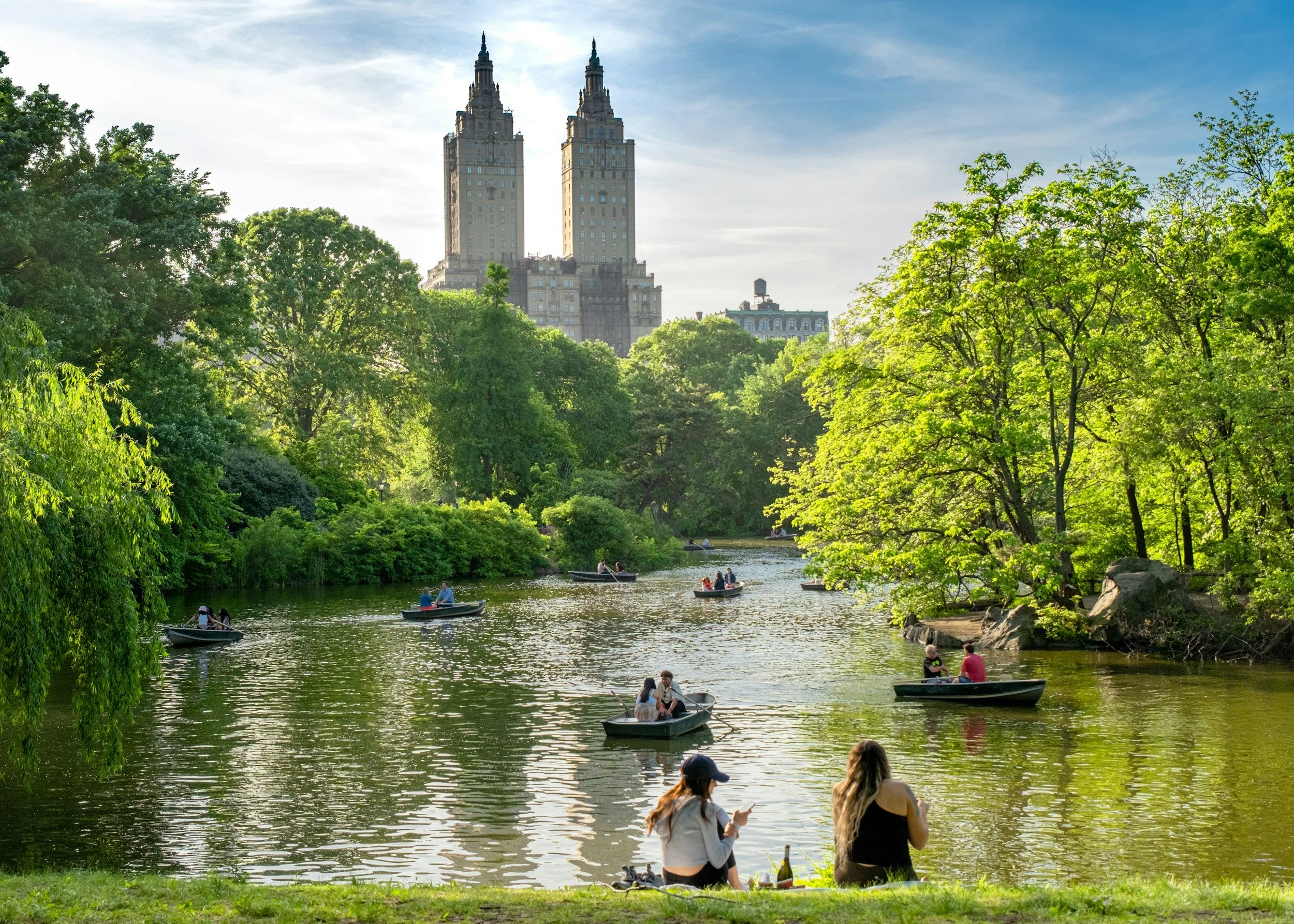
Chiara Grimes interviews ELC New York Ecocentric Law Fellow Maria Florencia Pérez
In 2021, New Yorkers voted overwhelmingly to amend the state constitution with what became known as the “New York Green Amendment” (NYGA). The new amendment—given as Article II, Section 19—states:
“Each person shall have the right to clean air and water, and a healthful environment.”
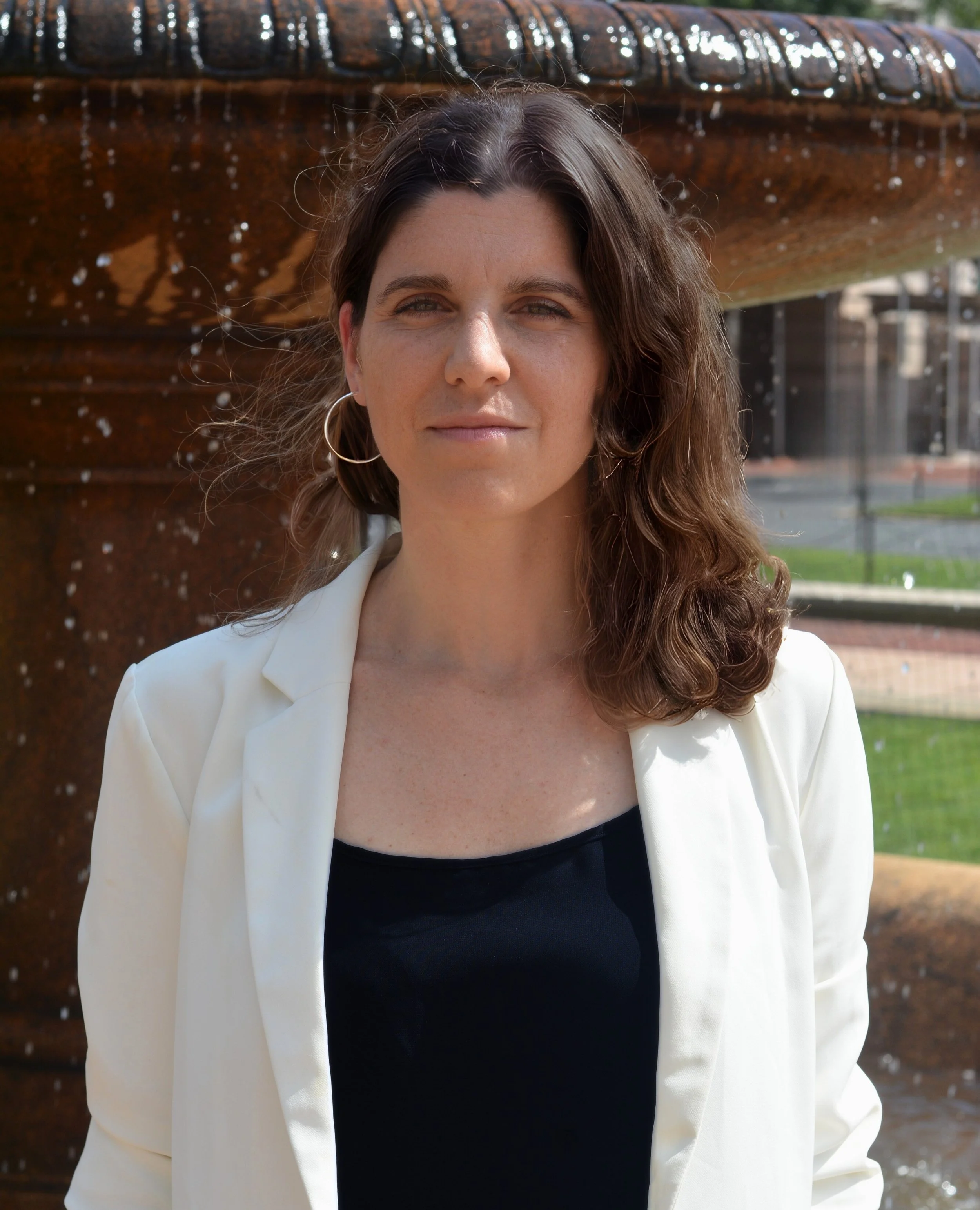
Maria Florencia Pérez, New York Ecocentric Law Fellow at Earth Law Center
This made New York the sixth state to pass a constitutional provision related to the right to a healthy environment, and only the third, after Montana and Pennsylvania, to do so in its state bill of rights.
At Earth Law Center (ELC), team members work directly with municipalities and community leaders to help translate this constitutional right into meaningful local policies. ELC published “Implementing the Green Amendment in New York: Tools for Municipalities and Advocates,” a toolkit created with funding from the New York Community Trust to provide a roadmap for implementing and strengthening the NYGA. The Toolkit shares the amendment’s history, explores emerging case law, and offers model ordinances to guide local governments in fulfilling these rights.
But constitutional rights do not enforce themselves, and ELC has a larger vision for actualizing the protections promised by the NYGA. I reached out to Maria Florencia Pérez, a lawyer serving as ELC’s New York Ecocentric Law Fellow, to discuss this work.
Pérez, who lives in New York City and is originally from Argentina, has collaborated with government agencies, international organizations, and private entities on initiatives involving public procurement, sustainable supply chains, and biodiversity conservation in Latin America. She holds a Master’s in Public Administration in Environmental Science and Policy from Columbia University, a Master’s in Environmental Policy, Law, and Management from Universidad Austral, and a Law degree from the University of Buenos Aires.
Q: What drew you personally to this work in the field of Earth Law, and how has your background shaped the way you approach advancing the NYGA?
A: I worked in the public sector for several years and completed an MPA in Environmental Science and Policy, and both experiences taught me the same lesson: having a good policy means nothing if the people implementing it don't have the support they need. That's where we come in. We're not there to tell officials what to do; we're there to be an extra pair of hands, help them think things through, and bring resources they might not have time to find on their own. The work is different from what most people expect. It's not just legal or academic but is very much about understanding the context of a place and the people in it. I think that's what keeps it interesting.
Q: What are some recent accomplishments, or what are you most proud of that has been completed?
A: When we started, we assumed the work would be mostly regulatory, focused on the legal framework. Turns out there was a whole other dimension we hadn't fully anticipated: New Yorkers simply don't know these rights exist. So a big part of what we've been doing is getting the word out. And what's been really encouraging is seeing local governments respond to that. Some are just curious—asking questions, wanting to understand what the Green Amendment actually means for them. Others are already taking steps to act on it. Either way, that engagement is what we're most proud of. We see it as the groundwork for something that will keep growing long after our direct involvement ends.
Communicating the New York Green Amendment to Municipalities
Q: The NYGA establishes environmental rights at the constitutional level. What do you see as the biggest gap between having these rights on paper and realizing them in practice?
A: The rights themselves are broad but also quite basic: clean air, clean water, a healthful environment. They sit alongside a whole body of existing environmental law, and figuring out how they interact is part of the challenge. But they also open a real door for municipalities. Local governments already have the authority to go beyond state minimums, and the Green Amendment gives them a constitutional basis to do that more boldly. The harder question is the human one. We live alongside both the natural world and everything we've built, and those two things don't always get along. Our job is to find ways to make that coexistence work better, for people and for nature. It's not a clean equation, but that's also what makes it worth working on.
Q: As a specialist on this topic, do you have any recommendations to localities on how to communicate the importance of the Green Amendment or how to educate others about it?
A: The honest answer is: it depends on the town. Social media matters, but it’s not the whole picture, and what works in one community might fall completely flat in another. New York is incredibly diverse, what resonates in a dense urban neighborhood is very different from what will in a small rural town.
What we do believe, across the board, is that public spaces are underused tools. Parks, playgrounds, sports facilities—these are places where people already spend time. If you can connect the Green Amendment to those spaces, to things people actually care about in their daily lives, it starts to feel real rather than abstract. Simple things work: a neighborhood beautification challenge, an outdoor public meeting, bringing back something like the old “Great Trees of New York” initiative. The formula isn't complicated: start something, see what happens, adjust, try again.
But if we're talking about what really moves the needle long-term, it's education. Getting into schools, inviting young people into conversations they’ve historically been left out of, and actually listening when they show up. Something as small as holding a public meeting outside, where passersby can stop and listen, can make a difference.
The Future of the New York Green Amendment
Q: What is something you’re excited about that the team will begin working on in the future?
A: The NYGA Directory is the thing we're most excited about right now. The idea is simple: municipalities across New York State doing this work shouldn't have to figure everything out from scratch on their own. They should be talking to each other, sharing what’s worked, sharing what hasn’t. The Directory is meant to be that space. We’re also putting together a “Lessons Learned” document, basically everything we wish someone had handed us when we started, including the mistakes, which are honestly the most useful part.
The bigger goal, though, is to build something that doesn’t need us to keep running. We work that way internally, sharing, building on each other’s work, and we’d love to see that replicated across communities. In the best version of this, local actors own it, run it, and make it their own. That’s when you know something has actually taken hold.
–––––––
Municipalities are critical in solidifying the human right to a healthful environment in New York. While still a relatively new right, the NYGA has already been at the center of numerous cases, and its full impact will continue to unfold through legislation, litigation, and local action for many years to come. My only question now, to all residents of New York State, is what tomorrow holds. If municipalities and people fully embraced the spirit of the NYGA, what would look different in how decisions are made, and what would be the clearest signs of positive transformation in the human-environment relationship?
Earth Law Center, supported by a grant from the New York Community Trust, is available to provide pro bono support to local and Tribal governments or authorities on the implementation of the right to clean air, clean water, and a healthy environment. For more information, or to express interest in a jurisdiction-specific landscape analysis, assistance with legal drafting, or other services to implement and fund actions aligned with the national Green Amendment movement, please contact Florencia Pérez at mfperez@earthlaw.org.