
Rights of the Animas River: Reflections from Colorado Student Advocates Who Helped Achieve River Rights Resolution
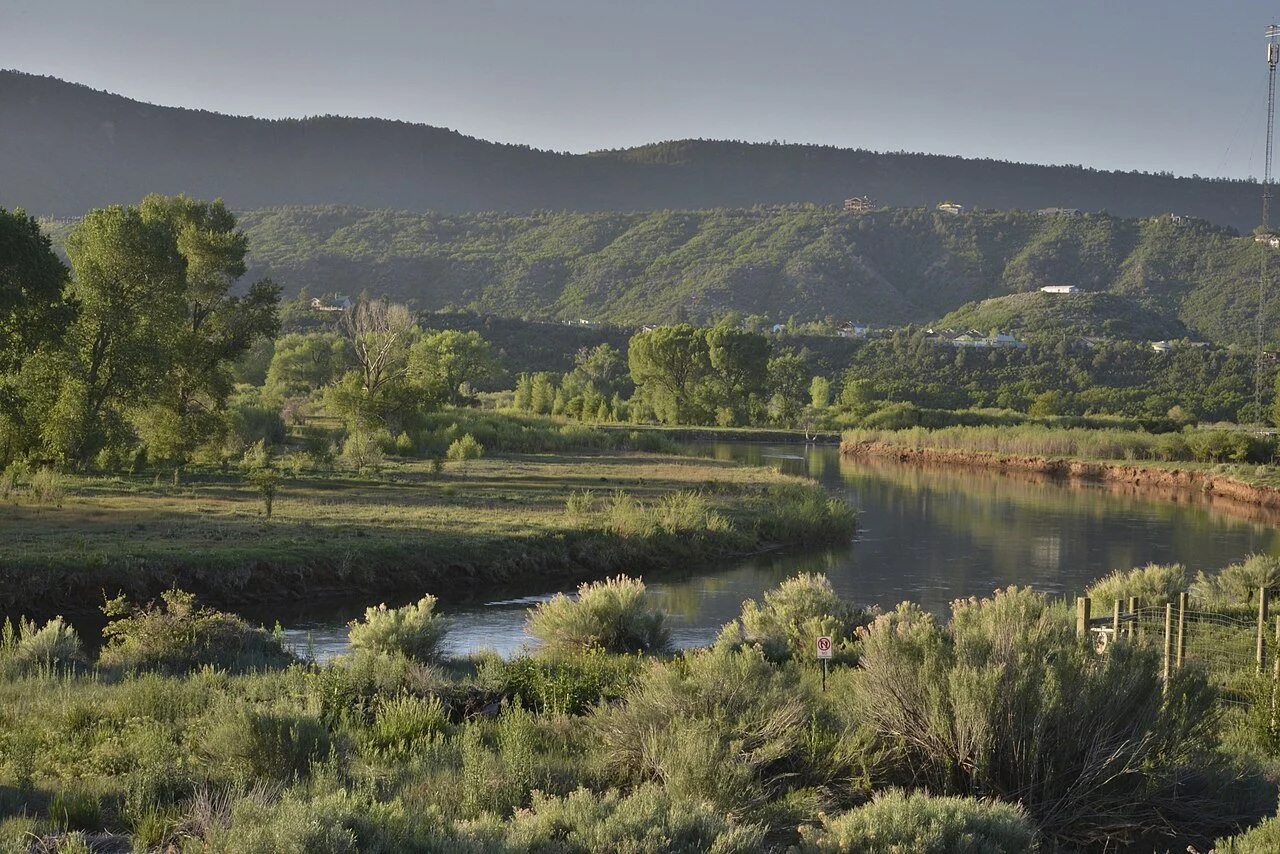
The Animas River flows just north of Durango, Colorado. Photo credit: Ahodges7, CC BY-SA 3.0 via Wikimedia Commons
By Lillian Davis and Juniper Lee
The Animas River begins high in Colorado’s San Juan Mountains and runs 126 miles south before joining the San Juan River in Farmington, New Mexico. Along the way, it moves through alpine forests, narrow canyons, agricultural valleys, and the city of Durango. Life in this part of Southwest Colorado is deeply tied to the river. The Animas remains one of the few undammed water systems in the intermountain West, though it continues to face pressure from development and a long legacy of mining.
In Fall 2025, we and other students in a sociology course on water justice taught by Dr. Becky Clausen at Fort Lewis College in Durango had the opportunity to shift how the Animas is understood in local governance. We spent the semester studying contemporary water issues and the many ways water is perceived, governed, and valued. By the end of the course, the class had helped develop and present a Rights of Nature resolution to the Durango City Council. In November 2025, the resolution passed unanimously, recognizing the Animas River as a living being with rights.
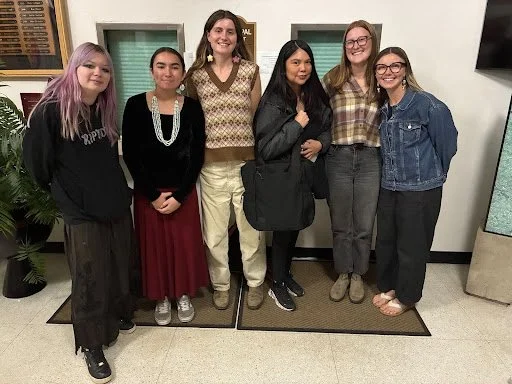
Fort Lewis College students (left to right) Riley Latus, Lilliona Benally, Park Donnelly, Alexandria Sapien, Charlotte Luth, and Lillian Davis.
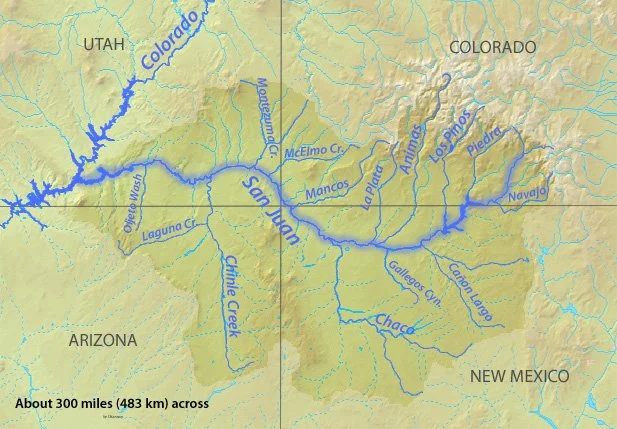
Image credit: Shannon, CC BY-SA 4.0, via Wikimedia Commons
The resolution recognized four rights of the Animas River:
The right to flow free and flourish, with sufficient water quality and quantity to maintain ecosystem health;
The right to support essential functions within watershed ecosystems, maintaining integrity of the river’s natural cycles such as recharging groundwater, moving and depositing sediments, and providing adequate habitat for native plants and animals;
The right to be free from pollution and other harms, thereby maintaining water quality and native biodiversity;
The right to river restoration and preservation of adequate ecosystem health.
The resolution also called on the City of Durango to develop policies and programs that recognize those rights, oppose or mitigate actions that would clearly violate them, and coordinate with the Fort Lewis College Four Corners Water Center to prepare a yearly public report on the health of the river. This report will feature dynamic and adaptive data, and, importantly, will contribute under a Rights of Nature framework to gaps identified in local watershed reporting.
Creating a Connection to Place
A central element of the course was having students think about their own relationships with water. Dr. Clausen encouraged the group to consider what water justice meant to us personally and to build a more deliberate connection to place. Each student chose a body of water they felt drawn to and returned to that same place over the course of a month. We spent time reflecting on our relationship to it in connection with relevant class content. Throughout the semester, we engaged with multiple ways of knowing water, including its connection to human health, the animacy of water, and the dominant Western tendency to manage water as a resource.
The Gold King Mine Spill: Showing Reciprocity to Downstream Neighbors
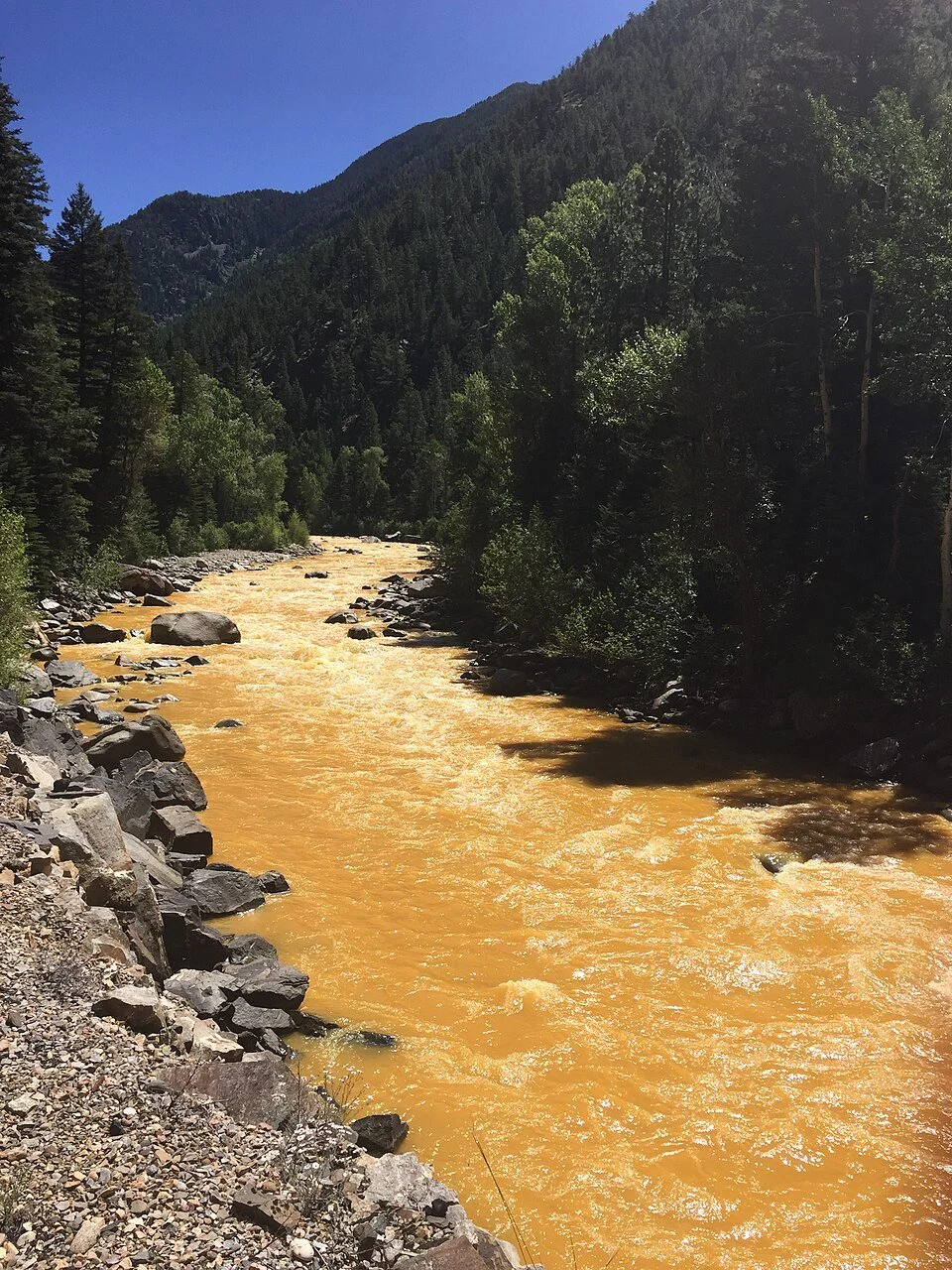
The Animas River between Silverton and Durango, within 24 hours of the 2015 Gold King Mine waste water spill. Photo credit: Riverhugger, CC BY-SA 4.0, via Wikimedia Commons.
This resolution coincided with the 10 year anniversary of the Gold King Mine Spill. This notorious spill happened in the late summer of 2015, when EPA workers mistakenly burst a high pressure pocket of acid mine drainage at the Gold King Mine, sending roughly 3 million gallons of contaminated water into Cement Creek and the Animas River. The spill carried around 880,000 lbs of heavy metals downstream and affected Indigenous farming communities, especially within the Navajo Nation, where many residents were forced to stop using river water for irrigation and daily life.
With the Gold King Mine Spill at the forefront of Durango residents’ minds, students recognized this momentous anniversary was critical to the river rights project’s efforts. We wished for the project to acknowledge a history of water-related exploitation in our region, as well as the responsibility upstream communities have to protect downstream neighbors who may bear the ecological and infrastructural burden of legacy mining. The Animas protects and provides for the people of the Southwest, charging them with the responsibility to live in reciprocity with the river and to steward it with downstream neighbors in mind.
Bringing the Resolution to City Council
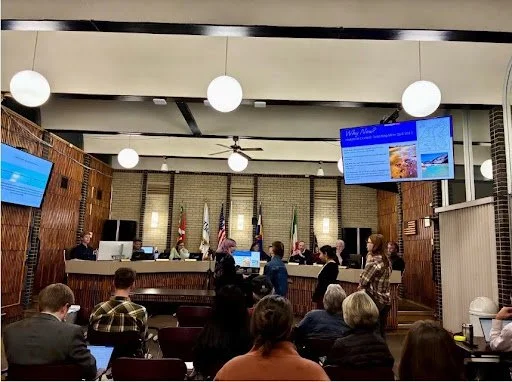
Fort Lewis College students present to the Durango City Council
At the city council meeting, six students presented the resolution, while classmates, Dr. Clausen, and other community members showed support from the audience. The presentation was received with clear enthusiasm, with several council members commenting that it was inspiring to see young people come together in civic spaces. The resolution passed unanimously, signaling broad support for the students’ work and the idea that the Animas River should be recognized as a living being with rights.
Ripple Effects in the Four Corners and Beyond
The successful passage of the resolution was only the beginning for the Rights of the Animas River movement in Durango. Since November, the project has gained attention at and beyond the local level, becoming part of a wider national and international conversation on Rights of Nature governance. Students have continued building on the work through collaboration with Earth Law Center, which has helped carry the project into new public and professional spaces. We have, for example, presented at a Rights of Nature webinar, cohosted by the Interreligious Eco-Justice Network and Yale Forum on Religion and Ecology. There, we shared reflections about the process with other educational institutions such as Colorado State University and the University of Udine, Italy. In addition, we joined ELC for a launch event in Soho, London, where we connected with Rights of Nature advocates and organizations working toward similar goals.
Rather than ending with the semester, the effort has continued through a student coalition committed to carrying the work forward. Students are now focused on monitoring the implementation of the resolution, supporting community education around river health, and keeping the conversation alive.