
By Aisha O’Neil
In June 2026, the Journal of Property, Planning and Environmental Law published a special issue, “Rights for Rivers,” edited by Dr. Luke Bennett. The publication includes six articles on the theoretical and practical implications of river rights. Led by former Earth Law Center (ELC) law student intern Kellianne Elliott and editorial staffer Matt Zepelin, ELC interns contributed the article “Should rivers have duties? Implications of standing nature.”
The special issue’s articles include:
Kellianne Elliott et al.’s assertion that rivers can have rights without duties
Souad Ezzerouali et al.’s analysis of the intersection between the Rights of Nature movement and Islamic tradition
Oluwabusayo Temitope Wuraola’s argument that the rights and personhood of rivers must be recognized
Ebba Hooft Toomey and Tineke Lambooy’s survey of legally living rivers around the world
Francine Rochford’s Australian case studies demonstrating the fallibility of human representatives for rivers
Angela María Sánchez-Alfonso and Rana Göksu’s call for the Rights of Nature movement to endorse grounded ways of knowing
As with many law journals, the issue is behind a paywall. So, through this post, ELC hopes to make the ideas in the articles accessible to readers and to provide a bird’s-eye view of the issue as a whole.
Should Rivers have duties? Implications of standing for Nature
Elliott et al.’s article, written in collaboration with the Earth Law Center, argues that the existence of river rights does not necessitate rivers having duties. Under most current legal frameworks, liability only arises when actors have a cognizable duty to avoid harm. This is true in a number of scenarios, including the rights of minors and corporations. Similarly, rivers, Elliott et al. note, “[owe] no obligations to human society; rather, human society owes a duty to respect the River’s place in the web of life.”
Guardianship bodies have become a common method for rivers and other natural ecosystems to express their rights. The article proposes that the duties of guardianship bodies could be interpreted similarly to the obligations of corporations. Within corporations recognized as legal bodies, individuals are held accountable for the corporation in very limited circumstances. Such situations must be so extreme that the traditional protections of corporate liability are held to sanction fraud or injustice. Much like the shareholders of a corporation, the guardians of a river must be protected from liability in a way that enables them to perform their duties. However, rivers and guardians must be distinguishable; the guardians of a river need to be held accountable in extreme cases such as corruption.
The duties of guardianship bodies could be interpreted similarly to current frameworks for the guardianship of natural persons, which are traditionally created in cases of child abuse or elder care. The National Guardianship Association has developed standards which require guardians to, among other things, make the least restrictive decisions on the person’s freedoms and identify and advocate for the person’s needs, goals, and preferences. Guardians are not generally held liable for actions taken on behalf of their wards, but are when they act carelessly with the individual’s property. This structure could translate to the protection of rivers, whose guardians must be responsible for making beneficial decisions on behalf of rivers and must be held accountable when they fail in that duty.
Above all, the authors clarify that the best method to protect rivers is a statutory scheme specific to the ecosystem and guardianship bodies involved.
River rights in Islamic law: between implicit recognition of legal personality and sustainable use regulation
Souad Ezzerouali et al.’s article emphasizes the implicit protections for rivers within Islamic Law. Such protections are largely based on the Sharia principles of public ownership (ibaha), prevention of harm (la darar wa la dirar), and stewardship (khilafah). She presents these as a normative framework that complements the rights of rivers movement.
The first principle, public ownership, protects rivers as a resource. This ideal includes two components. The first is waqf, the dedication of resources for public benefit with managing trustees, which has been practiced throughout Islamic history. The second is hisbah, the institutional monitoring of the waqf. Under this framework, rivers are framed as objects of protection, represented by the quasi-legal principles of public oversight for the benefit of all.
The law of la darar wa la dirar, the second tenet, prohibits harm and the reciprocation of harm in Islam. It places this obligation on all members of society, and it stems from the mandate in the Qur’an: “Do not spread corruption on the Earth.” Unlike many modern systems of environmental law, this law has the potential to protect rivers proactively, rather than in retrospect.
Under the final ideal, stewardship, Islamic law positions humans as trustees over Earth with a responsibility to care for natural resources. This principle prohibits the private ownership of major bodies of water, favoring collective ownership. Everyone has an absolute right to water use under Islamic law.
Ezzerouali et al. hold that there is strong evidence of the practice of these principles in modern Islamic legal systems. This includes places such as Bangladesh, where the Supreme Court has recognized all rivers as legal persons. (While this was not explicitly grounded in Islamic law, it does resonate with it.) Morocco has a law which classifies rivers as public property with enforceable rights. Pakistan, Indonesia, and Iraq all have different legal recognition of the rights of rivers, using the principles of Islamic law.
While these modern systems strongly embody the principles of Islamic law, Ezzerouali et al. acknowledge that governments must take steps to reinforce the full realization of these rights in individual legal systems. When efforts to grant rivers legal rights face strong resistance, Ezzerouali et al. find value in alternative legal models which recognize the intrinsic values of natural entities.
Legally living Rivers - a global review enriched by a case study of the Yarra River Protection
Ebba Hooft Toomey and Tineke Lambooy’s article surveys legislative attempts to create legally living rivers around the globe. Across 69 enacted river cases, they locate 16 in which court decisions or other documents qualify rivers as “legally living.”
These cases demonstrate the importance of Indigenous leadership to the river rights movement, as twelve of these cases were initiated by Indigenous peoples. Other cases were motivated by cultural provisioning, the interconnectedness between humans and nonhumans, and the failure of existing laws and policies to prevent the modern environmental crisis. While each contained terminology referring to the rivers as living entities, they did this through diverse language: one made the river into a legal subject, four made it a legal person, and eleven did not create either. Eleven cases also recognize the rights of the river, and twelve establish representation for it. Toomey and Lambooy examine the case study of the Birrarung River in Australia to delve into these complexities.
This river was recognized as a living entity in 2017 in response to a seven-year grassroots community movement. The Yarra River Protection Act recognizes the river’s traditional owners, creates an advisory council with spaces for traditional owners, and utilizes a co-management approach between Indigenous and non-Indigenous actors for the river. Under the Act, the Birrarung River is a legal subject of Australia, but is not granted legal rights. The Act only protects the river on public land, not including the river’s source or mouth.
However, the Act has created significant change. It recognizes the river’s significance, acknowledges the adjacent land as a living entity, and establishes an overarching policy framework for legislation related to the river.
While the compromises in the Act mean that the river does not have as much protection as it could, they also provided the Act with strong, constructive community support. The community consultations done to create this Act have become central to its legitimacy.
As the authors conclude, ecojurisprudence (ecocentric law) intentionally challenges societal assumptions. This can create shortfalls and a lag between the enactment of rights and their actualization. It can also generate new methodologies for protecting natural spaces.
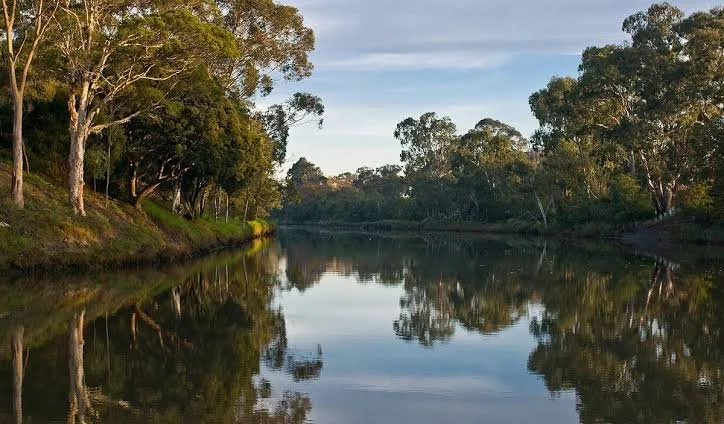
Yarra River; Image credit: TRIPADVISOR
Reprising Environmental Personhood – Representation and the Construction of Knowledge
Francine Rochford’s Australian case studies criticize the relationships between Indigenous actors and Western governments in Rights of Nature (RoN) cases. She makes this critique through two case studies: the Hindmarsh Island Case and Munkara v. Santos.
Hindmarsh Island: Opponents of a proposed bridge to Hindmarsh Island (Kumarangk) in South Australia argued that it would desecrate waters sacred to Ngarrindjeri women. Part of the evidence, the so-called “secret women’s business,” was restricted to Ngarrindjeri women and withheld from men, including the federal minister assessing the heritage claim. A group of dissident Ngarrindjeri women said the tradition was a recent fabrication, and a 1995 South Australian Royal Commission agreed. A 2001 Federal Court judgment later found no evidence of fabrication. For Rochford, the case shows how claims about the sacredness of a water body can be shaped by the goals of particular human actors.
Tiwi Islands (Munkara v Santos): In 2024, Tiwi Islanders sought to block construction of a gas pipeline for Santos’s Barossa offshore project. They argued it would harm sea country and ancestral beings associated with the waters off the islands. The Federal Court dismissed the case. It found insufficient evidence of the claimed cultural significance along the pipeline route, and it found that the claimants’ lawyers had improperly shaped evidence from an expert anthropologist and some witnesses. The ruling allowed construction to proceed.
Rochford believes that these cases illuminate critiques of the river rights movement, which often backs its campaigns with Indigenous understandings of personhood. She argues that the movement fails to recognize the non-translatable nature of Indigenous knowledge to Western governments and that the secrecy demanded by some elements of Indigenous knowledge is incompatible with Western legal systems. Even the process of consultation, Rochford contends, “entangle[s] Indigenous ontologies and bureaucratic form but do not assure translational integrity.”
Rochford asserts that the RoN movement has, unproductively, integrated co-governance principles into its advocacy. These movements appear to take for granted the idea that Indigenous groups will align with anti-development ideals. In effect, this reduces all Indigenous Peoples into a projected uniformity without real regard for their complex and differing interests.
Rochford also believes that the democratic ideal of transparency is incompatible with incorporating Indigenous ideas into governance. Rochford argues that Indigenous practices are rarely easily studied in a comprehensive and transparent manner, making them easy to manipulate for the benefit of environmental advocates. The power of environmental organizations to interpret Indigenous knowledge to their advantage gives humans a new form of dominion over Nature. This freedom of interpretation and lack of transparency in co-governance is a challenge to the “rationality of law itself.”
Towards “grounded” knowledges: from the Atrato River to knowing Nature when defending its rights
In their article, Angela María Sánchez-Alfonso and Rana Göksu argue that the Rights of Nature movement must move beyond traditional legal understandings of Nature and toward grounded practices of knowledge. They use the case study of the Atrato River to emphasize this point.
In many Rights of Nature cases, courts continue to prioritize traditional understandings over grounded and Indigenous knowledge. In the Atrato case, for instance, the Court demanded scientific certainty that communities along the river faced mercury poisoning as a result of mining, despite the narrative testimony of multiple people that the river was contaminated and that this contamination had affected them. The authors contend that this approach makes science the only “objective” way of knowing, discrediting Indigenous perspectives. The prioritization of these forms of knowledge perpetuates the anthropocentric understanding the Rights of Nature movement works to disrupt. It takes Nature out of its context to quantify it.
Alternatively, grounded legal practices, “legal geography,” recognize the importance of place in society. This concept emphasizes the specialities of law, the idea that law makes space and place makes law. It prioritizes the knowledge of those who experience and understand a space rather than scientific experts. Legal geography was practiced, for example, when the Constitutional Court of Colombia visited the Atrato. That trip enabled the Court to witness the river’s relationship with surrounding communities, to look beyond the “strictly formalised legal actors” of traditional law. Such grounded practices, the article contends, are the only way to experience relationality; to understand knowledge in a time-sensitive, direct, and sensory manner.
Despite their critique of Western ways of knowing, Sánchez-Alfonso and Göksu believe there to be no existential tension between scientific and other-than-expert knowledge in the Rights of Nature movement. The tensions that presently exist are the result of a legal system which prioritizes traditional science over Indigenous and grounded understandings. Sánchez-Alfonso and Göksu also do not intend for their article to be a critique of the Rights of Nature movement. They do, however, challenge advocates to move beyond the anthropocentrism of knowledge.

Atrato River; Photo Credit Almajior, CC BY-SA 4.0, via Wikimedia Commons
Rivers as persons: intrinsic value, capabilities and representation
Oluwabusayo Temitope Wuraola, in her article, writes a comprehensive argument in favor of legal personhood for rivers. She writes that the rivers’ desires are clear from ecological knowledge and case studies on the rights of rivers. Rivers’ interests include freedom from destruction and from harm to their intrinsic value; and the abilities to thrive and flourish, and to be represented adequately. That final right is vitally significant, as without beneficial human representation, the rights of rivers are likely to be ineffective. However, Wuraola argues that current models demonstrate that adequate representation is attainable when representatives relate to, know, and understand the rivers’ intrinsic value.
The author believes the rights and representation of rivers are achievable given current models of legal personhood. In legal systems, personhood is a “pure abstraction.” It has no relation to society’s moral or scientific definitions of humanity, as is evidenced by the rights to personhood by corporations. Instead, rivers hold rights when legal systems choose to recognize them. The allocation of rights under modern legal systems is simply a method to protect the interests of those rights holders.
Wuraola analyzes some additional metaphysical justifications for the Rights of Nature, yet finds these flawed because they center on human concepts such as pain, pleasure, and rationalism. Nature, she argues, must be granted rights for its intrinsic value.
Perhaps even more significant than the theoretical discussion over the feasibility of Nature’s rights, Wuraola argues, is the practical evidence that such rights can exist. Nature already holds rights in Ecuador, Bolivia, and elsewhere, making arguments against the theoretical possibility of Rights of Nature unreasonable.
Not only are the rights of rivers possible, this article argues, but they are necessary. In current legal systems, rivers are not appreciated for their intrinsic value. This enables people, and the present, to be prioritized over long-term ecological health. Human advocates for rivers cannot take actions to protect them for their own good. Rights for rivers could be the framework to solve this lack of representation—the framework to reimagine the legal value of Nature.
