
Lake Titicaca in Danger: Community Action and the Rights of Nature
By the Earth Law Center Latin America Legal Team
Lake Titicaca, a large mountain lake on the border of Perú and Bolivia, is sacred to the Aymara and Quechua peoples.[1] Known as “Mama Qota” or “Qota Mama” in the Aymara language, signifying the goddess of water in Andean cultures, the lake faces a serious environmental crisis that threatens its balance and the culture that has nurtured it for generations. In response, Earth Law Center's Latin America Legal Program is collaborating with Indigenous communities to defend the lake's rights, strengthen leadership—especially among women and youth—and support legal actions aimed at protecting the lake. Their work shows that recognizing the lake as a subject of rights is crucial for healing its waters and safeguarding the life, culture, and future of the Altiplano.
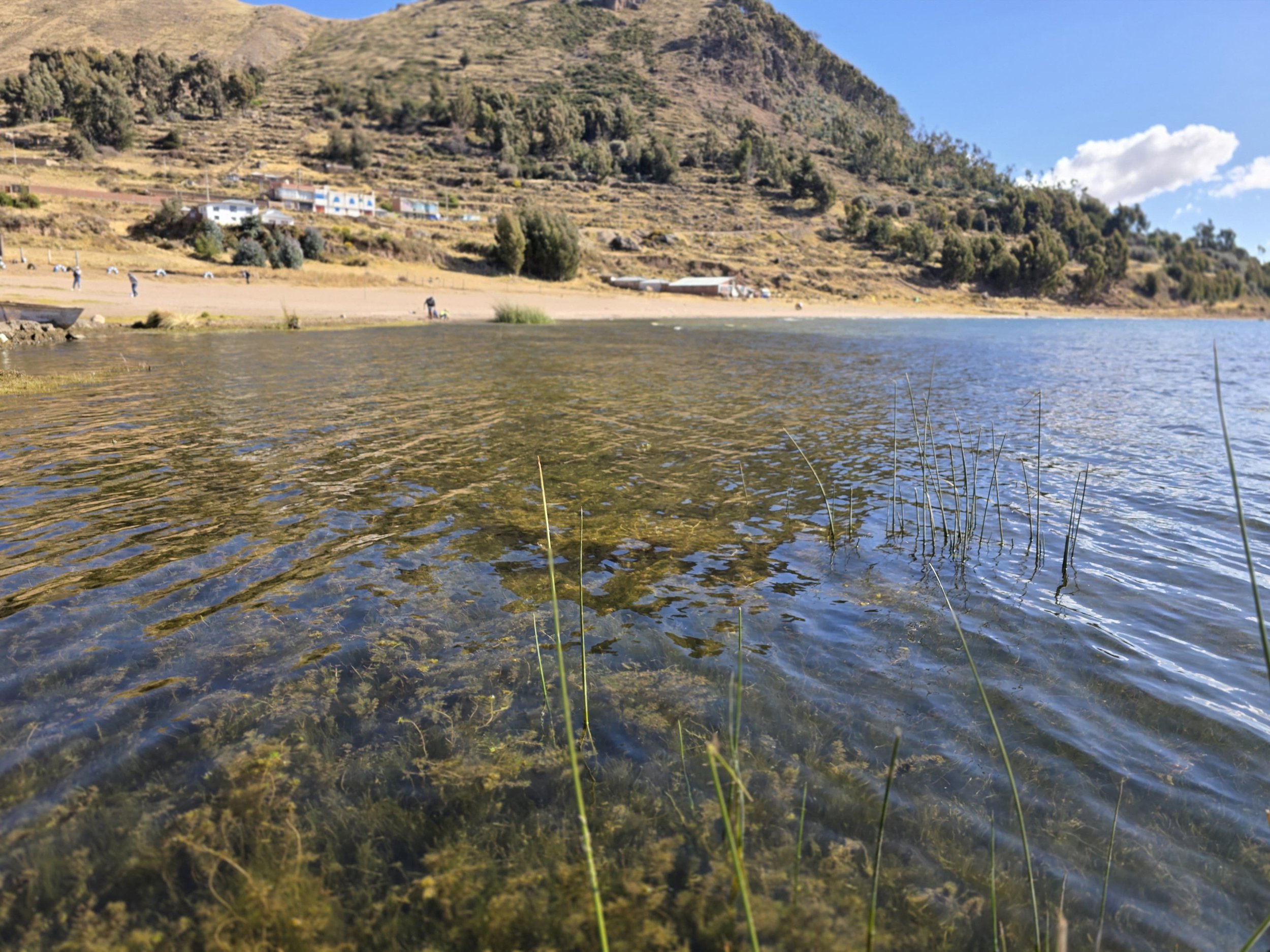
Near the shore of Juli Bay, Lake Titicaca. Photo credit: Javier Ruiz.
About ELC’s Latin America Legal Program
The Latin America Legal Program at Earth Law Center (ELC) supports environmental defenders, particularly Indigenous Peoples and their women defenders who sustain their territories. Through one of the pillars of our work, “Empowering women, youth, and defenders of Nature,” we provide legal advice, support in legal proceedings, and tools to enhance capacities in environmental governance and the exercise of fundamental rights.
We work closely with communities, building strategies rooted in their territories and worldviews. We are committed to their leadership; our role is to be strategic allies who amplify their voices and empower them in the defense of their ecosystems.
We are active throughout Latin America and currently have a strong presence in Perú, focusing significantly on Lake Titicaca.
Why Lake Titicaca Matters
Lake Titicaca is the largest freshwater lake in South America. Located in the heart of the Andean Altiplano at 3,810 meters (12,500 feet) above sea level, it is the highest navigable lake in the world. The lake ecosystem is home to rich biodiversity, including the parihuanas (Andean flamingos) and the greatest variety of endemic fish in the Altiplano, primarily from the genera Orestias and Trichomycterus, with notable species like the Mauri and the Suche.[2-3]
“Since the time of our ancestors on Lake Titicaca, there were Carachi, Mauri, Suche, and Pejerrey fish, as well as birds such as Keñola and Parihuana, and we fed on them during times when there was no chakra (farmland) up above, far from the lake, and we would come down and eat,” said Marcela González, president of the Puno Departmental Women's Association. “For me, there is nothing more sacred than Lake Titicaca.”[4-6]
Geographically, the lake is a natural wonder spanning a basin shared by Bolivia and Perú, with the cities of Copacabana and Puno as its most popular bays. This vast basin, surrounded by mountain ranges and plateaus, covers 70% of the Puno departmental area and integrates a water system of more than 50 lagoons and 300 rivers. Its unique biodiversity combines high Andean grasslands with jungle ecosystems, including tropical forests, wetlands, and savannas.
The lake is home to the Titicaca water frog, the world's only fully aquatic frog, which is endemic to the Altiplano.[7] Listed in Appendix I of the Convention on International Trade in Endangered Species of Wild Fauna and Flora (CITES) and classified as Critically Endangered by the International Union for the Conservation of Nature (IUCN), it is also recognized as a threatened species in Perú.[8] This amphibian serves as an indicator of ecosystem health and faces multiple threats, including habitat destruction, invasive species, amphibian-specific fungal diseases, climate change, and water pollution.[9]
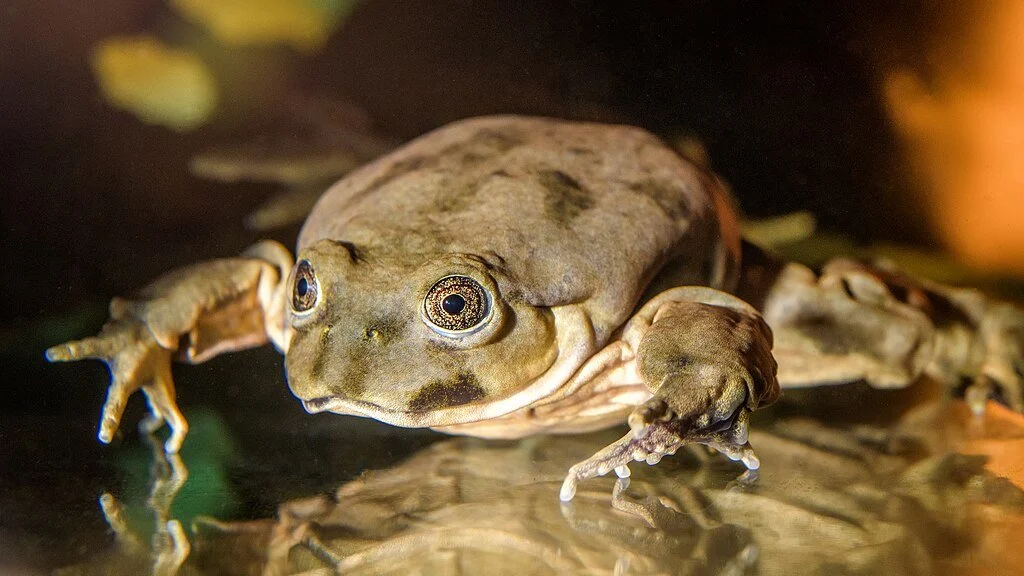
Titicaca water frog. Petr Hamerník, CC BY-SA 4.0 <https://creativecommons.org/licenses/by-sa/4.0>, via Wikimedia Commons
Threats Affecting the World's Highest Navigable Lake
Like its emblematic water frog, Lake Titicaca is under threat. The lake and its biodiversity face multiple challenges: wastewater discharges, heavy metals from tributary rivers, invasive species, solid waste pollution, and the impact of tourism on its bays and recreational areas.
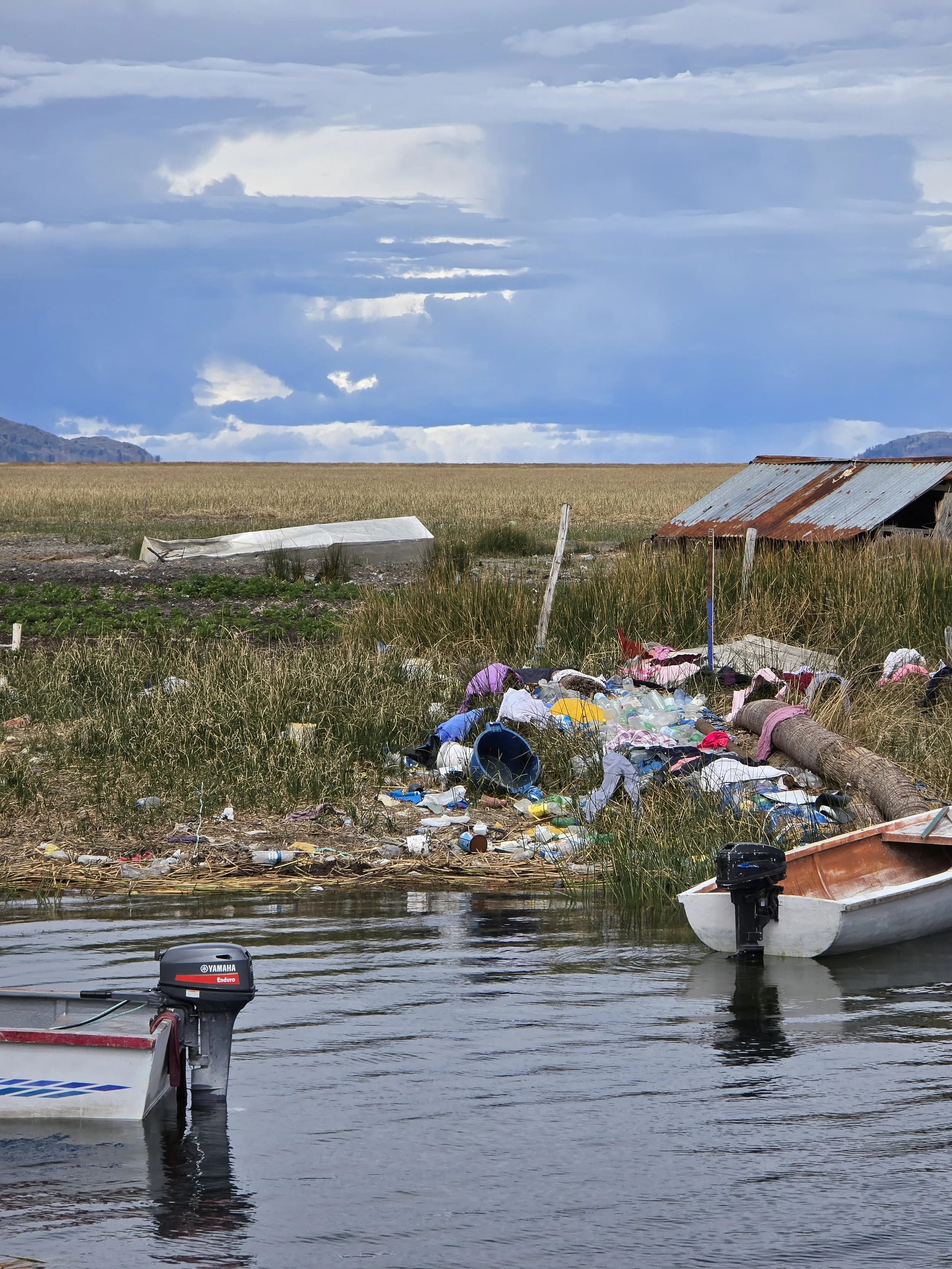
Pollution in Puno Bay, Lake Titicaca. Photo credit: Javier Ruiz.
The lake has become increasingly vulnerable due to human activity that has polluted its waters. Key threats documented in government reports and specialized research include wastewater from population growth in surrounding towns such as Puno and Juliaca.[10] This growth has heightened the demand for water and sewage services. However, over half of the riverside inhabitants lack sewage systems, and the few existing wastewater treatment plants cannot handle the volume.
Additionally, solid waste management poses another critical challenge. Urban expansion has generated waste exceeding collection capacity, leading to inadequate disposal and subsequent pollution of the lake. The impact of industrial mining activity is also significant, with numerous mines in the basin's upper reaches using toxic substances like mercury to process gold and silver ore. Studies have recorded high levels of heavy metals, including iron, lead, arsenic, barium, and zinc, in key tributaries such as the Ramis and Coata Rivers, which carry these pollutants into Lake Titicaca.
Finally, oil pollution affects the lake ecosystem. Oil emissions from wells and wastewater loaded with carbonates and chlorides flow directly into the lake. This phenomenon has led to the formation of salt crusts that kill surrounding vegetation, a visible testament to the toxicity affecting this invaluable water body.
“Like our mother, Grandmother Qota Mama or Lake Titicaca, for us children of the sun, like Lupijaquess [“people of the sun's warmth”], the lake is sick, it is crying out for help so that we can save it,” said Yolanda Flores, a women's rights activist from the town of Yunguyo and member of Human Rights and Environment Puno. “In the lake's basin are several towns and cities that are connected to the sewage system, and all of them are directed to Lake Titicaca. Where there are towns there is pollution . . . [and] there are mining concessions in our watershed headwaters that are exploiting mining and gold with cyanide and mercury, and all of that pollutes us. It is a cry from Mama Qota that we can save ourselves from pollution together.”
Scientific research has confirmed that, although Lake Titicaca is home to unique species, their populations are alarmingly declining, putting them at risk of extinction.[11] In addition to the Titicaca water frog, a prime example is the Puno flamingo, whose numbers are decreasing due to the impact of mining on their nesting areas.[12] This migratory species is listed on the IUCN Red List and in Appendix II of CITES.[13-14]
Culture and Nature: The Struggle for Identity in Titicaca
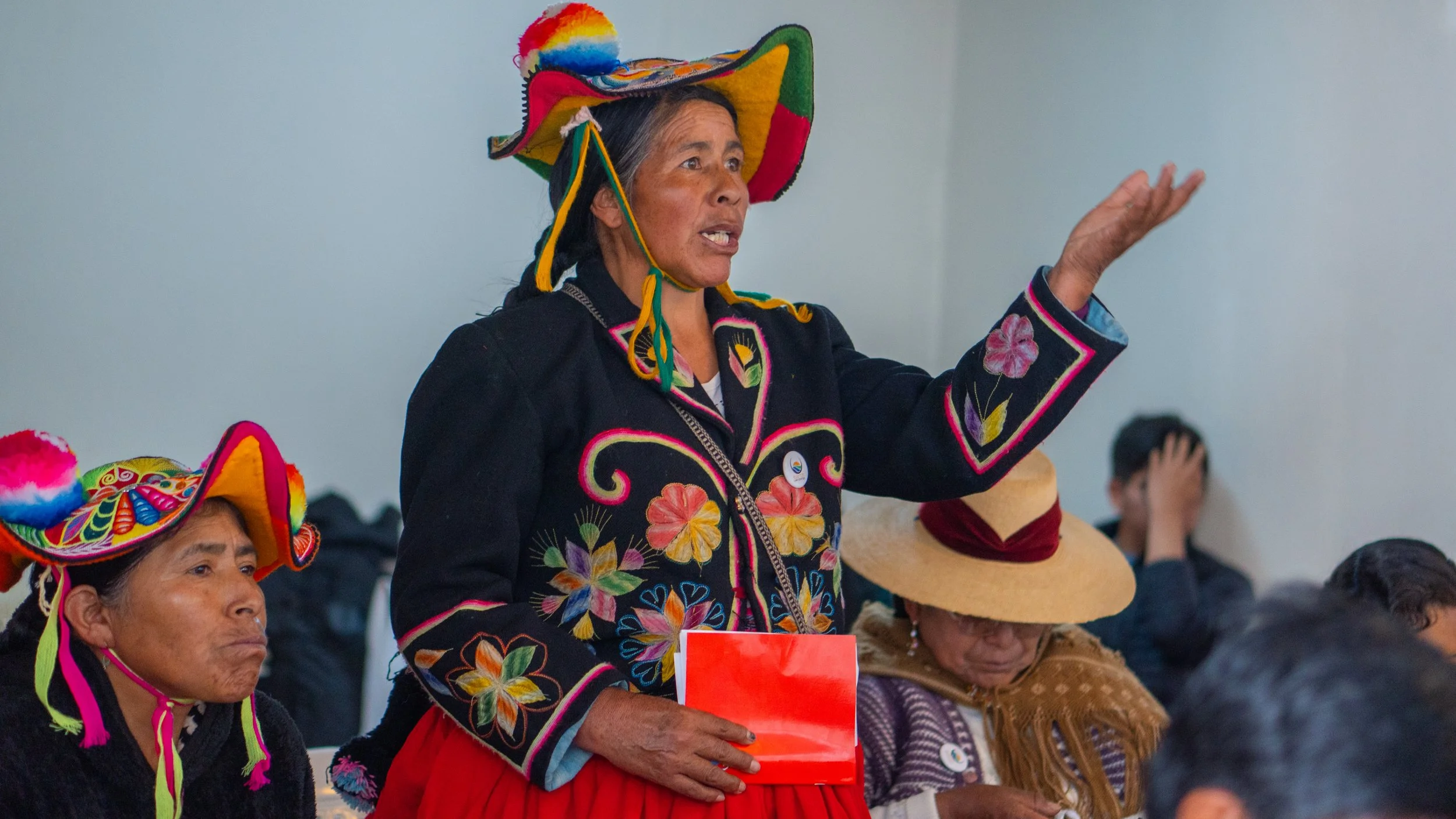
One of the women defenders of Lake Titicaca. Photo credit: Heidy Collanqui
The Indigenous Peoples of Lake Titicaca have expressed deep concern about the impact of biodiversity loss on their culture and ways of life. They note that medicinal plants that once flourished in the Puno Valley are becoming scarce and that fish that were essential to their ancestral diet are disappearing due to the introduction of foreign species and overfishing. Members of these communities, trained in water monitoring, have documented a worrying decline in the lake's level, which has fallen by up to 40 centimeters (15.7 inches) during periods of severe drought over the last two decades.
This environmental degradation directly affects their cultural traditions. Among younger people, ancestral practices such as giving thanks to Mama Qota have been lost, while many avoid visiting the lake due to the sewage dumped into its basin. Coastal pollution, exacerbated by unregulated urbanization, hinders annual spiritual gatherings and community cleanups.
For the Aymara people, Lake Titicaca is a living being that communicates with them. Those with ancestral knowledge interpret the winds and the behavior of the waters to predict the weather, know when the rains will come, and identify the right time for planting. Mama Qota signals these cycles through signs such as the green grass growing on the rocks along its shores.
"Qota Mama is what we call her in our Aymara language. She is a young maiden in our culture. She speaks with the achachilas [protective spirits that inhabit the hills and mountains of Andean culture], and we ask her to grant us a good harvest. Many brothers make offerings to her and ask her to make their projects successful,” said Soraya Poma Cotrado, president of the Network of Women Leaders in Defense of Water and Lake Titicaca. “Qota Mama is also a healer. I had a nice experience: at one point, I had pimples on my face, but I was told that I should go to the Lake at 3 a.m. I went early to Qota Mama and was cured.”
The defenders of the Lake recall how, in childhood, it was easier to maintain a harmonious relationship with their cultural heritage. They made offerings of gratitude to the lake and collected eggs from its shores, and their parents fished with their hands on the banks. Today, areas like the Capachica peninsula show clear signs of decline: the llasca [Cladophora crispata, a species of green algae native to the Puno region] have disappeared, root gathering has become dangerous due to pollution, and during carnivals and rituals, the black waters affecting Lake Titicaca become visible.”
Despite the serious pollution problems affecting Lake Titicaca, its beauty and bounty endure, captivating both locals and visitors. From the center of Puno, with its colorful displays of traditional dances and festivals, to the city of Ilave and the mystical portal of Aramu Muru (Ajayu Marka in Aymara) to the west of the lake,[15] the region sustains a rich cultural heritage. Here, the Aymara and Quechua cultures, deeply connected to water and Nature, base their traditional knowledge and community practices on a harmonious relationship with the environment.
In the Chucuito province, the shores of San Juan beach contrast sharply with Puno Bay. This area, renovated in 2024, has clearer waters and less urban sprawl, highlighting the white sand and surrounding greenery. It is one of the best-preserved areas of the lake, cared for by the Lupakas, descendants of the Aymara people who inhabit the region.[16-17]
From this point, you can admire the immensity of Mama Qota, whose waters merge with the sky on the horizon, creating the illusion of an inland sea, the “Sea of Puno.” Although this place remains one of the most beautiful in the Titicaca basin, its landscape too is at risk due to multiple environmental challenges facing the lake and its inhabitants, threatening to erode this priceless natural beauty.[18]
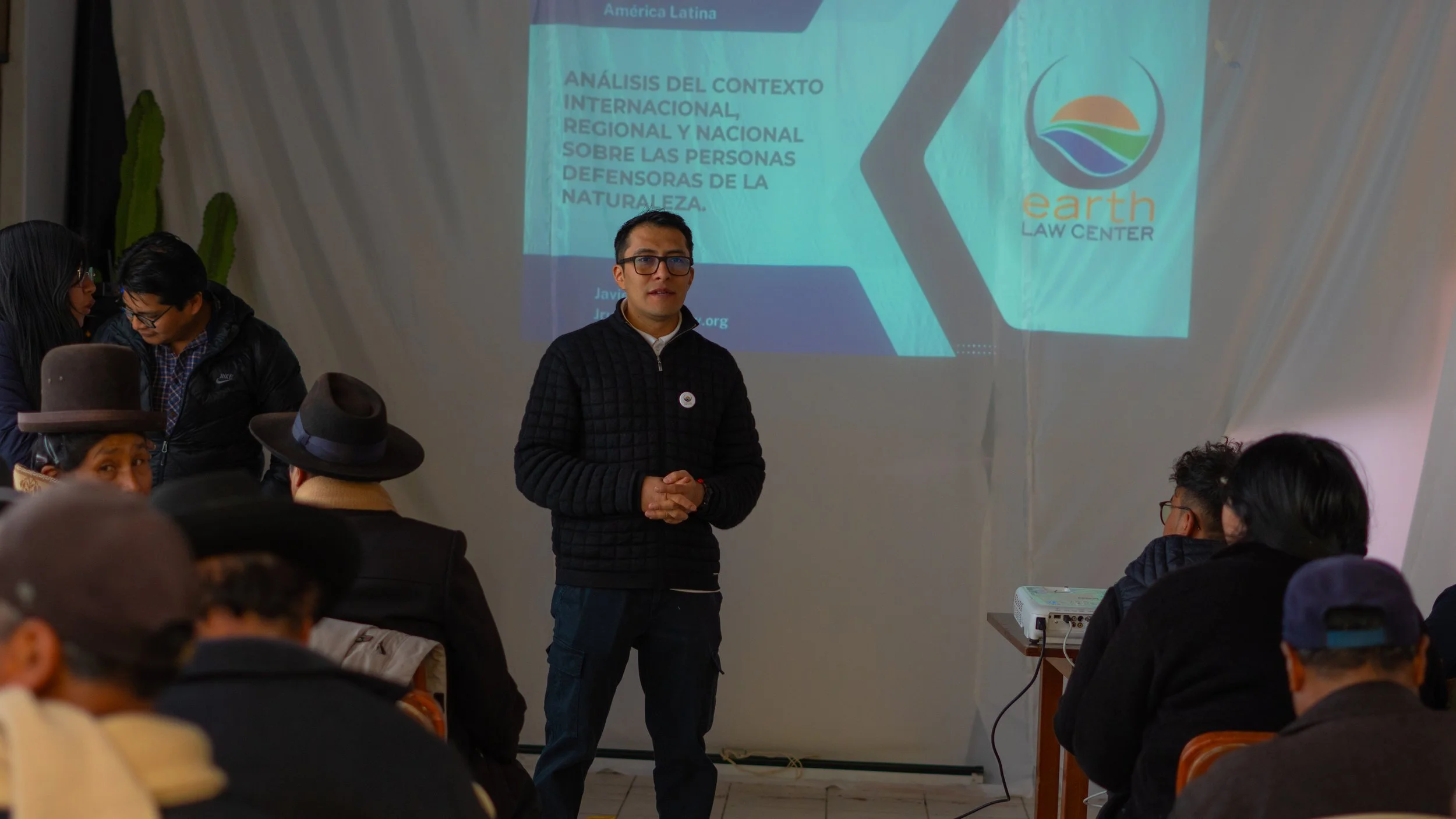
ELC attorney Javier Ruiz. Photo credit: Heidy Collanqui
“Walking alongside the sisters and brothers who defend the lake, in the Apus Mountains area affected by mining in Juli, I observed how they collected plants from the wetlands,” said Javier Ruiz, a lawyer with the Earth Law Center. “I immediately asked the sister what the plants were used for, and she replied, ‘We collect these plants to cure headaches and stomachaches. We are taking advantage of this trip to the higher altitudes because they are no longer found in the lower areas near the Lake.’”
Defending the Rights of Lake Titicaca
To protect their culture and the biodiversity of Lake Titicaca, many groups have taken legal action and promoted the creation of public policies that recognize the lake’s intrinsic rights.
“What we are witnessing in Lake Titicaca is a monumental paradigm shift. It is not just a legal battle against pollution; it is the vindication of an ancestral worldview that is finally finding its place in modern law,” said Bastián Núñez, legal advisor to ELC.
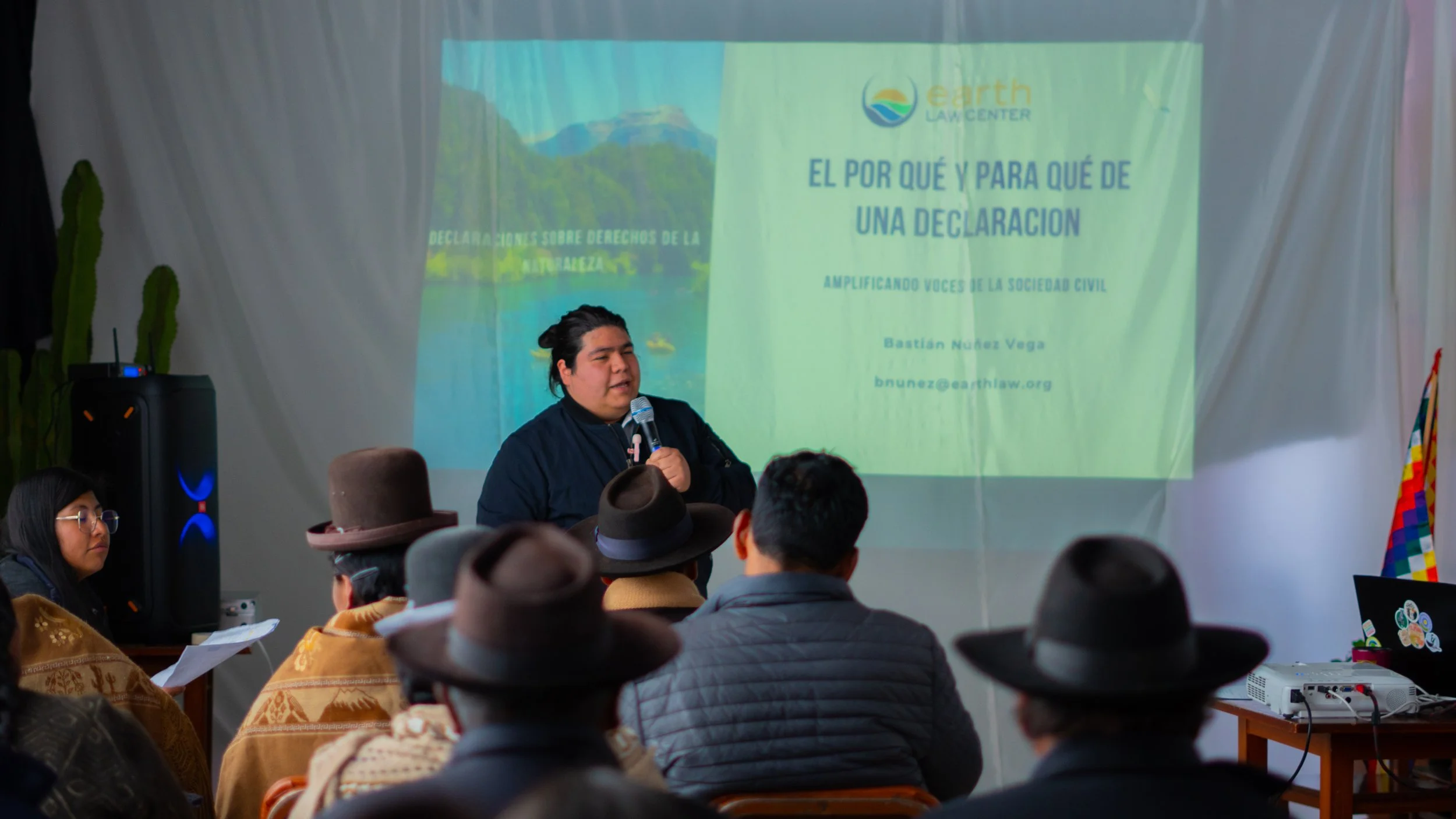
Bastián Núñez, legal advisor to ELC. Photo credit: Heidy Collanqui
The Puno Human Rights and Environment Organization (DHUMAP) and the Legal Defense Institute (IDL), along with the Association of Indigenous Conservationists, filed a lawsuit to recognize the rights of Lake Titicaca and initiate its decontamination. They supported their case with technical reports showing that ecosystem degradation is due to inadequate wastewater treatment, solid waste leakage, and mining activities. After an unfavorable first ruling in 2024, the Superior Court of Puno declared that ruling null and void in October of this year, restarting the legal process and providing a new opportunity for the defense of Lake Titicaca.
Simultaneously, the Network of Women Leaders in Defense of Water and Lake Titicaca, consisting of 60 Indigenous women from 13 districts in Puno and Bolivia, successfully urged the Regional Government of Puno to issue an ordinance in August 2025 recognizing the lake and its tributaries as subjects of rights.[19] The ordinance establishes five fundamental rights:
the right to existence and maintenance of ecological integrity
the right to natural regeneration of hydrological cycles and biodiversity
the right to freedom from pollution and disruptive activities
the right to restoration in the event of environmental damage
the right to representation by protective entities.
Recognizing the lake as a legal entity—following precedents like the Marañón River in Perú, the Aquepi River in Ecuador, Laguna Francia in Argentina, and Lake Tota in Colombia—would enable the enforcement of pollution controls on wastewater discharges and mining tailings in Lake Titicaca by imposing protection obligations on both the state and private actors.[20-23]
Incorporating the Rights of Nature into the management of the Titicaca basin clarifies the ecological needs of the Lake and defines the obligations of the State and other actors for its protection. This approach promotes preventive and restorative measures from a systemic perspective, enhancing ecosystem resilience and aligning human decisions with ecological integrity. Implementing the Rights of Nature is a gradual and transformative process that starts with recognizing the intrinsic value of Mama Qota in regulations, judicial decisions, and public policies, and progresses towards a binding framework that requires the application of ecocentric principles such as precaution, prevention, in dubio pro natura, and the use of the best available science.
In the context of Lake Titicaca, integrating the Rights of Nature into environmental decision-making could lead to stricter environmental impact assessments; modifications of existing human activities, including extractive ones that jeopardize ecosystem health; and the review, adaptation, or revocation of concessions causing significant harm. It may also involve the obligation to restore contaminated areas, enhance wastewater management, and strengthen the protection of key tributaries and wetlands.
Ultimately, a Rights of Nature framework could guide the governance of the lake toward a balance between ecological limits and human well-being, ensuring that Titicaca continues to provide ecosystem services, cultural identity, and spiritual life to the communities that protect it. Its implementation requires not only substantive new tools but also a cultural and procedural transformation that places Nature at the center of all public and private decisions affecting the basin. This ecocentric paradigm, endorsed by constitutional jurisprudence, would institutionalize the participation of Indigenous and local communities as legitimate guardians of water bodies, laying the foundation for a structural transformation in watershed management.
The Regional Ordinance, which recognizes Lake Titicaca and its tributaries as subjects of rights of preferential regional interest, is a legal milestone. It establishes that the lake's rights are based on the rights of Indigenous Peoples and guarantees their effective participation in the lake's management. This action helps close inequality gaps in decision-making regarding its protection and decontamination.
“Water is life, my water, water, water from Titicaca, my water, how could I not take care of you, oh, oh, oh, knowing that you are life, my water.”—Popular composition about Lake Titicaca, inspired by the song “Agüita de Putina” by Los Uros de Titicaca
Between November 2024 and June 2025, ELC's Latin America Legal Program traveled to Puno, Perú, to support initiatives by the Aymara and Quechua communities aimed at protecting and decontaminating Lake Titicaca.
Through workshops and activities with local groups, we identified a collective concern about the environmental decline of the lake. Negative ecological impacts on the lake not only damage the region’s main environmental landmark but also profoundly affect the social and cultural life of its inhabitants. For this reason, our work has focused on highlighting the ancestral link between the Aymara and Quechua cultures and the lake.
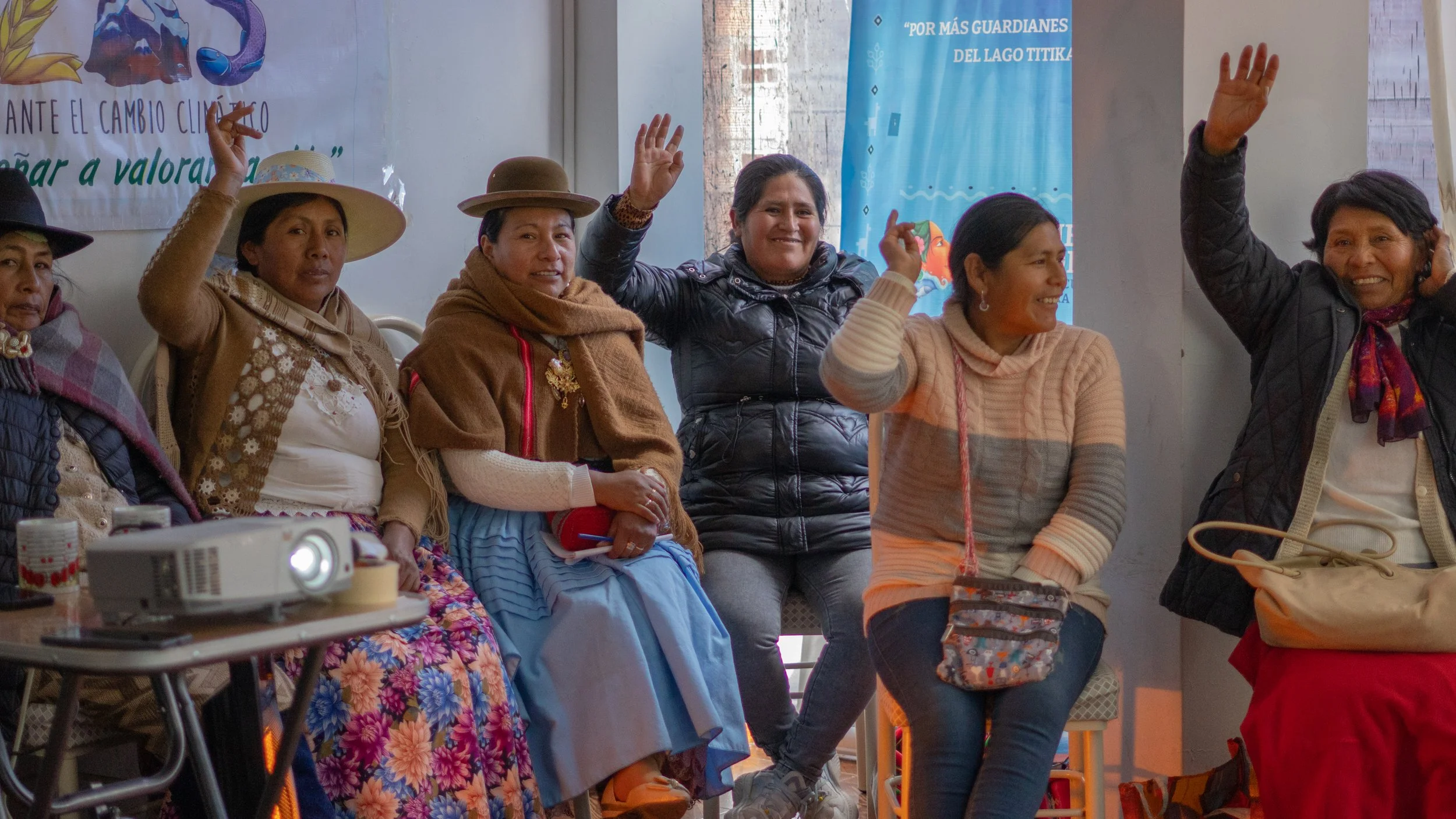
Members of the Network of Women Leaders in Defense of Water and Lake Titicaca. Photo credit: Heidy Collanqui
We have developed a specific methodology to strengthen the cultural aspects linked to Titicaca and its path toward the recognition of rights. This responds to the historical neglect of Indigenous Peoples' worldviews in decision-making about the conservation of the Lake, weakening efforts for its comprehensive protection.
“What we are witnessing in Lake Titicaca is a monumental paradigm shift,” said says Bastián Núñez, legal advisor to ELC. “It is not just a legal battle against pollution; it is the vindication of an ancestral worldview that is finally finding its place in modern law.”
Ultimately, the fight for Lake Titicaca goes beyond protecting Nature; it is essential for cultural preservation and environmental justice. Acknowledging the rights promoted by Indigenous Peoples is crucial for healing the lake’s waters and for honoring and preserving the ancient worldview that sees it as a living mother, Mama Qota, whose well-being is inseparable from that of all beings dependent on her.
Notes
[1] The Lake Titicaca basin is also home to the Uros, a people located from Puno Bay to the interior of the Lake. Its population has settled on floating islands and rafts made of totora reeds, which they traditionally used to navigate the waters of Titicaca https://bdpi.cultura.gob.pe/pueblos/uro. ELC Latin America Legal Program’s fieldwork has focused on a phase of coordination with the Aymara and Quechua populations of Puno.
[2] Parihuana or Puno flamingos. Phoenicoparrus jamesi, a bird endemic to Puno.
[3] Mauri or suche. Trichomycterus rivulatus, a fish endemic to Lake Titicaca.
[4] Carachi or karache. Orestias agassizii and Orestias luteus, fish endemic to Lake Titicaca.
[5] Argentine fish species (Odontesthes bonariensis) introduced into Lake Poopó in Bolivia, which migrated to Lake Titicaca in 1955 via the Desaguadero River.
[6] Titicaca Zampullín or Keñola. Rollandia microptera, a bird endemic to the Andean highlands.
[7] Giant Titicaca frog or Telmatobius culeus, a species of giant anuran amphibian endemic to Lake Titicaca.
[8] DS N°004-2014-MINAGRI.
[9] RAMOS RODRIGO, Víctor Enrique; QUISPE COILA, Jhazel Arnold, and ELIAS PIPERIS, Roberto Kosmas. Assessment of the relative abundance of Telmatobius culeus in the coastal zone of Lake Titicaca, Perú.
[10] Peruvian University of the Union. Condori Huancapaza Maritza, Ascencio Pacho Juan, Paucar Ginez Margot Yeny. Determination of the extinction factors of the giant frog of Lake Titicaca.
[11] Ramos Rodrigo, Victor Enrique, Jhazel Arnold Quispe Coila, and Roberto Kosmas Elias Piperis. 2019. “Evaluation of the Relative Abundance of Telmatobius Culeus in the Coastal Zone of Lake Titicaca, Peru.” Revista Peruana de Biología 26 (4): 475-80. https://doi.org/10.15381/rpb.v26i4.17216.
[12] Derlindati, Enrique J. Flamingos of the Andes. Nature Conservation Series 24: The Argentine Puna: Nature and Culture (2018). Online. Available at: https://www.researchgate.net/profile/Enrique-Derlindati-2/publication/336967273_Los_flamencos_de_los_Andes/links/5dbc684e92851c818021069c/Los-flamencos-de-los-Andes.pdf.
[13] IUCN Red List. Online. Available at: https://www.iucnredlist.org/es.
[14] CITES. Appendices I, II, and III effective as of February 7, 2025. Online. Available at: https://cites.org/esp/app/appendices.php.
[15] Pari Yenny. Experiences of the Energetic Tourist on the Vibrational Frequencies Emitted from the Aramu Muru Portal, Province of Chucuito-Puno, 2019. National University of the Altiplano. Pp. 19-20. Online. Available at: https://files.core.ac.uk/download/587975713.pdf.
[16] The Lupaca, an ancient people who lived near Lake Titicaca, are the ancestors of the Aymara.
[17] Provincial Municipality of Chucuito Juli. Grand Opening. San Juan Beach. Online. Available at: https://www.gob.pe/institucion/munichucuitojuli/noticias/993840-gran-inauguracion-playa-de-san-juan.
[18] Tumi Jesús. Attitudes of the population towards sanitation, environmental management, and coastal pollution in the district of Juli-Puno, Peru. Espacio Abierto, vol. 31, no. 4, pp. 150-163, 2022. University of Zulia. Online. Available at: https://www.redalyc.org/journal/122/12273665008/html/.
[19] Regional Ordinance No. 000011-2025-GRP.
[20] Case No. 00010-2022-0-1901-JM-CI-01. Action for protection. Resolution No. 14 dated March 15, 2024. Nauta I Mixed Court. First instance.
[21] Case No. 1185-20-JP. Judgment No. 1185-20-JP/21. Quito, December 15, 2021. Action for Protection. Constitutional Court of Ecuador.
[22] Case 4085-2019-1-C. Judgment dated November 29, 2024. Action for protection. 21st Civil and Commercial Court of Resistencia.
[23] Case No. 157593153001-2020-00081-00. Judgment ST-0047 dated December 1, 2020. Action for protection of constitutional rights. First Civil Court of the Oral Circuit of Sogamoso.